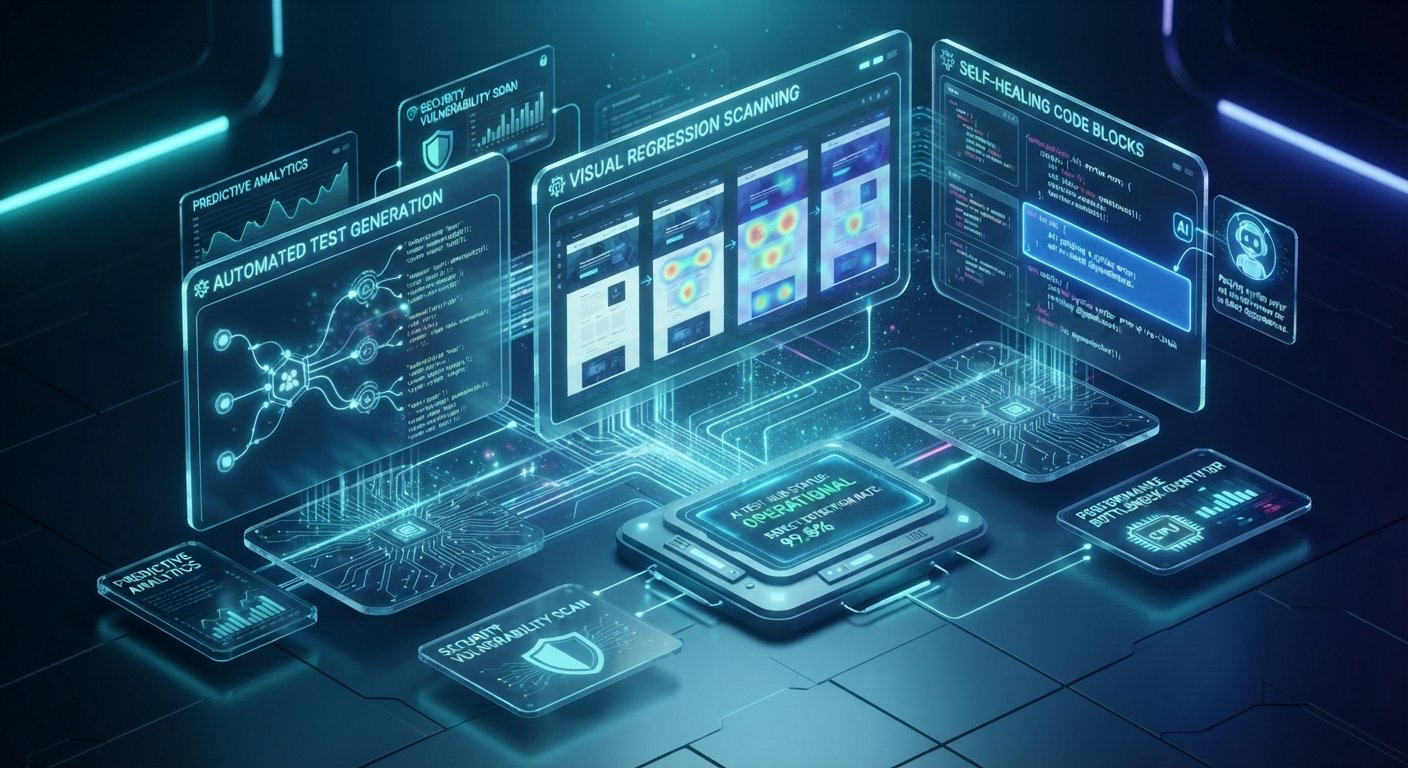
Manual quality assurance struggles to keep pace with rapid software release schedules. Modern engineering teams frequently struggle with brittle scripts that break whenever user interfaces change, causing test suite maintenance to consume hundreds of engineering hours.
Learning how to automate software testing using AI tools bridges this gap by introducing machine learning models, autonomous test agents, and self-healing algorithms into the continuous integration (CI/CD) pipeline. This step-by-step guide walks you through transforming manual test workflows into an AI-driven quality assurance ecosystem.
Key Takeaways
- Maintenance Over Generation: The primary benefit of AI in QA is self-healing test scripts that automatically adapt to UI changes.
- Natural Language Authoring: Modern AI platforms allow QA specialists and product managers to generate complex test flows using plain English prompts.
- Shift-Left Testing: Integrating autonomous test agents directly inside AI coding assistants allows developers to verify code before opening pull requests.
- Visual AI Superiority: AI-powered visual regression tools detect pixel-level layout bugs across browsers without hardcoded element selectors.
What Is AI-Powered Software Testing?
AI-powered software testing uses machine learning how to automate software testing using AI tools algorithms, natural language processing (NLP), and computer vision to author, execute, and maintain test suites automatically. Traditional test framework engines (like Selenium or Cypress) depend on rigid DOM locators. When a front-end developer updates a button ID or moves a form field, traditional tests fail instantly.
Step-by-Step Guide: How to Automate Software Testing Using AI Tools
Implementing AI automation requires a structured strategy to ensure smooth integration with existing codebases.
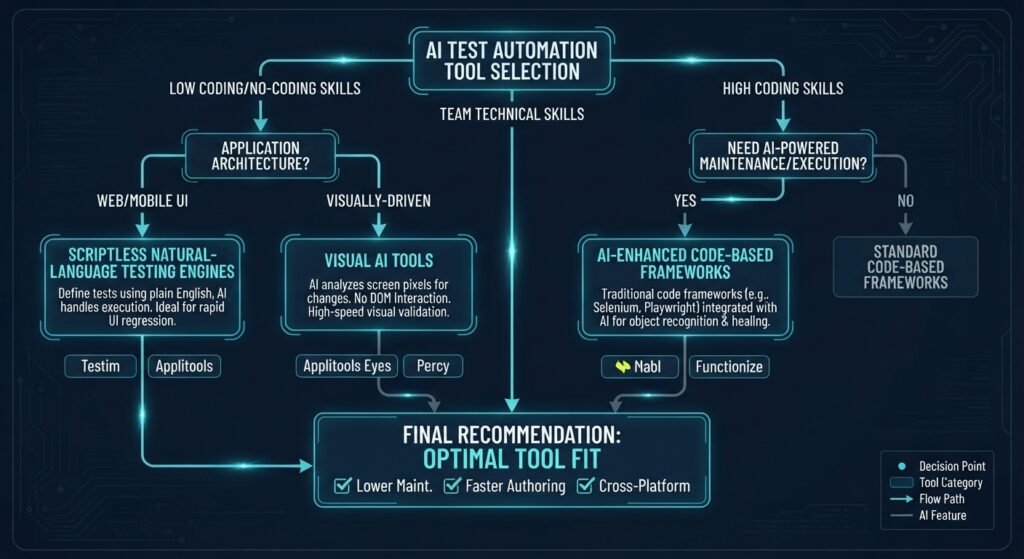
Step 1: Audit Your Testing Baseline and Select the Right AI Stack
Identify where your current QA pipeline experiences the highest friction—whether in test script authoring, cross-browser maintenance, or API validation.
- Agentic & Natural Language Testing: Platforms like testRigor, mabl, or Shiplight allow teams to write tests using natural language instructions or AI coding agent integrations.
- Visual UI Validation: Applitools uses AI computer vision to compare expected screen layouts with rendered pages, ignoring harmless dynamic changes.
- Self-Healing Web Suites: Tools such as Testim or ACCELQ dynamically update broken selectors during runtime execution.
how to automate software testing using AI tools AI test generation engines analyze the underlying application object model, map elements dynamically, and synthesize robust, multi-step test scripts.
Step 3: Configure Self-Healing Test Script Mechanics
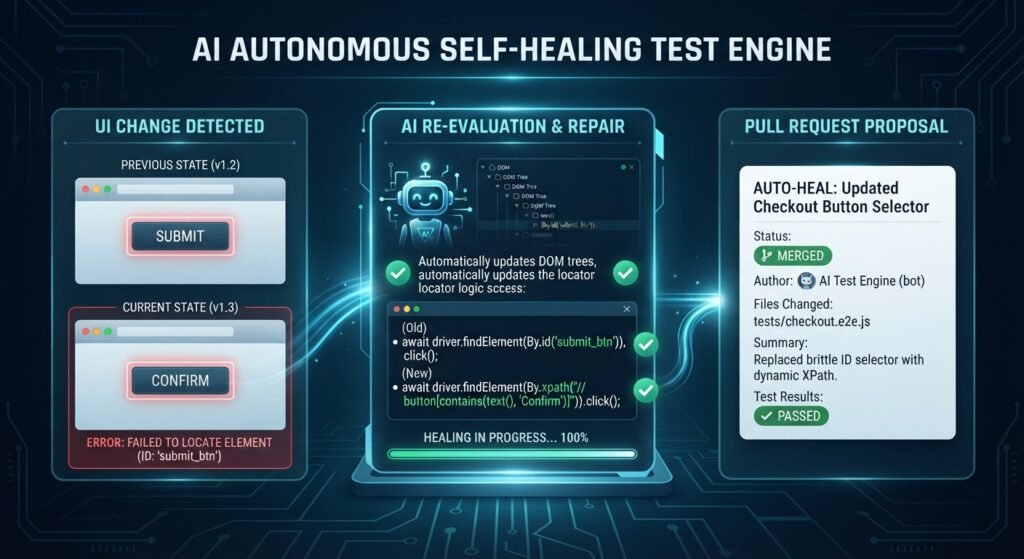
Test script maintenance remains one of the costliest aspects of software engineering. When learning how to automate software testing using AI tools, configuring self-healing features is vital.
When a button’s underlying HTML changes from <button id="submit_v1"> to <button class="btn-primary-new">, self-healing algorithms evaluate contextual attributes (such as button placement, text labels, and relative DOM neighbors) to keep the test suite running cleanly.
Step 4: how to automate software testing using AI tools
Traditional visual regression testing produces false positives whenever font rendering or responsive layouts shift slightly. Visual AI uses trained machine-learning models to evaluate screen changes the way human eyes do—flagging structural layout defects while ignoring intentional content updates.
For official design patterns on building scalable cloud infrastructure for test execution, refer to the [AWS Well-Architected Framework]([External Link: Insert high-authority external URL here with anchor text]).
Step 5: Integrate AI Test Suites into Your CI/CD & Shift-Left Workflows
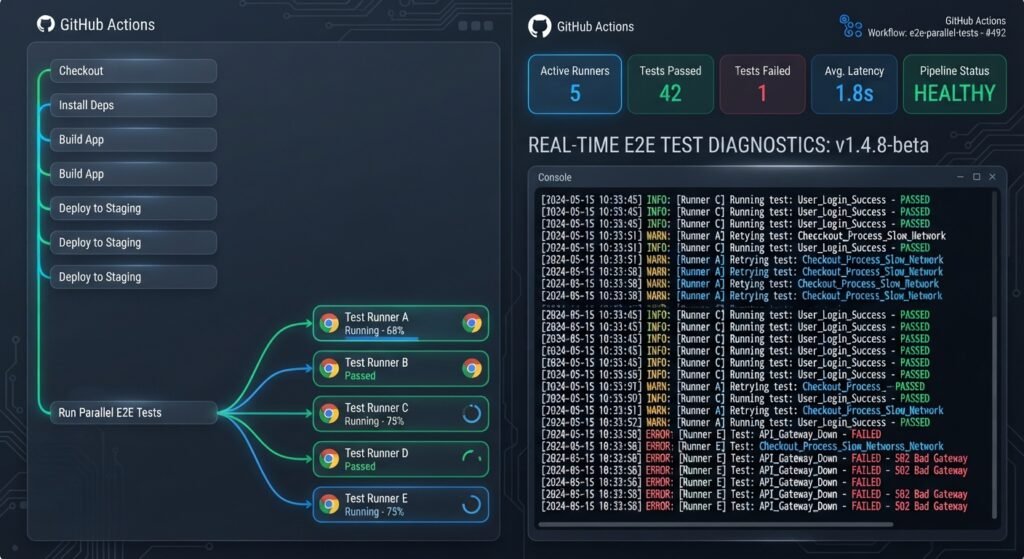
how to automate software testing using AI tools To maximize ROI, embed your automated AI tests directly into your continuous integration and continuous delivery (CI/CD) deployment pipeline.
- Pre-Commit Checks: Trigger autonomous AI test agents whenever developers write code in local IDE environments like Cursor or VS Code.
- Pull Request Gating: Automatically run targeted AI smoke test suites on active Git branches before code merges into production.
- Autonomous Root Cause Analysis: Leverage AI diagnostic modules to scan test failure logs, group duplicate bugs, and flag exact code diffs responsible for breaking changes.
Head-to-Head Comparison: Popular AI Test Automation Tools
| Platform | Primary AI Feature | Best Use Case | Scripting Requirement |
|---|---|---|---|
| Shiplight AI | Agentic browser verification & MCP integration | AI coding workflows & Playwright teams | YAML / Plain English |
| testRigor | Generative NLP test creation & Vision AI | No-code cross-functional QA teams | Plain English |
| mabl | Unified web/mobile self-healing & auto-wait | Engineering-led product teams | Low-Code / Visual Trainer |
| Applitools | Computer vision visual regression AI | Visual & layout UI validation across devices | Code-Based Integration |
Conclusion
Understanding how to automate software testing using AI tools is transformational for modern development teams. By replacing fragile, static scripts with self-healing execution, plain-English test authoring, and computer vision validation, organizations can reduce maintenance overhead while accelerating release velocity. Start small by integrating self-healing AI into your flakiest regression flows, then expand autonomous testing across your full deployment pipeline.
Frequently Asked Questions (FAQs)
Will AI replace human QA engineers in software testing?
No. AI tools automate repetitive tasks like writing regression scripts, maintaining selectors, and executing visual checks. Human QA engineers remain essential for designing overall test strategies, evaluating complex user experience journeys, and conducting exploratory testing.
How do self-healing tests work in AI software testing tools?
Self-healing tests evaluate multiple contextual attributes of UI elements (such as DOM position, neighboring labels, and visual bounds) rather than relying on a single static ID or XPath. If an attribute changes, the AI algorithm infers the target element and automatically updates the test script during runtime how to automate software testing using AI tools how to automate software testing using AI tools
Can non-technical team members automate tests using AI?
Yes. Modern AI test automation platforms support plain-English natural language processing (NLP), allowing product managers, business analysts, and manual testers to author comprehensive test flows without writing code how to automate software testing using AI tools.
how to automate software testing using AI tools how to automate software testing using AI tools how to automate software testing using AI tools
how to automate software testing using AI tools how to automate software testing using AI tools how to automate software testing using AI tools how to automate software testing using AI tools
how to automate software testing using AI tools how to automate software testing using AI tools how to automate software testing using AI tools how to automate software testing using AI tools how to automate software testing using AI tools how to automate software testing using AI tools
1 thought on “How to Automate Software Testing Using AI Tools: Step-by-Step Guide”