How to Clean Up Docker Images, Containers, and Volumes to Free Disk Space
Clean Up Docker Images, Containers, and Volumes

As you build, test, and deploy applications using containerization, your local workstation or production server quickly accumulates hidden storage bloat. Every time you build a container image, pull updates, or spin up microservices,Docker caches layers, leaves behind stopped containers, and retains persistent volumes that linger long after their parent containers have been deleted. Over time, this unmanaged data consumes gigabytes—or even terabytes—of disk space, eventually triggering … Read more

How to Clean Up Unused Docker Images, Containers, and Volumes to Free Disk Space

How to Clean Up Unused Docker Images

Docker is an indispensable tool for modern software engineering, containerization, and microservices deployment. However, as you build, run, and iterate on applications, Docker silently accumulates leftover assets—dangling images, stopped containers, abandoned networks, and anonymous volumes. Over time, these orphaned artifacts can easily consume dozens or even hundreds of gigabytes, triggering zero-disk-space errors on development machines … Read more

How to Fix “FATAL: Exceeded maximum connection limit” in PostgreSQL

FATAL: Exceeded maximum connection limit

Running into the FATAL: Exceeded maximum connection limit (or FATAL: sorry, too many clients already) error in PostgreSQL can immediately bring application traffic to a standstill. This error occurs when the number of concurrent client sessions attempting to connect to your PostgreSQL database instance exceeds the defined threshold specified by the max_connections configuration setting. Because … Read more

How to Fix API Rate Limit Errors: Causes and Client-Side Best Practices

Fix API Rate Limit Errors

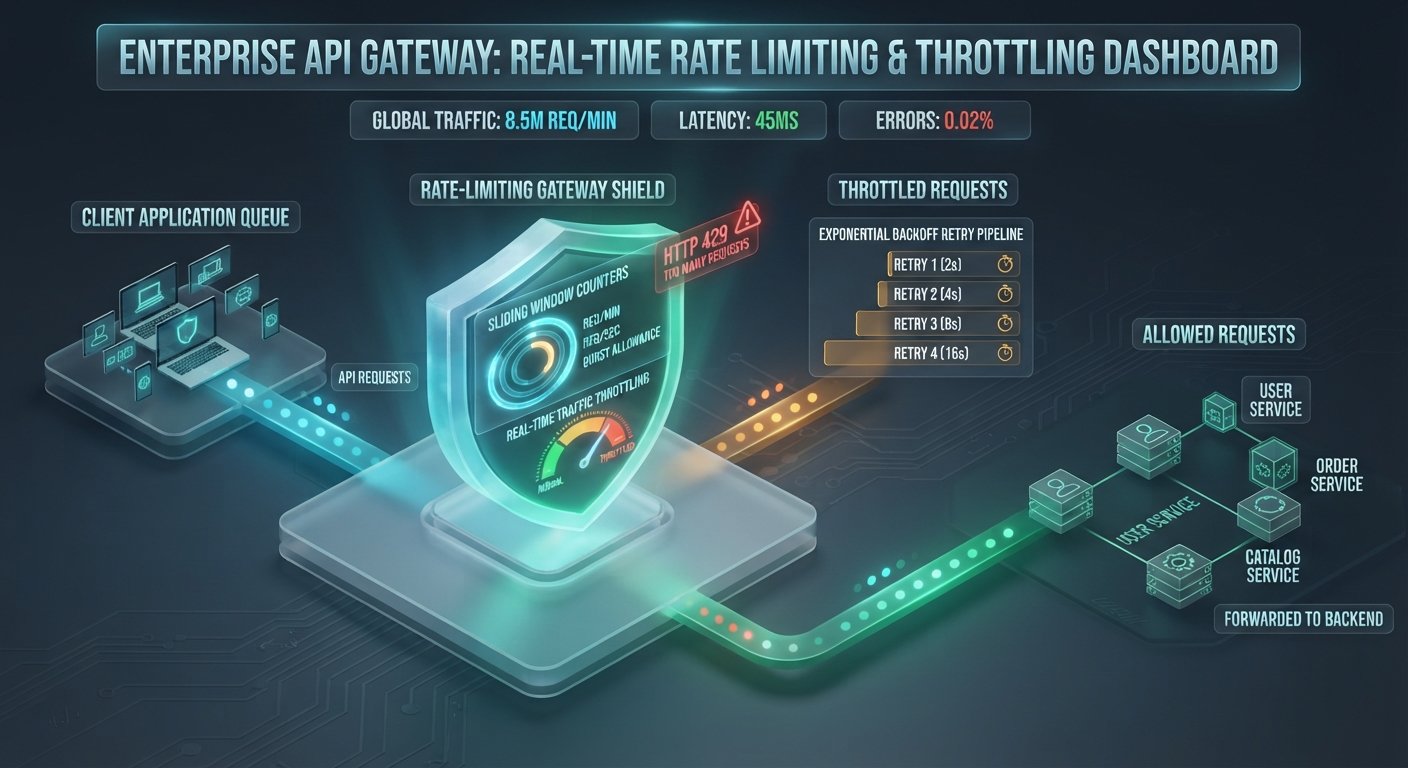
API rate limiting is an indispensable defense mechanism used by modern SaaS platforms and cloud APIs to prevent server overload, defend against denial-of-service (DoS) attacks, and maintain fair service availability across multi-tenant infrastructures. However, encountering HTTP 429 Too Many Requests errors can severely disrupt user workflows, drop critical data payloads, and trigger cascading application failures … Read more

How to Debug High CPU Usage and Memory Leaks in Web Applications

How to Debug High CPU Usage

Unexplained CPU spikes and steady memory growth are two of the most destructive issues facing modern web applications. Left unaddressed, high CPU consumption leads to thread starvation, elevated request latency, and dropped connections. Simultaneously, unhandled memory leaks trigger severe Garbage Collection (GC) pauses and eventually crash application instances with Out-Of-Memory (OOM) errors. Learning how to … Read more

How to Fix API Rate Limit Errors: Causes & Best Practices

how to fix API rate limit errors

Encountering an HTTP 429 Too Many Requests status code during a critical production data sync or automated workflow can halt applications instantly. As software architectures transition to cloud microservices and third-party SaaS integrations, handling API rate limits gracefully has become an essential requirement for resilient system design. Understanding how to fix API rate limit errors … Read more