Selecting the technology foundation for a digital product is one of the most critical decisions a software engineering team or CTO will make. The choices made during early architectural planning dictate platform performance, developer velocity, maintenance overhead, and hosting costs for years to come.
Understanding how to choose the right tech stack for a scalable web application enables engineering leaders to build resilient systems capable of handling traffic spikes, complex data models, and continuous feature updates. This comprehensive guide outlines the key criteria, architectural considerations, and popular technology combinations needed to build a future-proof web application.
Key Takeaways
- Core Architectural Alignment: Learning how to choose the right tech stack for a scalable web application requires matching technology capabilities directly to product requirements, traffic projections, and team expertise.
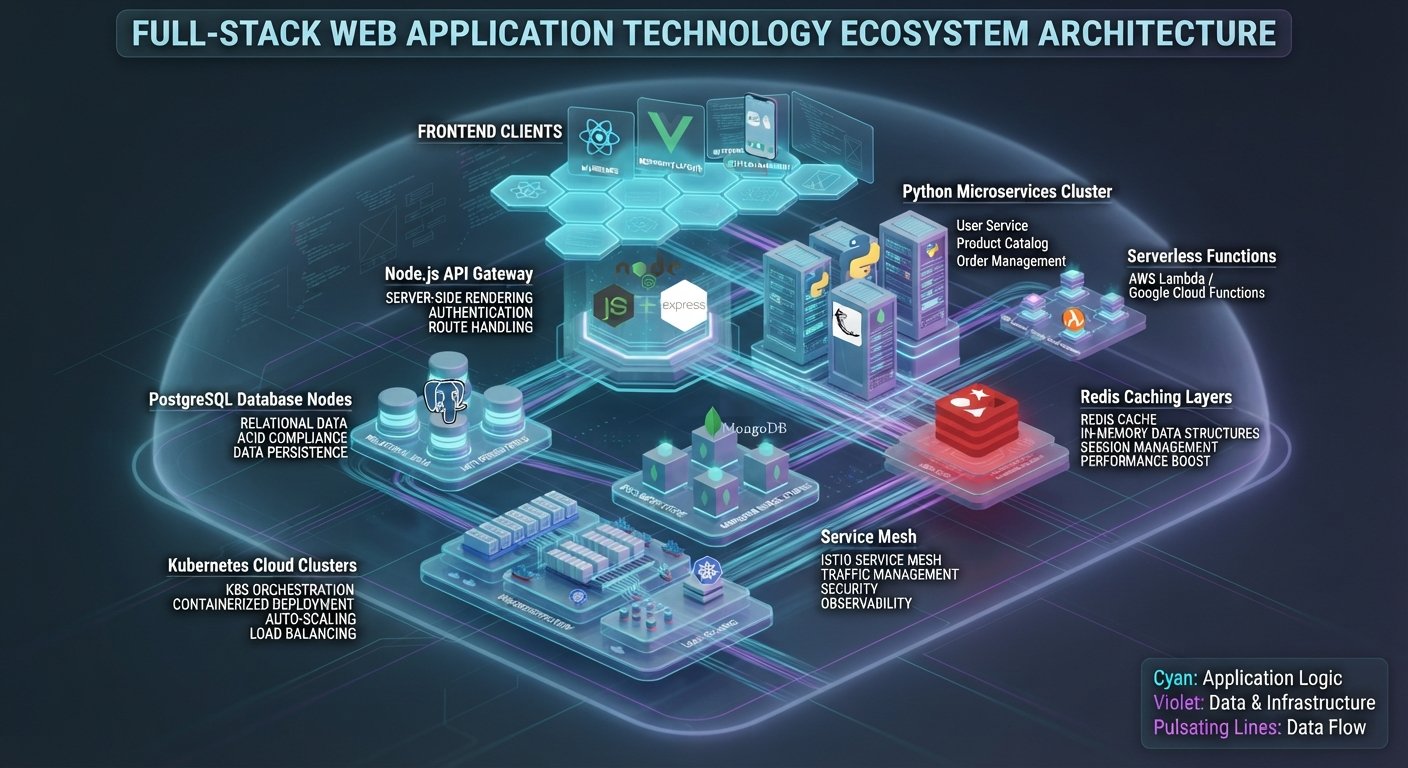
- Balanced Layer Strategy: A modern web stack consists of four distinct layers: the client-side frontend, server-side backend, database storage layer, and cloud deployment infrastructure.
- Horizontal vs. Vertical Scaling: Scalability depends on choosing technologies that support horizontal scaling (adding more instances) alongside efficient caching and database sharding.
- Ecosystem and Talent Availability: Prioritize technologies with active developer communities, extensive open-source packages, and strong hiring markets over obscure or overly hyped tools.
Anatomy of a Modern Web Application Tech Stack
A tech stack represents the combination of programming languages, frameworks, libraries, databases, and infrastructure tools used to run a web application. It is generally divided into four core layers:
Choosing the right technology at each layer ensures that data flows seamlessly from client user interfaces down to persistent cloud databases.
Key Criteria for Evaluating a Tech Stack
Evaluating potential technologies requires balancing long-term scalability against immediate development constraints. When determining how to choose the right tech stack for a scalable web application, evaluate these six criteria:
1. Application Complexity and Business Requirements
Different web applications demand different architectural strengths. A real-time collaborative tool (such as Figma or Slack) requires low-latency WebSocket connections and event-driven backends like Node.js or Go. Conversely, an enterprise data-crunching platform might benefit from Python or Java for heavy computation and data manipulation.
2. Scalability and Performance Drivers
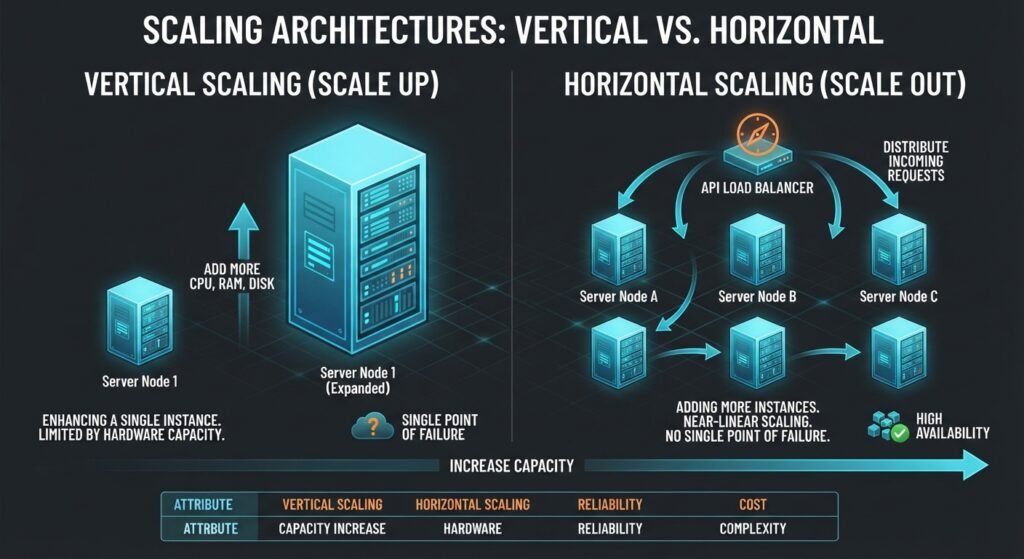
Scalability is the ability of an application to handle growing workloads without degrading performance. Evaluate scalability along two dimensions:
- Vertical Scalability (Scale-Up): Adding more CPU or RAM to an existing server instance.
- Horizontal Scalability (Scale-Out): Adding more server nodes across a load-balanced network. Frameworks like Node.js, Go, and stateless microservice architectures excel at horizontal scaling.
3. Developer Talent Pool and Community Ecosystem
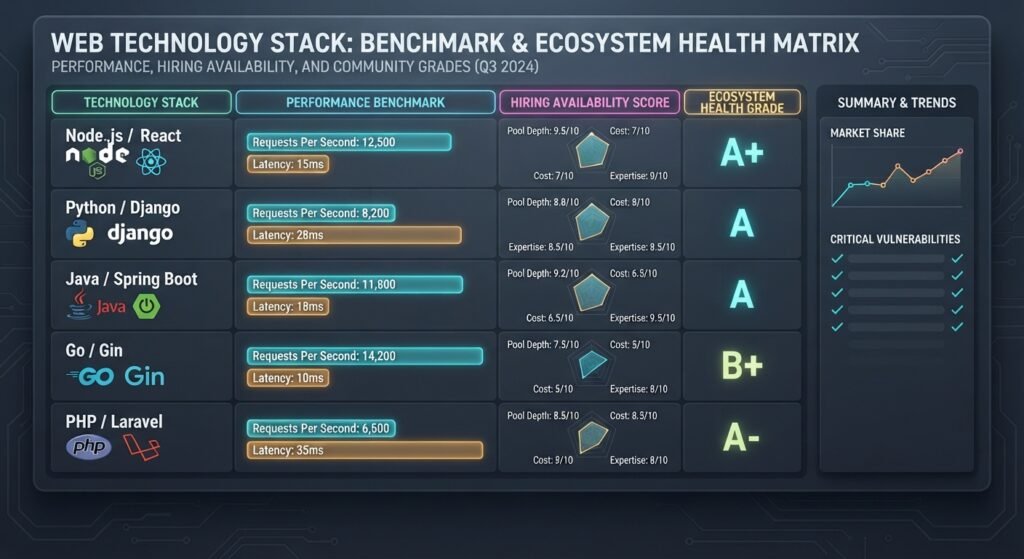
A framework’s quality matters little if you cannot hire engineers to maintain it. Mature ecosystems like JavaScript/TypeScript (React, Node.js) and Python (Django, FastAPI) offer vast talent pools, well-tested third-party packages, and extensive documentation.
4. Development Speed and Time-to-Market (TTM)
Early-stage startups prioritizing rapid prototyping often favor batteries-included frameworks like Django or Ruby on Rails. These frameworks provide built-in authentication, ORM database layers, and admin panels out of the box.
5. Maintenance and Security Overhead
Ensure the chosen tech stack receives regular security patches, long-term support (LTS) releases, and active maintainer engagement. Avoid abandoned open-source libraries that introduce security vulnerabilities into production code.
6. Infrastructure and Licensing Costs
Calculate cloud resource usage early. Open-source technologies (like PostgreSQL and Linux) eliminate licensing fees, while serverless platforms (like AWS Lambda) reduce base infrastructure costs for unpredictable traffic patterns.
Step-by-Step Selection Framework
Follow this structured process when selecting your application’s technology stack:
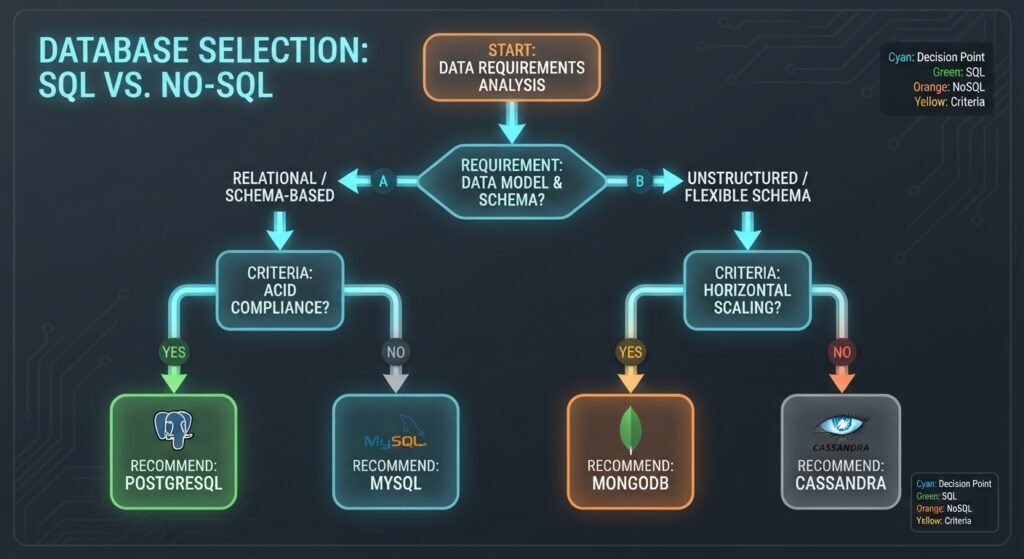
- Define the Data Model First: Choose PostgreSQL for structured, relational data requiring strict ACID compliance (e.g., fintech or e-commerce). Choose MongoDB or DynamoDB for unstructured, high-throughput document data.
- Select the Backend Language & Runtime: Match runtime performance to workload requirements (e.g., Go for high-concurrency microservices, Node.js for I/O-heavy APIs, Python for machine learning workflows).
- Pick the Frontend Framework: Choose React or Next.js for large ecosystem support and server-side rendering (SSR), Vue.js for gentle learning curves, or Svelte for lightweight performance.
- Design the Infrastructure and Caching Layer: Add an in-memory cache like Redis in front of your primary database to handle frequent read operations without slowing down database queries.
Popular Tech Stacks for Scalable Web Applications
While custom technology stacks are common, several proven software stack combinations offer established blueprints for scalable web apps:
The MERN Stack (MongoDB, Express, React, Node.js)
- Best For: Single-page applications (SPAs), real-time dashboards, and full-stack JavaScript development.
- Key Advantage: Unified language (JavaScript/TypeScript) across both client and server layers simplifies development and context switching.
Modern Full-Stack TypeScript (Next.js, PostgreSQL, Prisma, Tailwind)
- Best For: High-performance SaaS applications requiring Server-Side Rendering (SSR), strong SEO capabilities, and type safety across the entire codebase.
- Key Advantage: Excellent initial page load speeds, superior search engine indexability, and end-to-end type safety.
Python & Microservices Stack (FastAPI / Django, PostgreSQL, Redis, React)
- Best For: Data-intensive SaaS platforms, AI/ML integrations, and complex analytical web platforms.
- Key Advantage: Combines rapid backend development with native access to Python’s extensive data science and machine learning libraries.
For web technology standards and browser API references, consult the official MDN Web Docs Technology Index.
Tech Stack Comparison Matrix
| Technology Stack | Frontend | Backend | Database | Best Scalability Use Case |
| Modern TypeScript | Next.js / React | Node.js / NestJS | PostgreSQL + Redis | High-traffic SaaS, E-commerce, Content Platforms |
| Go & Microservices | React / Vue.js | Go (Gin / Fiber) | PostgreSQL + Cassandra | High-concurrency APIs, Streaming, Distributed Systems |
| MERN Stack | React | Node.js (Express) | MongoDB + Redis | Real-time dashboards, Collaboration tools, SPAs |
| Python Enterprise | React / Angular | Python (FastAPI/Django) | PostgreSQL + Celery | Data analytics, AI-powered tools, Enterprise SaaS |
| LAMP / Modern PHP | Vue.js / Alpine | PHP (Laravel) | MySQL / MariaDB | Content management, SMB portals, Rapid MVPs |
Conclusion
Understanding how to choose the right tech stack for a scalable web application comes down to evaluating your business goals, workload requirements, and team strengths. Rather than chasing short-lived tech trends, prioritize mature frameworks with strong developer communities, well-documented APIs, and proven horizontal scaling capabilities. By selecting a balanced architecture across frontend, backend, database, and cloud layers, you position your web application for long-term growth and technical stability.
Frequently Asked Questions (FAQs)
What is the single most crucial factor when learning how to choose the right tech stack for a scalable web application?
The most crucial factor is aligning the stack’s strengths with your application’s primary bottleneck. If your application handles thousands of concurrent real-time connections, choose an event-driven runtime like Go or Node.js. If data integrity and complex relations dominate, prioritize a robust SQL database like PostgreSQL.
Can I change my tech stack later as my application scales?
Yes, but migrating a monolithic tech stack is time-consuming and expensive. Many growing applications adopt a microservices architecture, allowing engineers to rewrite specific high-load services in faster languages (like migrating a Python API service to Go) without refactoring the entire platform.
Is monolithic architecture or microservices better for web application scalability?
A modular monolith is often the best starting point for new web applications because it minimizes operational complexity. As traffic grows and domain boundaries clear, scaling individual high-traffic modules into independent microservices becomes significantly easier.