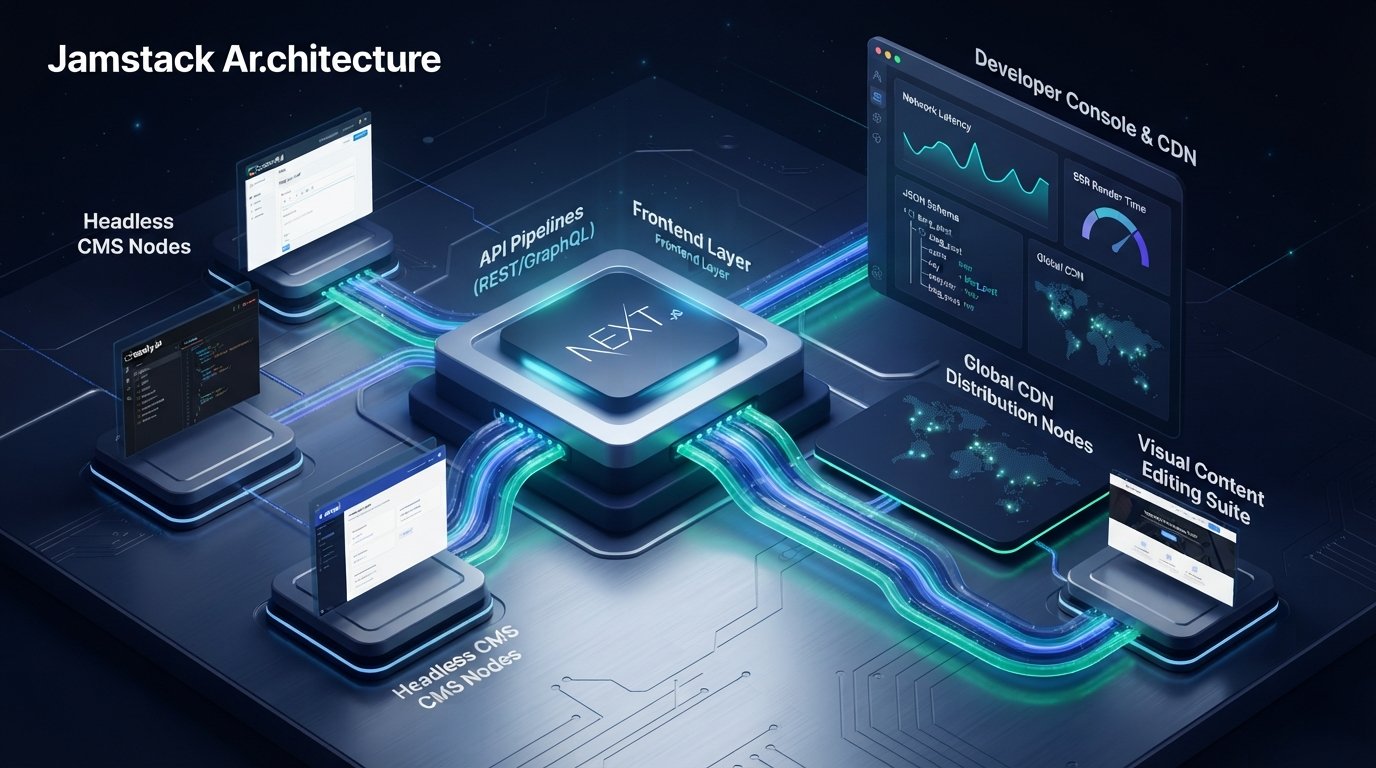
Building modern web applications requires a clear separation between content management and frontend presentation. Traditional monolithic Content Management Systems (CMS) often bundle the database, administration interface, and rendering engine together, which can limit frontend flexibility, degrade page load performance, and complicate multi-channel content distribution.
By pairing a decoupled content backend with Next.js—leveraging features like the React App Router, Server Actions, and Incremental Static Regeneration (ISR)—engineering teams can deliver fast, highly scalable Jamstack architectures. Finding the best Headless CMS for Next.js involves striking the right balance between developer autonomy, schema flexibility, and intuitive editing tools for non-technical content teams.
Key Takeaways
- Composable Architecture is dominant: Separating your content layer from Next.js allows teams to update frontends without touching the content database.
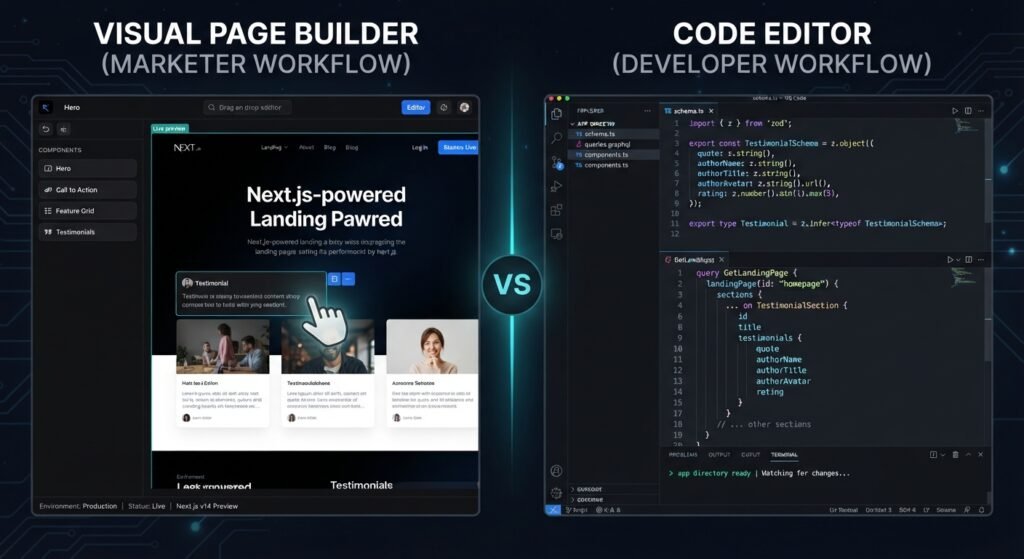
- Visual Editing bridges the gap: Modern platforms like Storyblok and Sanity Studio eliminate the traditional headless drawback of “blind editing” by offering live previews.
- TypeScript-Native CMS integration: Tools like Payload CMS run directly alongside Next.js applications, sharing schemas and TypeScript types natively.
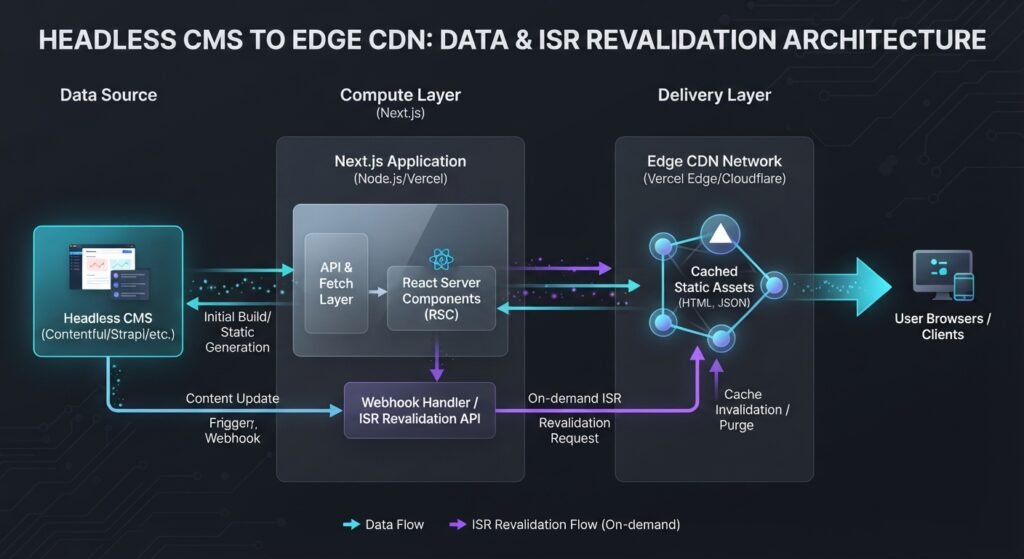
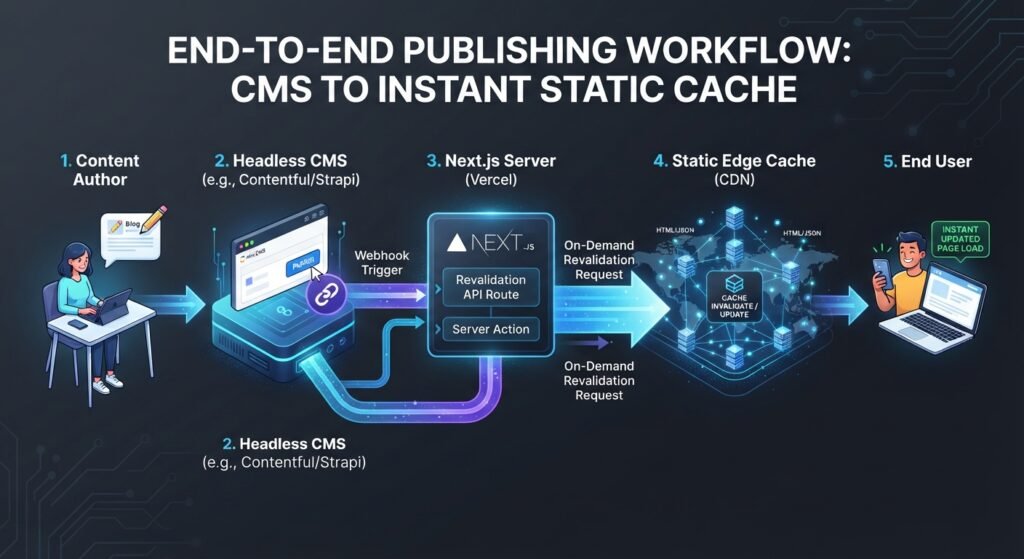
- On-Demand Revalidation replaces full rebuilds: Modern Jamstack setups utilize webhooks and Next.js Draft Mode to instantly update published content on edge networks without waiting for full static site rebuilds.
Essential Technical Evaluation Criteria for Next.js Content Platforms
When evaluating API-first content platforms for Jamstack applications, frontend engineers and technical architects should prioritize these capabilities:
- Native App Router & ISR Support: Deep compatibility with Next.js rendering strategies—including Server-Side Rendering (SSR), Static Site Generation (SSG), and targeted Incremental Static Regeneration (ISR).
- Draft Mode & Real-time Previews: Direct integration with Next.js
draftMode()to allow editorial teams to preview unpublished changes securely. - Structured Content Modeling: Powerful content type definitions, nested block components, and flexible query languages (GraphQL, GROQ, or REST APIs).
- Localization and Multi-Region Delivery: Granular locale routing and internationalization (i18n) handling out of the box.
- Asset Optimization Pipelines: Automatic image resizing, WebP/AVIF formatting, and global CDN delivery to safeguard Core Web Vitals scores.
[Internal Link: Insert relevant internal URL here with anchor text – “Check out our detailed architectural guide on optimizing Next.js Core Web Vitals for Jamstack sites”]
Evaluated: Leading Headless CMS Platforms for Next.js
1. Sanity: Maximum Schema Flexibility & Structured Content
Sanity treats content as a unified data graph. Its open-source editing environment, Sanity Studio, can be embedded directly into Next.js applications or hosted as a standalone app.
- Best For: Complex data relationships, real-time multi-user collaboration, and developer-heavy teams needing full control over the editorial UI.
- Key Strengths: Uses GROQ (Graph-Relational Object Queries) and GraphQL, offers real-time collaborative editing out of the box, and supports Portable Text for flexible content rendering.
- Considerations: GROQ has a minor learning curve for teams accustomed purely to REST or standard GraphQL.
2. Storyblok: Industry-Leading Visual Editor
Storyblok combines headless component architecture with a visual page builder. Content managers can compose pages using pre-defined React/Next.js components while seeing real-time visual updates.
- Best For: Marketing-driven web properties, composable e-commerce, and non-technical editorial teams.
- Key Strengths: Intuitive visual editor with live preview iframe integration, block-based component mapping, and strong App Router starter kits.
- Considerations: Complex custom visual extension workflows require additional frontend setup time.
3. Payload CMS: Code-First & Self-Hosted TypeScript Integration
Payload is a developer-centric, open-source CMS built natively with Node.js and TypeScript. It can run directly inside a Next.js monorepo or operate as a standalone backend.
- Best For: Engineering teams who want full code ownership, zero vendor lock-in, and native TypeScript type-safety across backend and frontend.
- Key Strengths: Open-source, auto-generated TypeScript types, fully customizable admin panel, and direct database access (PostgreSQL, MongoDB).
- Considerations: Requires self-hosting management (or Payload Cloud deployment) and DevOps responsibility.
4. Contentful: Scale & Governance for Enterprises
Contentful remains an established cloud-native platform for enterprise organizations managing global, multi-brand digital experiences.
- Best For: Large enterprise teams requiring granular permissions, strict publishing workflows, and extensive app integration marketplaces.
- Key Strengths: Robust RBAC governance, mature internationalization support, global CDN delivery, and enterprise SLAs.
- Considerations: Tiered pricing can scale rapidly for growing teams compared to developer-focused alternatives.
[External Link: Insert high-authority external URL here with anchor text – “Official Next.js Documentation on Data Fetching and Revalidation Strategies”]
Platform Capability Matrix
| Feature / Platform | Sanity | Storyblok | Payload CMS | Contentful |
| Hosting Model | Managed SaaS (Studio hosted anywhere) | Managed SaaS | Self-Hosted or Cloud | Managed Enterprise SaaS |
| Primary API Style | GROQ, GraphQL | REST, GraphQL | REST, GraphQL, Local API | REST, GraphQL |
| Editorial Experience | Customizable Studio UI | Live Visual Page Builder | Modern Admin UI | Structured Forms & Spaces |
| TypeScript Support | Native Type Generation | Official SDKs | Built-in Native Types | Generated SDK Types |
| Best Architectural Fit | Data-intensive & Custom Apps | Marketing & Composable Sites | Custom Full-Stack Next.js Apps | Large Multi-Team Enterprises |
Choosing the Ideal Architecture for Your Next.js Stack
Selecting the best Headless CMS for Next.js depends on your team’s specific operational constraints:
- When Editorial Autonomy is the Priority: Choose Storyblok. The visual editor allows marketing teams to construct complex layout slices independently without breaking developer component layouts.
- When Complex Data Modeling & Speed Matter: Choose Sanity. Its GROQ query language allows you to fetch deeply nested relational data trees in a single network request, perfectly matching React Server Component needs.
- When Full Code Ownership & In-House Hosting Are Mandatory: Choose Payload CMS. Having your backend schemas defined directly in TypeScript inside your repository eliminates API abstraction barriers.
Conclusion
Determining the best Headless CMS for Next.js involves balancing developer flexibility with an intuitive authoring experience for your marketing and content teams. Platforms like Sanity and Payload give developers fine-grained control over structured data and TypeScript integrations, while options like Storyblok and Contentful excel at streamlining workflows for non-technical creators. By selecting an API-first content platform that aligns with your team’s workflow, you can fully unlock the speed, security, and scalability of modern Jamstack development.
Frequently Asked Questions (FAQs)
Why is a headless CMS better than traditional WordPress for Next.js?
A headless CMS delivers content purely as data through an API, completely decoupling the content repository from the frontend rendering engine. This allows Next.js to handle page generation, resulting in faster load times, superior Core Web Vitals, enhanced security against common backend vulnerabilities, and total freedom over frontend styling.
How does Incremental Static Regeneration (ISR) work with a headless CMS?
When content is published or updated in the headless CMS, it sends an automated HTTP webhook request to a Next.js revalidation route. Next.js then regenerates only the specific page that changed in the background on the edge network, delivering updated content instantly to visitors without rebuilding the entire website.
Can non-technical content creators still preview pages before publishing?
Yes. Modern headless platforms integrate with Next.js Draft Mode. When an editor clicks “Preview” in the CMS, Next.js generates a secure, temporary preview session fetching draft data directly from the CMS API, allowing non-technical users to review exact visual changes before going live.
1 thought on “Best Headless CMS for Next.js and Modern Jamstack Websites”