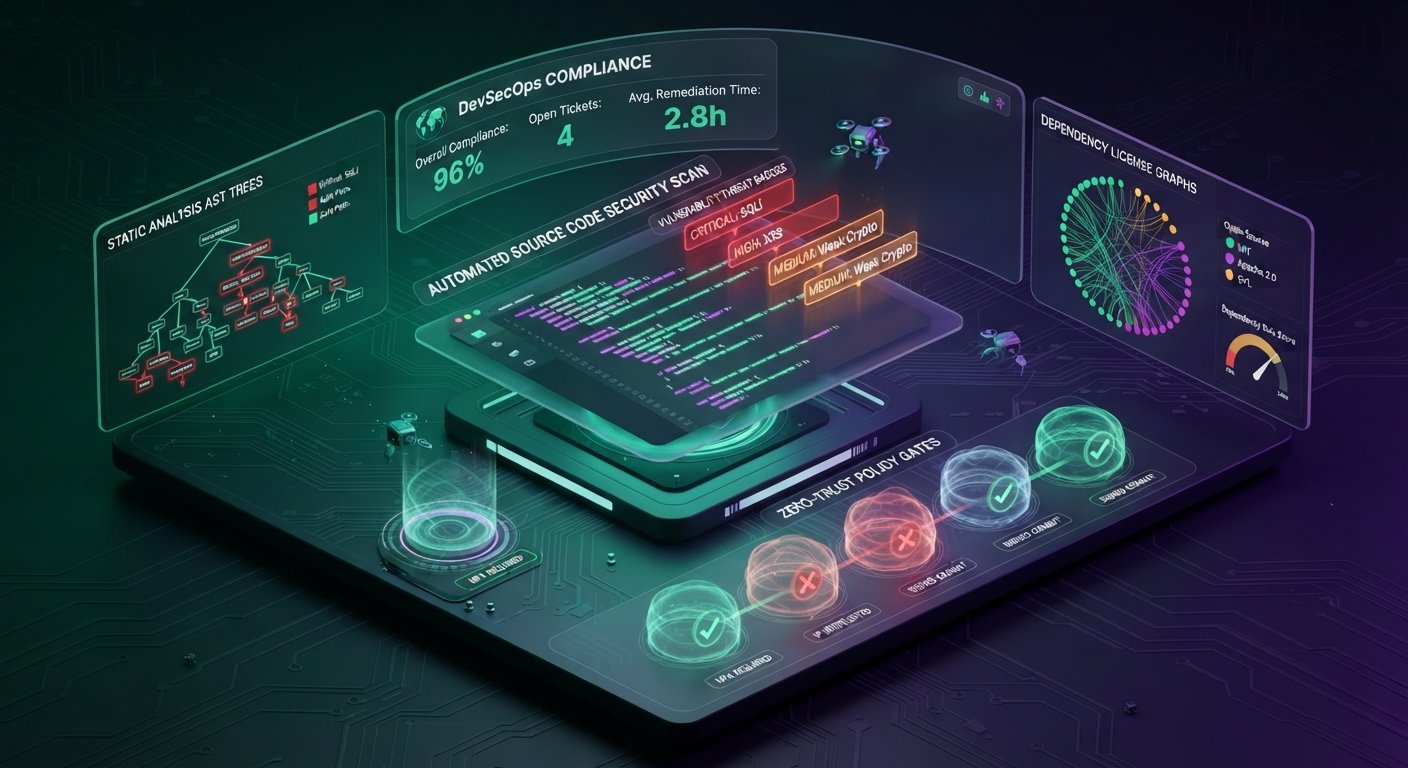
Discovering a critical security vulnerability after pushing code to production is every software team’s worst nightmare. Unpatched code flaws, exposed API keys, and compromised open-source dependencies can lead to severe data breaches, regulatory penalties, and reputational damage.
Learning how to audit software code security before deployment allows engineering teams to shift security left—identifying and patching vulnerabilities directly inside the development lifecycle long before release candidates reach live servers. This comprehensive guide details the tools, methodologies, and step-by-step strategies needed to establish a robust pre-deployment security audit pipeline.
Key Takeaways
- Adopt Shift-Left DevSecOps: Integrate security analysis directly into local IDEs and active Git branches rather than waiting for post-build staging audits.
- Combine Automated Tools with Manual Review: Automated tools like SAST and SCA catch common vulnerabilities at scale, while targeted human code reviews expose complex logic flaws and privilege escalation paths.
- Audit Third-Party Dependencies (SCA): Over 80% of modern software codebases consist of open-source packages; auditing software supply chains prevents supply chain attacks.
- Gating CI/CD Pipelines: Enforce automated policy gates that fail builds automatically when high or critical CVE vulnerabilities are introduced.
The True Cost of Skipping Pre-Deployment Code Audits
Remediating a software flaw in production costs up to 30 times more than catching it during the initial design and coding phase. When unvetted code reaches live users, minor oversights transform into active attack vectors.
┌─────────────────────────────────────────────────────────────────┐
│                 RELATIVE COST OF DEFECT REMEDIATION             │
├──────────────────────┬──────────────────────────────────────────┤
│ DEVELOPMENT PHASE    │ RELATIVE REMEDIATION COST                │
├──────────────────────┼──────────────────────────────────────────┤
│ Requirements / IDE   │ 1x (Base Cost)                           │
│ Build / CI Pipeline  │ 5x                                       │
│ Staging / QA         │ 10x                                      │
│ Production           │ 30x+ (Including downtime & disclosures) │
└──────────────────────┴──────────────────────────────────────────┘
Unsecured software exposes platforms to OWASP Top 10 risks—such as SQL injections, broken access controls, and cross-site scripting (XSS). To understand how cloud-native infrastructure setup supports secure application isolation, review our step-by-step guide on [How to Deploy a Cloud Application on AWS]([Internal Link: Insert relevant internal URL here with anchor text]).
4 Essential Components of a Pre-Deployment Security Audit
A thorough security audit relies on a multi-layered defense strategy combining four distinct testing methodologies:
┌─────────────────────────────────────────────────────────────────────────────────┐
│                    PRE-DEPLOYMENT SECURITY AUDIT LAYERS                         │
├──────────────┬──────────────────┬──────────────────┬────────────────────────────┤
│ SAST         │ SCA              │ DAST / IAST      │ MANUAL PEER REVIEW         │
│ Static Code  │ Open-Source      │ Dynamic Runtime  │ Architecture & Business    │
│ Analysis     │ Dependencies     │ Analysis         │ Logic Verification         │
└──────────────┴──────────────────┴──────────────────┴────────────────────────────┘
1. Static Application Security Testing (SAST)
SAST tools scan uncompiled source code for known vulnerability patterns, insecure coding practices, and hardcoded secrets (API tokens, database credentials).
2. Software Composition Analysis (SCA)
SCA engines analyze project manifest files (package.json, pom.xml, requirements.txt) to identify vulnerable open-source dependencies and license compliance violations.
3. Dynamic Application Security Testing (DAST)
DAST tools simulate real-world attacks against running staging applications, testing exposed HTTP endpoints, authentication headers, and API boundaries.
4. Manual Security Peer Reviews
Automated scanners cannot evaluate business logic defects or complex authorization flaws. Human peer reviews by experienced engineers ensure logical integrity and proper privilege enforcement.
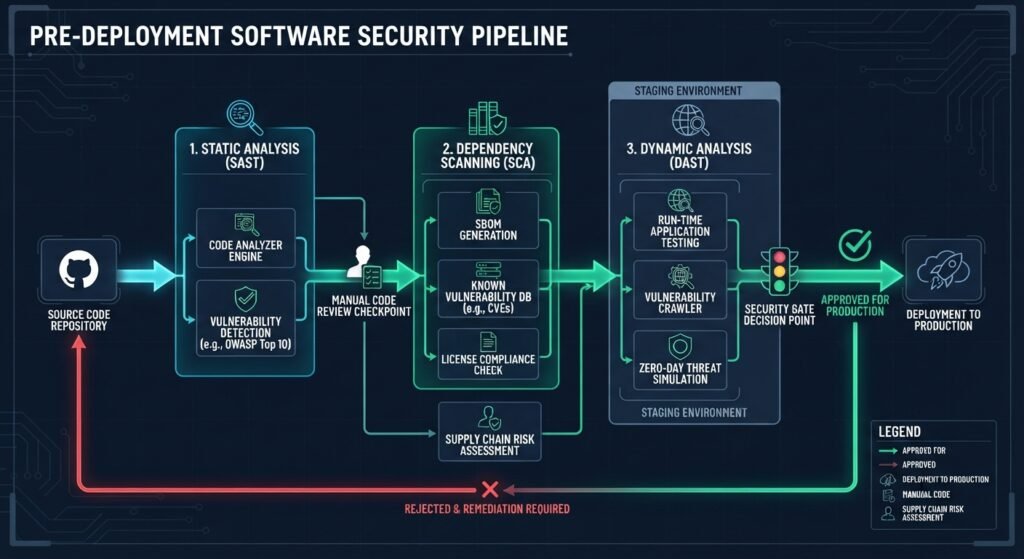
Step 1: Enforce Local Pre-Commit Hooks and Secrets Detection
Prevent hardcoded credentials from ever reaching remote version control repositories.
- Configure Git Pre-Commit Hooks: Use lightweight scanners (such as GitLeaks or Trufflehog) to inspect commits locally for secrets, private RSA keys, and API tokens before code is pushed.
- IDE Real-Time Security Feedback: Install security linter extensions directly into developer environments (like Cursor or VS Code) to highlight vulnerable functions as engineers write code.
Step 2: Integrate Automated SAST Scans into Active Pull Requests
Automate static analysis inside active code review channels.
- Configure SAST engines (e.g., SonarQMeta Description:Learn how to audit software code security before deployment. Follow our step-by-step code security audit guide to catch vulnerabilities and ship safe apps.
How to Audit Software Code Security Before Deployment
Deploying code without a thorough security review is one of the fastest ways to introduce critical vulnerabilities, leak sensitive data, and risk catastrophic breaches. As cyber threats evolve and supply chain attacks increase, performing a pre-deployment security audit has shifted from a best practice to a mandatory step in the software development lifecycle (SDLC).
A code security audit involves inspecting source code—both manually and through automated tooling—to identify hidden vulnerabilities, compliance violations, and architectural flaws before software reaches a live production environment.
Key Takeaways
- Shift Left: Integrate security audits early in the development pipeline rather than treating security as an after-the-fact release gate.
- Combine Tools with Human Insight: Automated static analysis (SAST) catches low-hanging fruit, but manual code reviews reveal complex business logic flaws.
- Audit Dependencies: Third-party libraries account for a massive percentage of modern codebases; scanning open-source components (SCA) is vital.
- Enforce Strict Secrets Management: Ensure hardcoded API keys, passwords, and tokens never make it into source control.
- Verify Compliance Early: Align audit checks with standards like OWASP Top 10, NIST, and ISO 27001 to simplify regulatory sign-offs.
1. Establish Your Code Security Audit Baseline
Before running scanners or reviewing lines of code, define clear standards and rules for what your audit needs to accomplish.
Define Your Security Rules and Compliance Targets
Different applications carry different risk profiles. Identify the compliance frameworks relevant to your industry (e.g., PCI-DSS for payment handling, HIPAA for healthcare) and map them to actionable coding standards. Reference established frameworks such as the OWASP Top 10 to establish baseline security expectations across your engineering team.
Map the Architecture and High-Risk Data Paths
Identify where sensitive data enters, flows through, and leaves your application. Pay extra attention to:
- Authentication and authorization boundaries
- API endpoints handling Personally Identifiable Information (PII)
- Data ingestion points prone to injection attacks (SQLi, XSS)
2. Automate Static Application Security Testing (SAST)
Automated tools serve as the first line of defense during a pre-deployment code security audit. They scan uncompiled source code to identify potential vulnerabilities instantly.
Integrate SAST into Your CI/CD Pipeline
Run SAST tools directly inside pull requests and build automation chains. By blocking builds that contain high-severity security findings, you ensure developers fix vulnerabilities before code reaches staging or production.
[Developer Push] ──> [SAST Automated Scan] ──> [Pass: Continue Build]
                                            └──> [Fail: Block & Notify]
Manage False Positives
Automated scanners often flag safe code paths as potential vulnerabilities. Establish a clear process for engineers to review, document, and triage false positives so security alerts do not cause developer fatigue.
Modern applications are built largely on top of open-source frameworks and third-party libraries. If your underlying dependencies are vulnerable, your application is vulnerable.
Identify and Patch Vulnerable Dependencies
Software Composition Analysis (SCA) tools analyze your package dependency files (e.g., package.json, pom.xml, requirements.txt) against known vulnerability databases like the National Vulnerability Database (NVD).
- Catalog all direct and transitive dependencies.
- Automate version updates using tools that flag outdated or vulnerable packages.
- Audit license compliance to prevent legal risks associated with restrictive open-source licenses.
4. Perform Targeted Manual Code Reviews
While automated tools excel at finding known syntax-level flaws, they frequently miss logic flaws and privilege escalation bugs. Manual peer reviews by senior engineers or security experts are indispensable.
Focus Areas for Manual Inspection
When manually auditing source code prior to deployment, focus on areas where human context is required:
- Broken Access Control: Ensure endpoints verify whether the logged-in user has permission to view or modify specific resources.
- Business Logic Errors: Check for edge cases where users might bypass payment workflows, step order, or rate limits.
- Hardcoded Secrets: Search for embedded API keys, JWT secrets, database connection strings, or private keys left in source files.

5. Validate Secrets and Configuration Security
Exposed credentials remain one of the primary causes of cloud environment breaches. Ensure your application configuration separates code from operational secrets.
Use Dedicated Secrets Managers
Never commit secrets directly to repository branches. Enforce the use of environment variables coupled with secure management systems like HashiCorp Vault, AWS Secrets Manager, or Azure Key Vault.
Implement Pre-Commit Hooks
Deploy pre-commit hooks on developer workstations to scan local commits for API keys, SSH keys, or tokens before changes are pushed to remote repositories.
6. Run Dynamic Testing and Remediation Verification
After static checks pass, execute dynamic tests against a staging environment that mirrors production as closely as possible.
Combine SAST with DAST
Dynamic Application Security Testing (DAST) scans the application while it is actively running, probing runtime behavior, response headers, and session management handling. Combining SAST and DAST yields a complete view of application security.
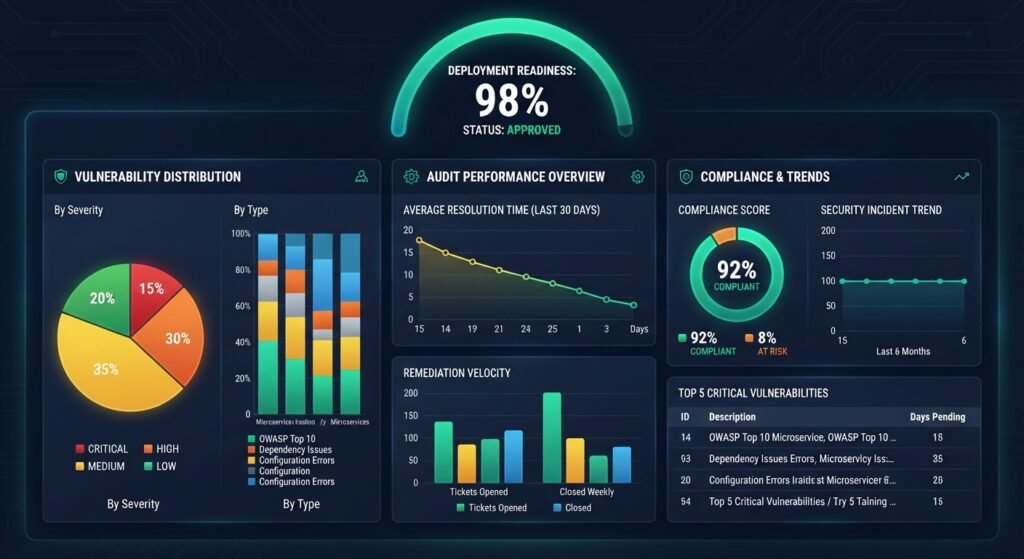
Document and Track Vulnerability Remediation
Create actionable bug tickets for every confirmed issue, assigning clear ownership and severity levels based on CVSS scores:
| Severity Level | CVSS Score Range | Deployment Action |
| Critical | 9.0 – 10.0 | Block Deployment immediately; fix required. |
| High | 7.0 – 8.9 | Block Deployment unless temporary mitigation is approved. |
| Medium | 4.0 – 6.9 | Track in sprint backlog; fix within 30 days. |
| Low | 0.1 – 3.9 | Log for future refactoring and maintenance. |
Final Security Sign-Off and Release
A pre-deployment code security audit is complete only when all critical and high-severity findings are resolved or mitigated with compensating controls. Maintain a signed audit trail documenting the review process, tool outputs, and manual sign-offs for compliance record-keeping.
By embedding automated SAST/SCA checks into your CI/CD workflow and pairing them with targeted manual code reviews, software teams can confidently release features without compromising security.
Frequently Asked Questions (FAQs)
What is the difference between a code security audit and penetration testing?
A code security audit evaluates source code directly (white-box review) to identify security bugs, structural flaws, and dependency risks before deployment. Penetration testing simulates real-world attacks against a running application (gray-box or black-box review) to exploit existing vulnerabilities.
How often should software teams perform a code security audit?
Automated security scans should run continuously with every code commit and build. Comprehensive manual code security audits should occur before major software releases, structural architectural changes, or at regular compliance intervals (e.g., quarterly or annually).
Can automated tools completely replace manual security code reviews?
No. Automated tools are fast and effective at finding known vulnerability patterns, but they lack human context. They struggle to detect complex business logic bugs, broken access controls, and design flaws that require human intuition to identify.
1 thought on “How to Audit Software Code Security Before Deployment”