
Best Cloud Cost Optimization Platforms.As enterprise organizations scale their digital footprint across Amazon Web Services (AWS) and Microsoft Azure,unmanaged infrastructure spend quickly becomes a major threat to gross margins. The shift from fixed capital expenditure (CapEx) to consumption-based variable operating expenditure (OpEx) gives engineering teams unprecedented agility—yet without centralized financial guardrails, idle instances, unattached block storage, over-provisioned Kubernetes clusters, and misaligned commitment discounts result in significant financial waste.
To combat cloud financial opacity, enterprises are adopting FinOps—an operational framework that unifies finance,engineering, and product teams around data-driven cloud financial management. Selecting the best cloud cost optimization (FinOps) platforms for enterprise AWS & Azure is critical for moving beyond reactive monthly bill inspections to real-time unit economics, automated rightsizing, and continuous commitment discount trading.
This comprehensive guide breaks down the leading enterprise FinOps platforms, evaluating them on multi-cloud ingestion, Kubernetes cost visibility, commitment discount automation, and business-value mapping.
Key Takeaways
- Shift from Static Reporting to Continuous Automation: Enterprise FinOps platforms must do more than display static charts; they must automate commitment purchasing (AWS Savings Plans, Azure Reserved Instances) and rightsizing workflows.
- Unit Economics Over Raw Spend: Leading platforms like CloudZero and Vantage translate raw cloud invoices into actionable business metrics—such as cost per tenant, cost per API request, or gross margin per customer.
- Kubernetes Container Isolation: Containerized microservices require specialized cost allocation (via tools like Kubecost) to accurately attribute CPU and memory requests down to specific namespaces and pods.
- Tagless Virtual Cost Allocation: Advanced FinOps tools utilize telemetry-based virtual tagging to categorize unallocated or untagged multi-cloud infrastructure without requiring engineers to rewrite cloud tags manually.
What Makes a FinOps Platform Enterprise-Grade?
Enterprise cloud environments spanning AWS and Azure present complex architectural challenges: multi-account hierarchies, enterprise agreement (EA) discounts, custom pricing tiers, and shared microservice clusters.
┌────────────────────────────────────────────────────────────────────────┐
│                 ENTERPRISE FINOPS CAPABILITY MATRIX                    │
├───────────────┬────────────────────────────────────────────────────────┤
│ CAPABILITY    │ OPERATIONAL BENEFIT                                    │
├───────────────┼────────────────────────────────────────────────────────┤
│ Multi-Cloud   │ Ingests AWS CUR 2.0, Azure Cost Management APIs, and   │
│ Ingestion     │ third-party SaaS (Datadog, Snowflake, OpenAI) data.    │
├───────────────┼────────────────────────────────────────────────────────┤
│ Virtual       │ Group untagged or shared resources using code-driven  │
│ Allocation    │ business rules without manual cloud tag refactoring.   │
├───────────────┼────────────────────────────────────────────────────────┤
│ Commitment    │ Continuously buys, exchanges, and optimizes AWS        │
│ Automation    │ Savings Plans & Azure Reserved Instances automatically.│
├───────────────┼────────────────────────────────────────────────────────┤
│ Anomaly       │ Detects unexpected cost spikes in near real-time and   │
│ Detection     │ routes context-rich alerts directly to Slack or Teams. │
└───────────────┴────────────────────────────────────────────────────────┘
The FinOps Foundation Framework defines three core phases: Inform (establishing total spend visibility), Optimize(eliminating waste and negotiating rates), and Operate (embedding continuous financial accountability into engineering culture). Enterprise platforms must support all three phases across AWS and Azure concurrently.
Top FinOps Platforms for Enterprise AWS & Azure
Here is an in-depth review of the premier FinOps and cost optimization platforms driving modern enterprise cloud operations.
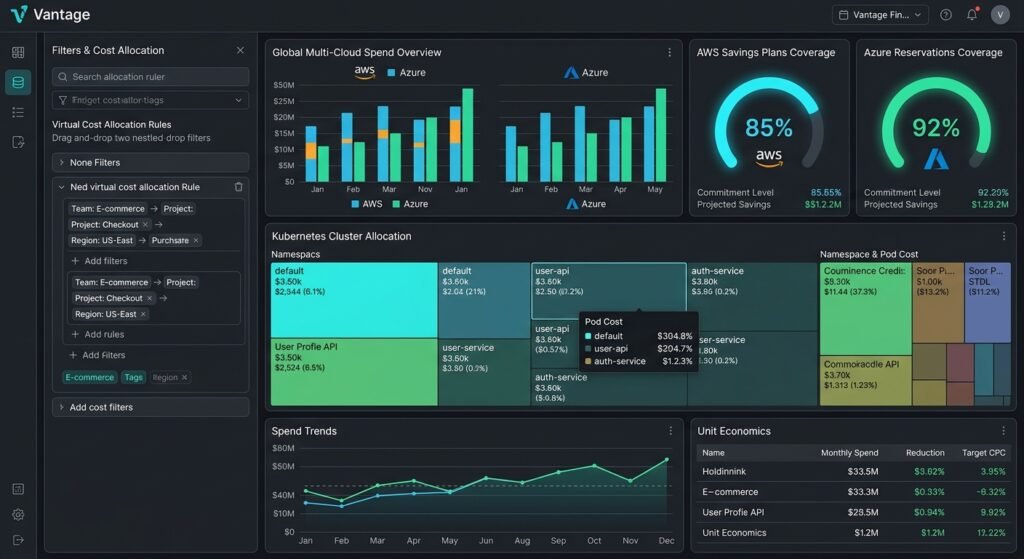
1. Vantage: The Modern Multi-Cloud Visibility Standard
Vantage has rapidly emerged as a leading multi-cloud FinOps platform, offering deep native support for AWS,Microsoft Azure, Google Cloud, Snowflake, Datadog, and Kubernetes.
┌─────────────────────────────────────────────────────────────────────────┐
│                     VANTAGE FINOPS ARCHITECTURE                         │
├───────────────────┬─────────────────────────────────────────────────────┤
│ Universal Data    │ Ingests AWS Cost & Usage Reports, Azure EA Billing, │
│ Pipeline          │ Kubernetes telemetry, and AI/LLM API spend.        │
├───────────────────┼─────────────────────────────────────────────────────┤
│ Virtual Tagging   │ Constructs virtual cost centers across fragmented   │
│ Engine            │ multi-cloud tags using SQL-like expressions.        │
├───────────────────┼─────────────────────────────────────────────────────┤
│ AWS & Azure       │ Automates commitment coverage with low-risk Savings │
│ Autopilot         │ Plan and Reserved Instance purchasing engines.      │
└───────────────────┴─────────────────────────────────────────────────────┘
- Unified Multi-Cloud Intelligence: Combines enterprise AWS accounts and Azure subscriptions into a single unified console alongside SaaS dependencies like Datadog, OpenAI, and Snowflake.
- Autopilot Commitment Optimization: Automatically manages AWS Savings Plans and Azure Reserved Instances to maintain maximum discount coverage while eliminating financial risk over-commitments.
- Developer-Friendly Query Engine: Features a modern, developer-centric interface that allows engineers to query cost allocations using structured, natural filters.
Best For: Mid-market to large enterprise organizations seeking a clean, developer-friendly interface to manage complex AWS, Azure, and SaaS spending.
2. CloudZero: Code-Driven Unit Economics & Telemetry
CloudZero takes a telemetry-first approach to FinOps, shifting focus from raw bill analysis to business unit economics.
- Tagless Cost Allocation Engine: Connects cloud infrastructure costs directly to business units using raw platform telemetry, eliminating the need for perfect resource tagging.
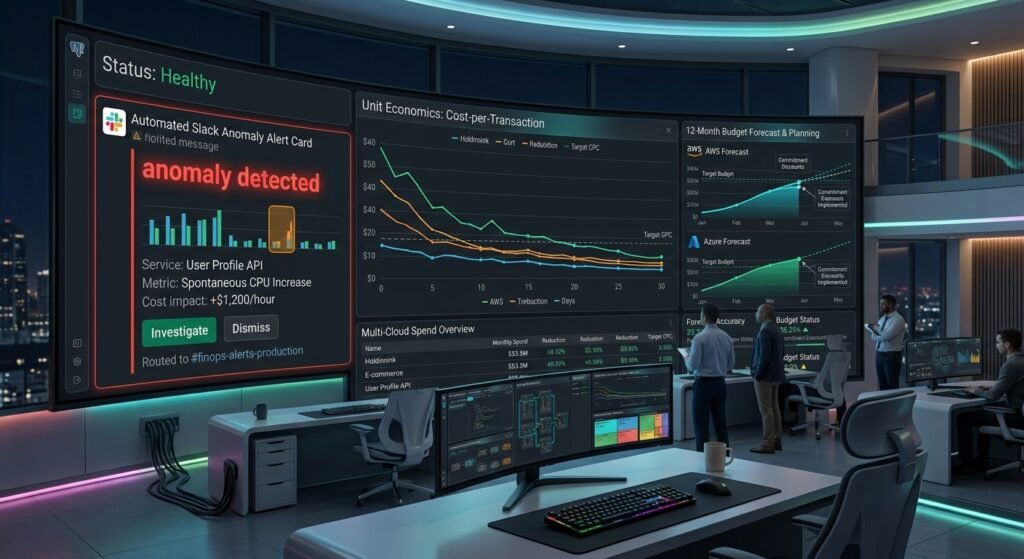
- Granular Unit Economics: Answers critical business questions by calculating Cost per Tenant, Cost per Customer, Cost per API Call, or gross margin per product feature.
- Real-Time Anomaly Routing: Detects infrastructure anomalies and routes alerting context directly to the engineering team responsible for the specific microservice.
Best For: SaaS businesses and cloud-native enterprises that need to understand unit profitability and track margins across AWS and Azure environments.
3. ProsperOps: Autonomous Commitment Discount Management
ProsperOps specializes strictly in autonomous rate optimization, executing hands-off commitment discount trading across AWS and Azure infrastructure.
- Autonomous Financial Execution: Uses algorithmic trading algorithms to continuously adjust Reserved Instances and Savings Plans in response to real-time compute usage changes.
- Zero Engineering Friction: Operates entirely at the cloud financial billing layer, requiring zero code modifications or instance resizing by engineering teams.
- Performance-Based Pricing: Aligns incentives by tying platform pricing directly to net savings generated.
Best For: AWS and Azure enterprises seeking maximum effective savings rates (ESR) through automated financial commitments without burdening DevOps teams.
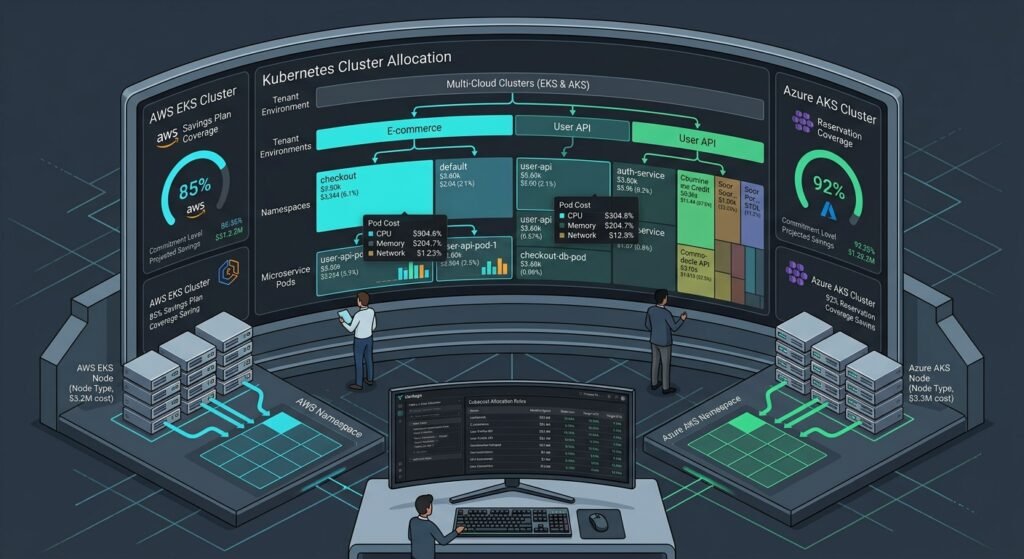
4. Kubecost: Precision Allocation for AWS EKS & Azure AKS
When enterprise workloads run on containerized infrastructure (such as AWS EKS or Azure AKS), standard cloud provider invoices fail to show microservice-level costs. Kubecost fills this gap with native Kubernetes cost monitoring.
- Microservice-Level Cost Allocation: Breaks down cluster infrastructure costs by namespace, controller,service, pod, and individual deployment labels.
- Actionable Container Rightsizing: Recommends precise CPU and memory request/limit adjustments to eliminate over-provisioned cluster nodes.
- Open-Source Integration: Integrates natively with Prometheus, Grafana, and OpenTelemetry stacks for seamless deployment.
Best For: Platform engineering and SRE teams running large-scale container fleets across AWS EKS and Azure AKS.
Head-to-Head Comparison: Enterprise FinOps Platforms
┌─────────────────────────────────────────────────────────────────────────────────┐
│                   ENTERPRISE FINOPS PLATFORM COMPARISON                         │
├──────────────┬──────────────────┬──────────────────┬────────────────────────────┤
│ PLATFORM     │ MULTI-CLOUD      │ KEY STRENGTH     │ BEST USE CASE              │
├──────────────┼──────────────────┼──────────────────┼────────────────────────────┤
│ Vantage      │ AWS, Azure, GCP, │ Unified reporting│ Developer-first multi-cloud│
│              │ SaaS, Kubernetes │ & Autopilot      │ visibility & optimization   │
├──────────────┼──────────────────┼──────────────────┼────────────────────────────┤
│ CloudZero    │ AWS, Azure, GCP, │ Tagless unit     │ SaaS gross margin & unit   │
│              │ Snowflake, K8s   │ economics        │ cost per customer tracking │
├──────────────┼──────────────────┼──────────────────┼────────────────────────────┤
│ ProsperOps   │ AWS & Azure      │ Autonomous       │ Hands-off commitment       │
│              │ (Compute Focus)  │ discount trading │ discount management        │
├──────────────┼──────────────────┼──────────────────┼────────────────────────────┤
│ Kubecost     │ Any Kubernetes   │ Container-level  │ Precision pod rightsizing  │
│              │ (EKS, AKS, GKE)  │ allocation       │ on AWS EKS / Azure AKS     │
└──────────────┴──────────────────┴──────────────────┴────────────────────────────┘
Strategic Steps for Implementing Enterprise FinOps
Deploying the best cloud cost optimization (FinOps) platforms for enterprise AWS & Azure requires pairing software tools with an intentional organizational framework:
- Establish a Centralized FinOps Practice: Create a cross-functional team including FinOps practitioners,engineering leads, and finance managers to govern cloud usage.
- Prioritize Allocation Before Optimization: Implement tagless allocation or consistent tagging schemes to assign every dollar of AWS and Azure spend to a specific business owner.
- Automate Rate Optimization First: Use automated tools like ProsperOps or Vantage Autopilot to optimize commitment rates before forcing engineers to refactor instance types.
- Embed Cost Awareness into Developer CI/CD: Expose resource cost estimates directly inside pull requests and IDEs to encourage cost-conscious architecture choices.
Conclusion
Selecting from the best cloud cost optimization (FinOps) platforms for enterprise AWS & Azure depends on your primary financial pain points. If you require unified multi-cloud visibility and automated commitment execution,Vantage provides an exceptional developer-centric solution. If tracking unit profitability and cost-per-tenant is paramount, CloudZero leads the industry in telemetry-based allocation. Meanwhile, ProsperOps delivers hands-off rate optimization, and Kubecost provides unmatched precision for containerized EKS and AKS environments.
By pairing an enterprise-grade FinOps platform with continuous allocation discipline, organizations can eliminate cloud financial waste, improve unit margins, and scale their cloud infrastructure with confidence.
Frequently Asked Questions (FAQs)
What is the best cloud cost optimization FinOps platform for enterprise AWS & Azure overall?
Vantage and CloudZero are widely recognized as top overall enterprise platforms due to their multi-cloud ingestion capabilities, tagless allocation models, and unit economics tracking across AWS and Azure environments.
How do FinOps platforms differ from native AWS Cost Explorer and Azure Cost Management?
Native cloud tools provide basic historical reporting within their own single-cloud siloes. Specialized enterprise FinOps platforms offer multi-cloud aggregation, virtual tagging without code changes, automated commitment discount trading, and deep container-level cost allocation.
Can FinOps platforms reduce cloud spend automatically without breaking applications?
Yes. Financial rate optimization engines (like ProsperOps or Vantage Autopilot) manage commitment discounts (Savings Plans and Reserved Instances) purely at the cloud billing layer without modifying instance configurations,running workloads, or application code.
1 thought on “Best Cloud Cost Optimization Platforms for Enterprise AWS & Azure”