
When production cloud applications experience outages, every passing second compromises user trust, triggers contractual SLA penalties, and drains engineering productivity. Site Reliability Engineering (SRE) and DevOps teams operate under constant pressure to maintain continuous uptime across distributed multi-cloud architectures. However, fragmented monitoring signals, noisy alerts, and manual, ad-hoc war rooms frequently slow down emergency response efforts.
Modern software organizations require specialized platforms to handle alert routing, coordinate cross-functional responders, enforce runbooks, and automate post-mortem retrospectives. Choosing the best incident management software for SRE and DevOps teams is a critical operational decision that directly impacts your organization’s Mean Time to Detect (MTTD) and Mean Time to Resolve (MTTR).
This comprehensive guide evaluates top incident response platforms, highlighting their key architectural capabilities, ChatOps integrations, and automation workflows.
Key Takeaways
- Evolution from Paging to Full Orchestration: Modern incident platforms do not merely alert on-call engineers via SMS or phone calls; they orchestrate the entire lifecycle—from automated triage and war room provisioning to post-incident learning.
- ChatOps Native Workflows: Modern platforms prioritize deep integration with Slack and Microsoft Teams, allowing responders to declare incidents, update severity levels, and assign roles without leaving their messaging app.
- The Opsgenie Migration Imperative: With Atlassian officially scheduling Opsgenie’s End-of-Life for April 5, 2027, engineering teams are actively migrating to next-generation incident management alternatives.
- AIOps & Automated Root Cause Analysis: Leading platforms integrate machine learning to correlate telemetry noise, suppress duplicate alerts, and draft initial post-mortem timelines from chat logs.
What Makes an Incident Management Platform SRE-Grade?
Not all alerting tools are equipped to manage complex enterprise infrastructure. SRE and DevOps teams require platforms designed for high-availability systems.
┌────────────────────────────────────────────────────────────────────────┐
│               SRE INCIDENT MANAGEMENT ARCHITECTURE                     │
├───────────────────────────────┬────────────────────────────────────────┤
│ CAPABILITY                    │ OPERATIONAL IMPACT                     │
├───────────────────────────────┼────────────────────────────────────────┤
│ Intelligent Noise Reduction   │ Aggregates duplicate APM/metrics       │
│                               │ alerts into a single incident entity.  │
├───────────────────────────────┼────────────────────────────────────────┤
│ Bidirectional ChatOps         │ Allows teams to command runbooks and   │
│                               │ update status pages inside Slack/Teams.│
├───────────────────────────────┼────────────────────────────────────────┤
│ Dynamic Escalation & On-Call  │ Routes pages based on service tags,   │
│                               │ schedule rotations, and overrides.     │
├───────────────────────────────┼────────────────────────────────────────┤
│ Automated Retrospectives      │ Auto-captures timeline events, PRs,   │
│                               │ and logs to generate post-mortems.     │
└───────────────────────────────┴────────────────────────────────────────┘
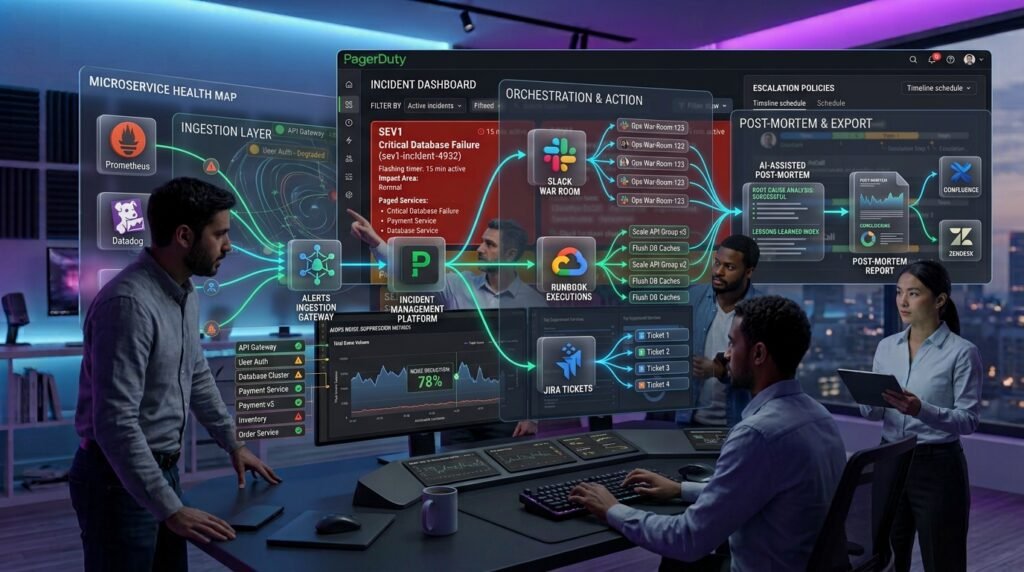
An enterprise-grade platform centralizes incoming telemetry signals from monitoring tools (such as Datadog, Prometheus, Grafana, and Dynatrace) and applies intelligent routing rules before paging on-call engineers.
Top Incident Management Software for SRE and DevOps Teams
Here is an in-depth breakdown of the leading incident management platforms used by modern software engineering organizations.
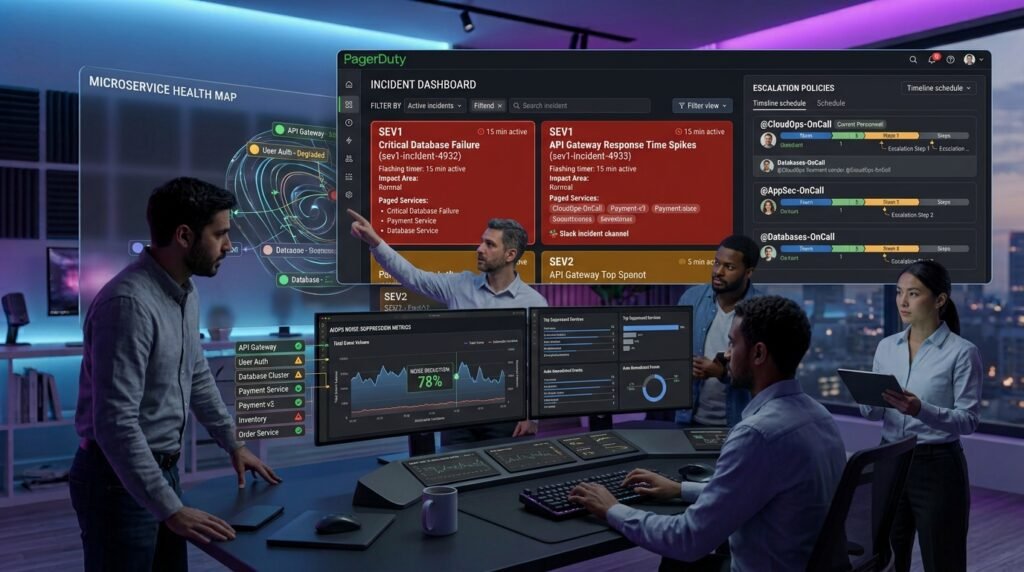
1. PagerDuty: The Enterprise Standard for On-Call Alerting
PagerDuty remains a dominant, battle-tested platform for enterprise alerting, on-call scheduling, and event intelligence.
┌─────────────────────────────────────────────────────────────────────────┐
│                    PAGERDUTY INCIDENT PIPELINE                          │
├───────────────────┬─────────────────────────────────────────────────────┤
│ Signal Ingestion  │ Consumes alerts from 700+ APM, cloud, and security  │
│                   │ integrations (Datadog, AWS CloudWatch, Splunk).     │
├───────────────────┼─────────────────────────────────────────────────────┤
│ Event Intelligence│ Applies AIOps machine learning to suppress noise and│
│                   │ group related alerts into parent incidents.         │
├───────────────────┼─────────────────────────────────────────────────────┤
│ Automated Action  │ Triggers webhooks, AWS Systems Manager runbooks, or │
│                   │ Ansible playbooks prior to human escalation.        │
└───────────────────┴─────────────────────────────────────────────────────┘
- Battle-Tested Reliability: Known for near-zero downtime and robust global notification infrastructure (SMS, voice calls, push notifications).
- Event Intelligence (AIOps): Automatically groups correlated alerts to reduce on-call fatigue during major infrastructure cascading failures.
- Process Automation: Integrates directly with platform tools to trigger automated diagnostic scripts or self-healing infrastructure remediations.
Best For: Large enterprises and regulated organizations requiring multi-tier escalation policies, strict security compliance, and high reliability.
2. incident.io: Best for Slack-Native ChatOps Workflows
Built natively around modern messaging applications, incident.io manages the full incident lifecycle directly inside Slack or Microsoft Teams.
- Zero-Friction Incident Declaration: Engineers can declare incidents directly in chat using
/inc declare, automatically creating dedicated incident channels, Zoom bridges, and Jira tracking tickets. - Service Catalog Mapping: Maps microservice ownership directly inside Slack, ensuring responders instantly know which engineering squad owns a failing API endpoint.
- AI Copilot & Retrospectives: Summarizes ongoing chat discussion threads, extracts timeline milestones, and drafts initial post-mortems automatically.
Best For: Mid-market to enterprise engineering organizations operating a Slack-first communication culture.
3. Rootly: Unmatched Low-Code Workflow Automation
Rootly combines deep Slack/Teams ChatOps integration with an advanced no-code workflow automation engine powered by Liquid variable logic.
- Customizable Workflow Engine: SREs can build conditional workflows—such as automatically creating customer-facing status page updates, spinning up dedicated war rooms, or notifying executive channels based on custom severity triggers.
- Transparent AI Root Cause Analysis: Analyzes system logs, recent GitHub pull requests, and deployment markers to highlight potential root cause candidates during active incidents.
- Opsgenie Migration Engine: Provides built-in migration tools to help teams transition on-call schedules and escalation policies away from retiring legacy systems like Opsgenie.
Best For: Advanced SRE and Platform Engineering teams needing highly customized, automated incident workflows.
To see how real-time application telemetry tools feed incident detection pipelines, explore our review of the [Top SaaS Monitoring Tools for Tracking Application Performance]([Internal Link: Insert relevant internal URL here with anchor text]).
4. FireHydrant: Process-Oriented Reliability & Service Cataloging
FireHydrant focuses on bringing structure, repeatability, and microservice cataloging to complex software organizations.
- Service-Centric Incident Routing: Integrates with your codebase and infrastructure to build a live map of microservices, dependencies, and team ownership.
- Guided Runbook Execution: Enforces operational consistency by stepping responders through mandatory diagnostic and mitigation tasks during SEV0/SEV1 outages.
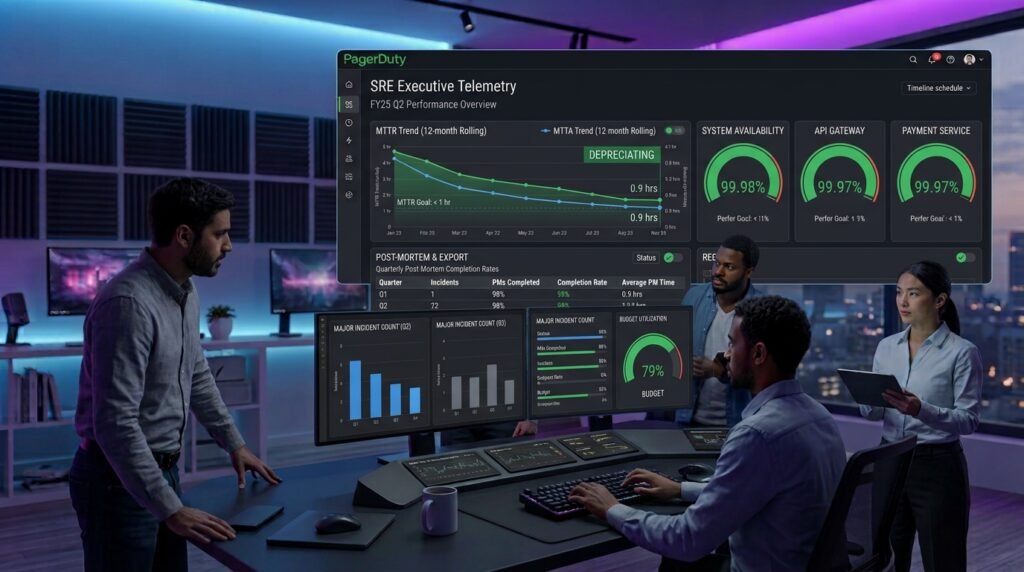
- Comprehensive Analytics: Tracks historical MTTR, Mean Time to Acknowledge (MTTA), incident frequency, and service reliability trends over time.
Best For: Fast-growing engineering departments seeking to standardize incident response processes across multiple squads.
For official industry guidelines on establishing SRE site reliability principles and error budgets, consult the Google SRE Handbook Documentation.
Head-to-Head Comparison: Top Incident Management Platforms
┌─────────────────────────────────────────────────────────────────────────────────┐
│                 INCIDENT MANAGEMENT FEATURE MATRIX                              │
├──────────────┬──────────────────┬──────────────────┬────────────────────────────┤
│ PLATFORM     │ INTERFACE FOCUS  │ KEY STRENGTH     │ BEST USE CASE              │
├──────────────┼──────────────────┼──────────────────┼────────────────────────────┤
│ PagerDuty    │ Web / Mobile     │ Enterprise scale,│ High-availability,         │
│              │ Console          │ 700+ integrations│ multi-team enterprise      │
├──────────────┼──────────────────┼──────────────────┼────────────────────────────┤
│ incident.io  │ Slack / MS Teams │ Native ChatOps,  │ Slack-first technology     │
│              │ Native           │ Service Catalog  │ companies                  │
├──────────────┼──────────────────┼──────────────────┼────────────────────────────┤
│ Rootly       │ Slack / Web      │ No-code workflow │ SRE teams requiring        │
│              │ Automation       │ engine & AI RCA  │ custom automation          │
├──────────────┼──────────────────┼──────────────────┼────────────────────────────┤
│ FireHydrant  │ Web Console /    │ Service dependency│ Process-driven teams       │
│              │ Slack            │ mapping & runbooks│ establishing SRE standards │
└──────────────┴──────────────────┴──────────────────┴────────────────────────────┘
Operational Strategies for Lowering MTTR
Implementing the best incident management software for SRE and DevOps teams yields the best results when paired with strong operational practices:
- Audit and Tune Alert Thresholds: High noise causes alert fatigue. Review incoming telemetry regularly to ensure only actionable, user-impacting conditions wake on-call engineers.
- Automate Channel & War Room Creation: Configure your platform to automatically create a dedicated Slack channel, video bridge, and status page draft immediately upon declaring a SEV1 incident.
- Conduct Blameless Retrospectives: Focus post-incident reviews on systemic improvements, missing automated guardrails, and runbook updates rather than individual human error.
Conclusion
Selecting the best incident management software for SRE and DevOps teams depends on your organization’s messaging workflows, service architecture, and desired level of automation. Modern ChatOps platforms like incident.io and Rootly lead the market in fast, Slack-native incident coordination. Meanwhile, established platforms like PagerDuty set the standard for complex, enterprise-scale alerting and escalation.
With Atlassian’s standalone Opsgenie reaching its End-of-Life on April 5, 2027, investing in a modern, automated incident management stack ensures your engineering team remains prepared to resolve outages quickly and protect application uptime.
Frequently Asked Questions (FAQs)
What is the best incident management software for SRE and DevOps teams overall?
Top overall platforms include incident.io (best for Slack-first teams), Rootly (best for no-code workflow automation), and PagerDuty (best for enterprise-scale alerting and global escalation routing).
Why are engineering teams migrating away from Opsgenie?
Atlassian officially scheduled Opsgenie’s End-of-Life for April 5, 2027. As a result, engineering and DevOps teams are migrating to modern alternatives like Rootly, incident.io, or PagerDuty to maintain uninterrupted incident workflows.
How does ChatOps lower Mean Time to Resolution (MTTR)?
ChatOps brings incident command actions, role assignments, runbook executions, and status page updates directly into messaging platforms like Slack or Teams. This eliminates context switching across multiple web portals during active outages, significantly lowering MTTR.
1 thought on “Best Incident Management Software for SRE and DevOps Teams”