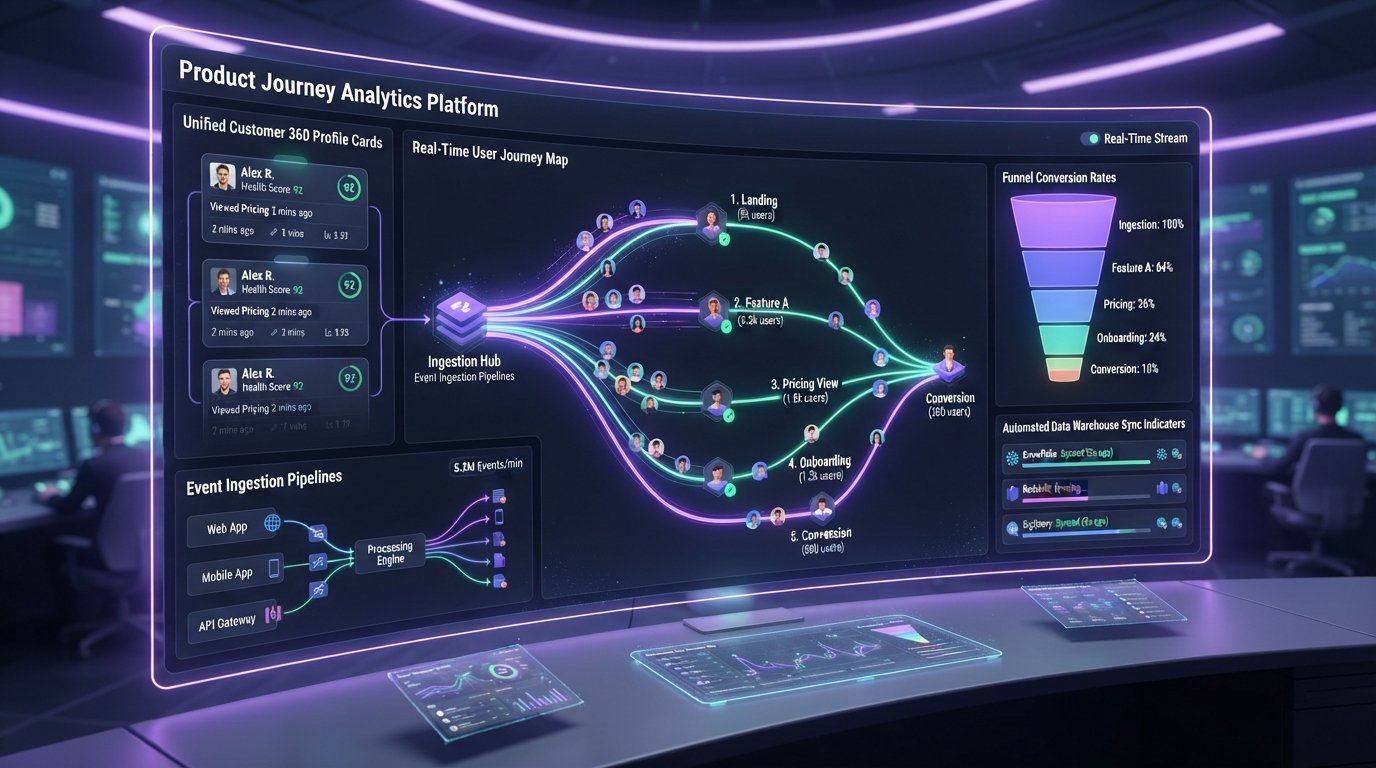
For modern Software-as-a-Service (SaaS) platforms, understanding user behavior requires tracking granular interaction events across web apps, mobile clients, backend microservices, and subscription billing systems. When product managers and data engineers track user retention, feature adoption, and expansion revenue, they quickly run into disconnected data silos. Raw event tracking from frontend apps rarely aligns with subscription data in Stripe or customer health scores in your CRM without a unified customer data layer.
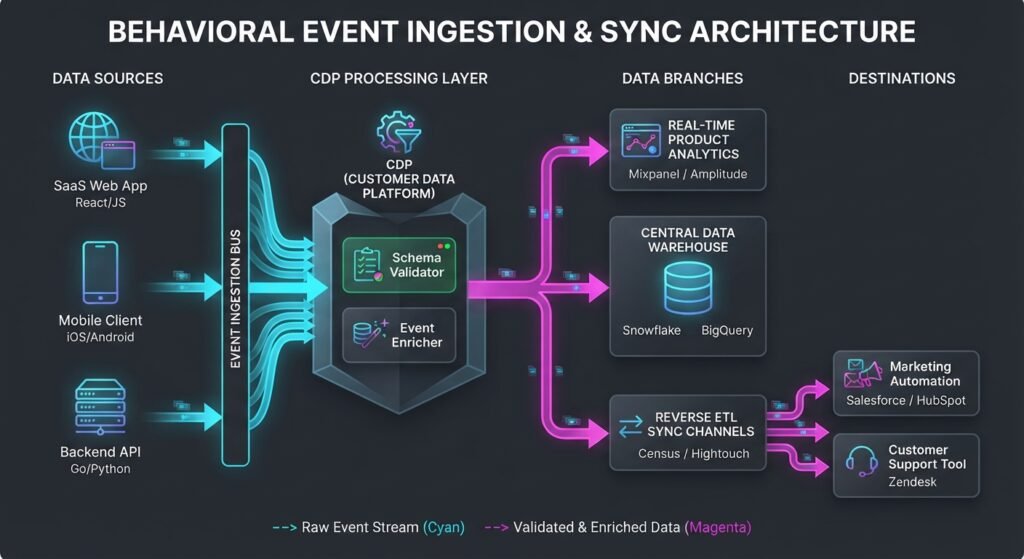
Selecting the best Customer Data Platforms for SaaS product analytics requires choosing an infrastructure that ingests high-volume product telemetries, cleans dynamic schemas, resolves customer identities, and routes clean data downstream into analytics engines like Mixpanel, Amplitude, or modern cloud data warehouses. This guide evaluates leading packaged, composable, and open-source CDPs engineered specifically for SaaS product analysis.
Key Takeaways
- Shift to Warehouse-Native & Composable Architecture: Modern SaaS data teams are moving away from traditional, black-box CDPs toward composable architectures (like Hightouch and RudderStack) that leverage Snowflake, BigQuery, or Databricks as the central single source of truth. CDP.com
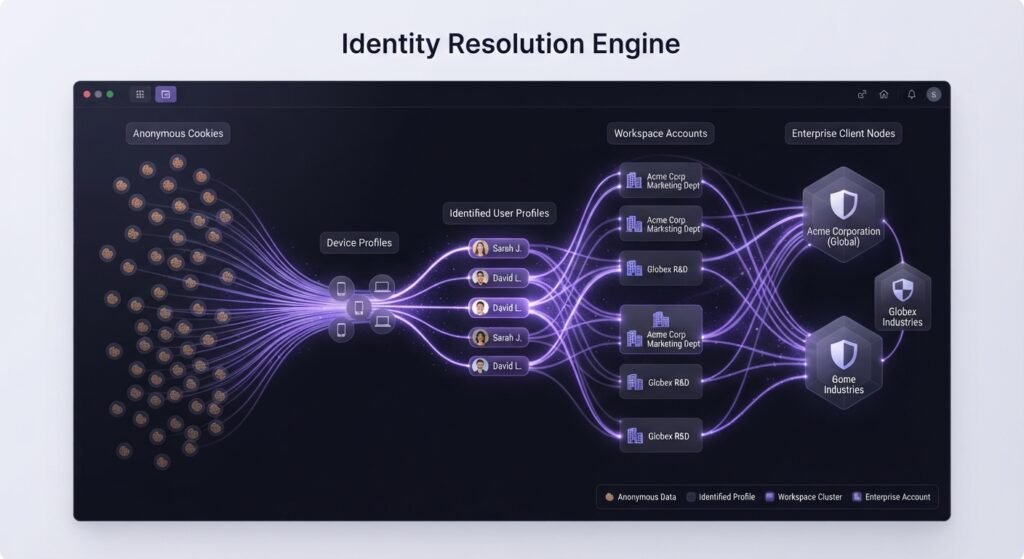
- Identity Resolution is Critical for B2B SaaS: The best product CDPs map anonymous website visitors to signed-up users, multi-user workspace accounts, and parent enterprise accounts seamlessly.
- Real-Time Streaming vs. Batch Syncing: Product analytics demands real-time event streaming for in-app messaging, feature flagging, and churn triggers, combined with reliable batch pipelines for warehouse reporting.
- Unified Analytics & CDP Stacks: All-in-one developer platforms like PostHog combine event capture, product analytics, session replay, and CDP routing into a single infrastructure. Knock
Core Criteria for Evaluating CDPs in SaaS Product Environments
When choosing a customer data platform for product analytics, engineering and product leadership should evaluate these primary technical capabilities:
- Flexible SDK Event Ingestion: Native client-side (JavaScript, React, iOS, Android) and server-side (Node.js, Go, Python) SDKs that capture behavioral events with low latency.
- Deterministic Identity Resolution: The ability to merge anonymous cookie IDs, user IDs, email addresses, and account-level organization IDs into a unified B2B customer profile.
- Schema Governance & Data Quality: Automated validation tools that block bad, unformatted, or unapproved event properties before they contaminate downstream analytics tools.
- Reverse ETL & Data Activation: Syncing enriched warehouse models and calculated product usage metrics back into operational SaaS tools (like Intercom, HubSpot, or Salesforce).
- Privacy, Consent & Security: Out-of-the-box compliance handling for GDPR, CCPA, and HIPAA, including automated PII scrubbing and user deletion requests. Knock
[Internal Link: Insert relevant internal URL here with anchor text – “Explore our architectural guide on designing event-driven microservices for SaaS applications”]
Top Customer Data Platforms for Product Analytics Reviewed
1. Twilio Segment: The Enterprise Industry Standard
Twilio Segment remains a benchmark customer data platform, offering an extensive ecosystem of pre-built integrations, robust SDKs, and enterprise data governance tools.
Knock
- Best For: Scale-stage and enterprise SaaS companies seeking a battle-tested, fully managed CDP with minimal infrastructure overhead.
- Key Features: Connections catalog (400+ destinations), Protocols (schema enforcement), Unify (identity resolution), and Reverse ETL.
- Pros: Unmatched developer adoption, massive integration library, reliable real-time routing. Knock
- Cons: Monthly Tracked User (MTU) pricing can scale steeply as user volume grows.
2. RudderStack: The Warehouse-Native CDP for Engineering Teams
RudderStack is built specifically for data engineers and developers who want total control over their data stack. It collects and routes event streams while storing all raw data directly inside your enterprise data warehouse.
Hightouch
- Best For: Engineering-led SaaS teams wanting a warehouse-centric CDP with lower data storage costs and developer control.
- Key Features: Developer-first event streaming, open-source SDKs, native cloud warehouse storage, and Transformations (in-flight code modification).
- Pros: Complete data ownership, open-source core, predictable usage-based pricing. Knock
- Cons: Requires standing data engineering expertise to model and manage warehouse tables.
3. Hightouch: Composable CDP & Reverse ETL Leader
Hightouch pioneered the composable CDP movement by activating customer data directly from cloud warehouses (Snowflake, BigQuery, Databricks) into business tools without copying data into a separate third-party platform.
CDP.com
- Best For: Teams with a mature cloud data warehouse who want to activate product analytics without maintaining duplicate CDP database silos.
- Key Features: Reverse ETL sync engine, visual no-code audience builder, warehouse-native identity resolution, and AI decisioning.
- Pros: Zero data vendor lock-in, leverages existing warehouse models, fast sync configuration. Hightouch
- Cons: Requires event collection tools or pipelines to get data into the warehouse initially.
4. PostHog: All-in-One Open-Source Product Operating System
PostHog combines customer data platform routing with built-in product analytics, session replays, feature flags, and A/B testing in a unified platform.
- Best For: Early-to-growth stage SaaS startups looking to replace multiple single-point tools with one developer-friendly platform.
- Key Features: Product analytics, session recording, feature flags, event capture CDP, and self-hosting options. Knock
- Pros: Eliminates tool sprawl, transparent open-source foundation, generous free usage tier. Knock
- Cons: Less specialized as a pure-play enterprise routing CDP compared to Segment.
Feature Comparison Matrix
| Feature / Platform | Twilio Segment | RudderStack | Hightouch | PostHog |
|---|---|---|---|---|
| Architecture | Managed Packaged CDP | Warehouse-Native CDP | Composable / Reverse ETL | All-in-One Analytics & CDP |
| Primary Focus | Event Collection & Routing | Data Engineering / Pipeline | Warehouse Data Activation | Product Analytics & Tools |
| Data Storage Location | Segment Managed Cloud | Your Cloud Data Warehouse | Your Cloud Data Warehouse | PostHog Cloud / Self-Hosted |
| Identity Resolution | Managed Identity Graph | Code/Warehouse-Based | Warehouse-Native Rules | Built-in App Profiles |
| Schema Validation | Enterprise Protocols | Developer Transformations | Warehouse Model Dependent | Live Ingestion Rules |
How to Choose the Right CDP Architecture for Your SaaS Product
To select among the best Customer Data Platforms for SaaS product analytics, align your technical architecture with your team’s engineering capacity:
- For Fast Deployment with Low Engineering Overhead: Choose Twilio Segment. Its managed infrastructure and turn-key destination catalog allow product teams to connect analytics tools rapidly without building custom pipelines.
- For Data-Engineered & Warehouse-Centric Teams: Choose RudderStack or a combination of Hightouch + your cloud warehouse. This composable approach ensures full data ownership, custom SQL modeling, and cost efficiency as your event volume scales. Knock
- For All-in-One Startup Product Suites: Choose PostHog. Combining analytics, session replay, and CDP routing in one stack eliminates integration friction and keeps software costs manageable.
Conclusion
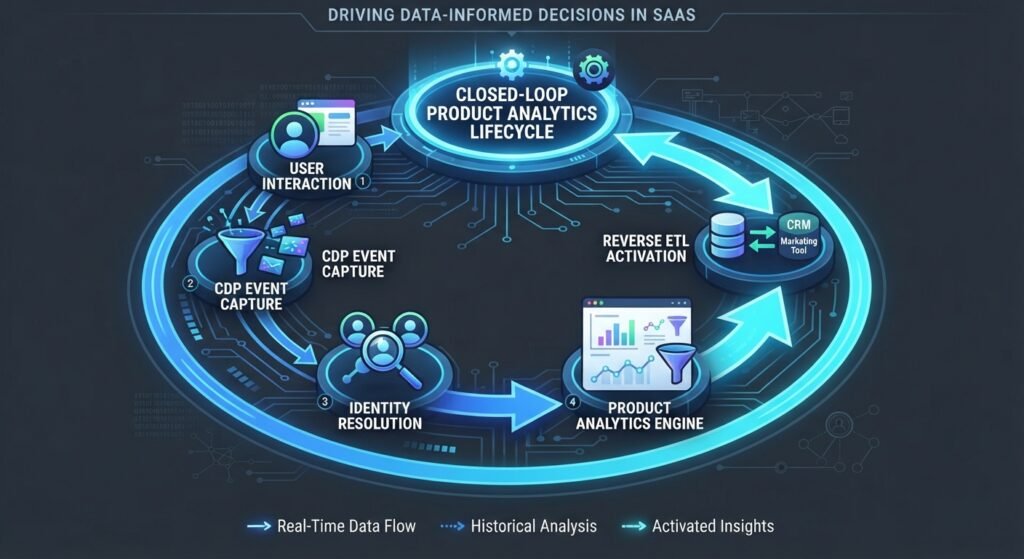
Choosing the best Customer Data Platforms for SaaS product analytics is a foundational technical decision that dictates how efficiently your team can measure user behavior, optimize conversion funnels, and decrease churn. Modern platforms have evolved past simple data pipelines into intelligent hubs that enforce schema quality, resolve complex B2B identities, and power automated user experiences. By selecting a CDP architecture that fits your engineering stack, you equip your product teams with the actionable insights required to build better software.
Frequently Asked Questions (FAQs)
What is the difference between a traditional packaged CDP and a composable CDP?
A traditional packaged CDP (like Twilio Segment) collects, processes, and stores customer data in its own proprietary cloud environment before routing it elsewhere. A composable CDP (like Hightouch or RudderStack) uses your existing cloud data warehouse (Snowflake, BigQuery) as the storage layer and activates data directly from it, preventing data duplication and vendor lock-in.
CDP.com+ 1
How do Customer Data Platforms handle B2B account hierarchies in SaaS?
Advanced CDPs use identity resolution engines to map individual user events (e.g., clicks, logins) to specific user IDs, which are then grouped under parent Account or Workspace IDs. This allows product managers to analyze usage trends both at the individual user level and across the entire enterprise customer account.
Can I use a CDP alongside product analytics tools like Mixpanel or Amplitude?
Yes. CDPs are designed to sit upstream of product analytics engines. The CDP captures the raw event data once, cleans and standardizes it, and then routes it simultaneously to tools like Mixpanel, Amplitude, your data warehouse, and marketing platforms without needing multiple SDKs in your codebase.
1 thought on “Best Customer Data Platforms (CDP) for SaaS Product Analytics: 2026 Guide”