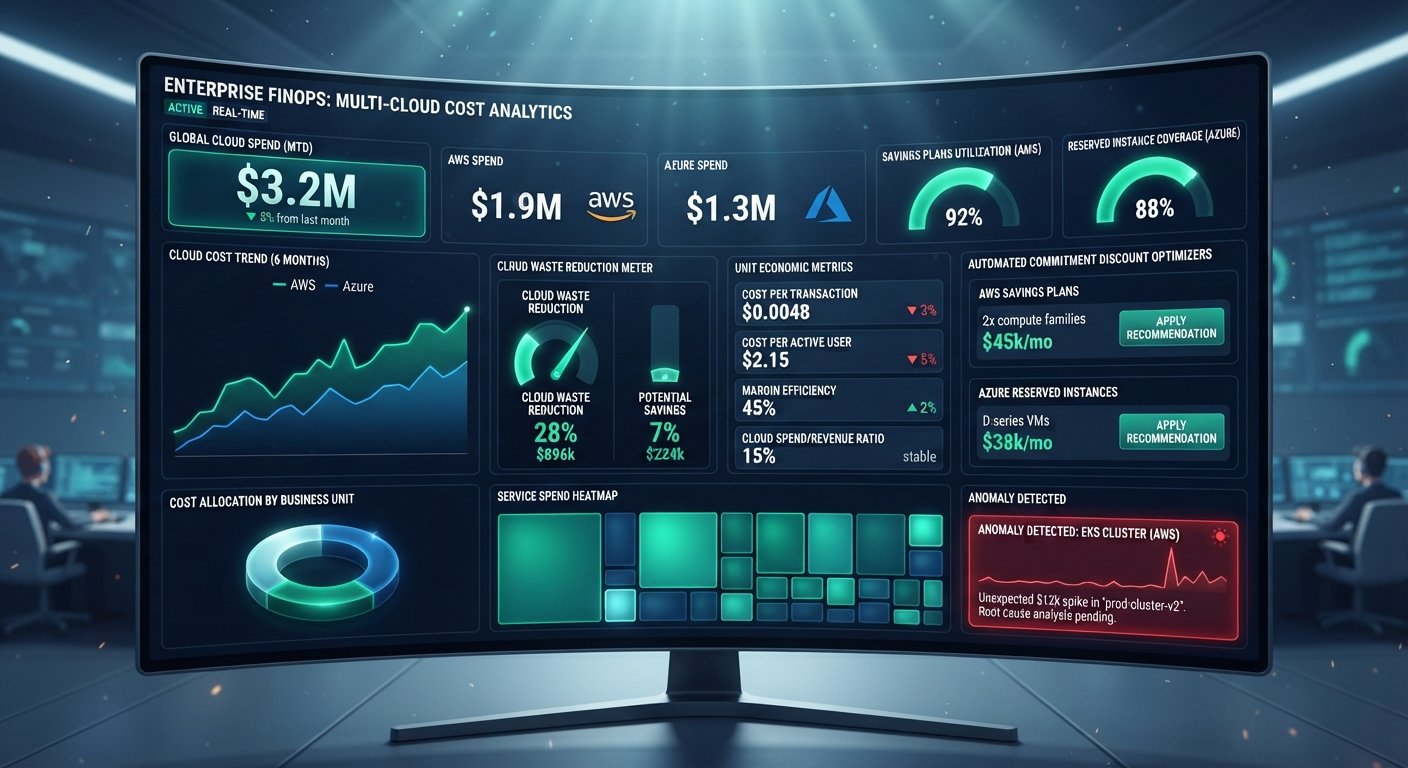
As enterprise multi-cloud footprints expand across Amazon Web Services (AWS) and Microsoft Azure, cloud financial management (FinOps) has shifted from a periodic budgeting exercise to a real-time operational priority. Unchecked auto-scaling, unallocated Kubernetes clusters, orphaned storage volumes, and complex commitment models (such as AWS Savings Plans and Azure Reserved Instances) create significant financial waste. Industry benchmarks indicate that unmanaged enterprise cloud environments lose 28% to 35% of their total spend to idle or over-provisioned infrastructure.
Selecting the best cloud cost optimization platforms for enterprise AWS and Azure requires moving beyond static, read-only billing reports. Modern enterprises demand platforms that support the FinOps Foundation’s Open Cost and Usage Specification (FOCUS™ standard), integrate virtual tagging engines to handle untagged resources, and automate rate and usage optimization directly within CI/CD pipelines. This guide provides a detailed evaluation of top enterprise FinOps platforms across governance, cost allocation, and automated remediation.
Key Takeaways
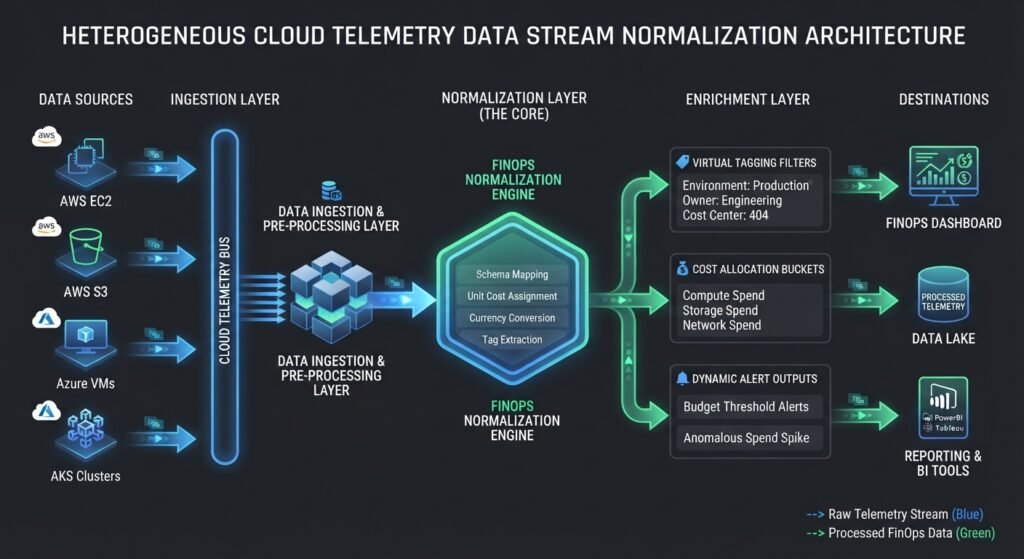
- FOCUS™ Standard Normalization: The best FinOps platforms normalize billing telemetry from AWS, Azure, and third-party services (like Snowflake or Datadog) using the FinOps Open Cost and Usage Specification.
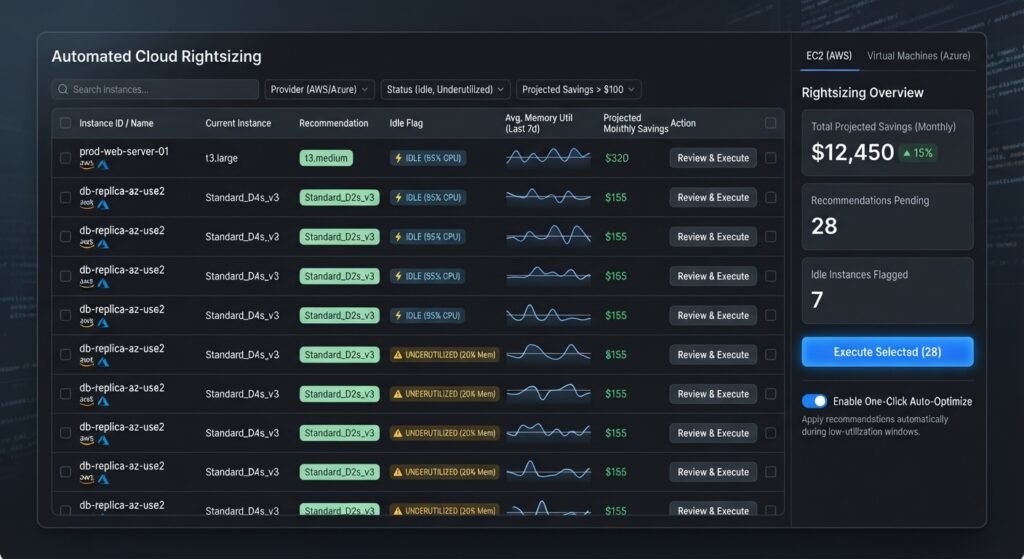
- Shift from Visibility to Autonomous Action: Modern tools do not just generate recommendations; they automate rightsizing, eliminate orphaned resources, and manage commitment portfolios dynamically. nOps
- Telemetry-Based Cost Allocation: Leading solutions leverage application telemetry and virtual tagging to assign shared Kubernetes and cloud costs to business units without requiring manual tagging rewrites. Vantage
- Unit Economics Drives Engineering Buy-in: Top platforms express cloud cost in business context—such as cost per customer, deployment, or API call—bridging the gap between engineering and finance teams. Control Plane
Core Criteria for Evaluating Enterprise FinOps Platforms
When evaluating enterprise-grade FinOps solutions for AWS and Azure, engineering and finance leadership should focus on these essential capabilities:
- Multi-Cloud Data Normalization: Ingesting complex AWS Cost and Usage Reports (CUR 2.0) and Azure Cost Management billing streams into unified, real-time dashboards.
- Virtual Tagging & Cost Allocation: Categorizing untagged or shared resources (such as multi-tenant EKS/AKS clusters) using custom rules and application telemetry.
- Commitment Lifecycle Management: Automating the purchase, exchange, and rebalancing of AWS Savings Plans, Reserved Instances, and Azure Reserved VM Instances.
- Anomalous Spend Detection: Real-time alerting via Slack, Teams, or PagerDuty when cloud spend spikes unexpectedly due to misconfigured workloads. Vantage
- Enterprise Security & Governance: Support for SAML SSO, granular Role-Based Access Control (RBAC), SOC 2 Type II compliance, and Infrastructure-as-Code (Terraform) integration. Vantage
Top Cloud Cost Optimization Platforms Reviewed
1. Finout: The MegaBill & Virtual Tagging Leader
Finout specializes in aggregating disparate cloud bills into a unified visual layer called the “MegaBill.” It connects native AWS and Azure billing with SaaS spend (Snowflake, Datadog, Kubernetes) without requiring changes to underlying code.
- Best For: Enterprise organizations with complex, multi-vendor stacks and incomplete tagging policies.
- Key Features: Virtual Tagging Engine, MegaBill unified data lake, widget-based FinOps dashboards, and FOCUS-compliant reporting.
- Pros: Rapid setup without manual tagging overhauls; seamlessly blends infrastructure and SaaS costs in one view.
- Cons: Custom automated remediation requires integration with third-party orchestration tools.
2. Flexera One (formerly CloudCheckr): Enterprise IT Governance
Flexera One provides extensive hybrid IT asset management and multi-cloud governance. It is engineered for large enterprises with strict ITIL workflows and complex cloud migration tracks.
- Best For: Fortune 500 enterprises needing combined cloud cost optimization, IT asset management (ITAM), and licensing compliance.
- Key Features: Deep multi-cloud policy automation, software license management (including Azure Hybrid Benefit tracking), and automated rightsizing actions. Control Plane
- Pros: Exceptional governance capabilities; tracks both on-premises licensing and multi-cloud consumption.
- Cons: Steeper learning curve and higher configuration overhead compared to developer-centric tools.
3. CloudZero: Telemetry-Driven Cost Intelligence
CloudZero connects cloud infrastructure spend directly to product context by organizing cost data by customer, product feature, team, or deployment.
Control Plane
- Best For: Software-as-a-Service (SaaS) enterprises that need to calculate exact unit economics and cost-per-customer metrics.
- Key Features: Telemetry-based cost allocation, real-time anomaly detection, automated unit cost calculations, and Kubernetes cost decomposition.
- Pros: Does not rely entirely on AWS/Azure resource tags; maps costs using live system telemetry.
- Cons: Focuses heavily on visibility and intelligence rather than hands-off autonomous execution.
4. Vantage: Engineering-First FinOps with Infrastructure-as-Code
Vantage delivers a developer-friendly cost management experience, featuring a native Terraform provider and automated Savings Plan management via its Autopilot engine.
Control Plane
- Best For: Engineering-led organizations that prefer managing FinOps policies as code within DevOps workflows.
- Key Features: Native Terraform Provider, Autopilot commitment management, 30+ native cloud integrations, and agent-based waste cleanup. Vantage
- Pros: Fast time-to-value; enables developers to inspect cost changes directly within pull requests and IaC files. Control Plane
- Cons: Advanced enterprise chargeback hierarchies require higher subscription tiers.
[External Link: Insert high-authority external URL here with anchor text – “FinOps Foundation: Official Framework and FOCUS Specification Standards”]
Feature Comparison Matrix
| Feature / Platform | Finout | Flexera One | CloudZero | Vantage |
|---|---|---|---|---|
| Primary Specialty | MegaBill & Virtual Tagging | Enterprise IT Governance | Unit Economics & Telemetry | Developer-First / IaC |
| Multi-Cloud Focus | AWS, Azure, GCP, SaaS | AWS, Azure, Hybrid IT | AWS, Azure, GCP, SaaS | 30+ Native Cloud/SaaS Services |
| Tagging Dependency | Low (Virtual Tagging Engine) | Moderate (Policy Enforcement) | Low (Telemetry-Driven) | Low to Moderate (Virtual Segments) |
| Commitment Management | Integrated Partners | Advanced Enterprise | Partner Integrations | Native (Autopilot) |
| Terraform Support | API-driven | API-driven | API-driven | Native First-Party Provider |
How to Select the Right Platform for Your Enterprise
To choose the best cloud cost optimization platforms for enterprise AWS and Azure, evaluate your organization’s operational maturity and primary friction points:
- For Messy Tagging Environments: If your organization struggles with incomplete or inconsistent tag enforcement across legacy AWS accounts and Azure resource groups, select Finout or CloudZero to allocate spend via virtual rules and system telemetry.
- For Complex Hybrid Governance: If you must coordinate multi-cloud governance alongside on-premises server licensing (such as Azure Hybrid Benefit) and IT asset inventories, Flexera One provides the necessary depth. Negotiation Consulting Firms
- For Engineering-Led DevOps Teams: If you want developers to take ownership of cloud spend within daily workflows using Infrastructure-as-Code, deploy Vantage.
Conclusion
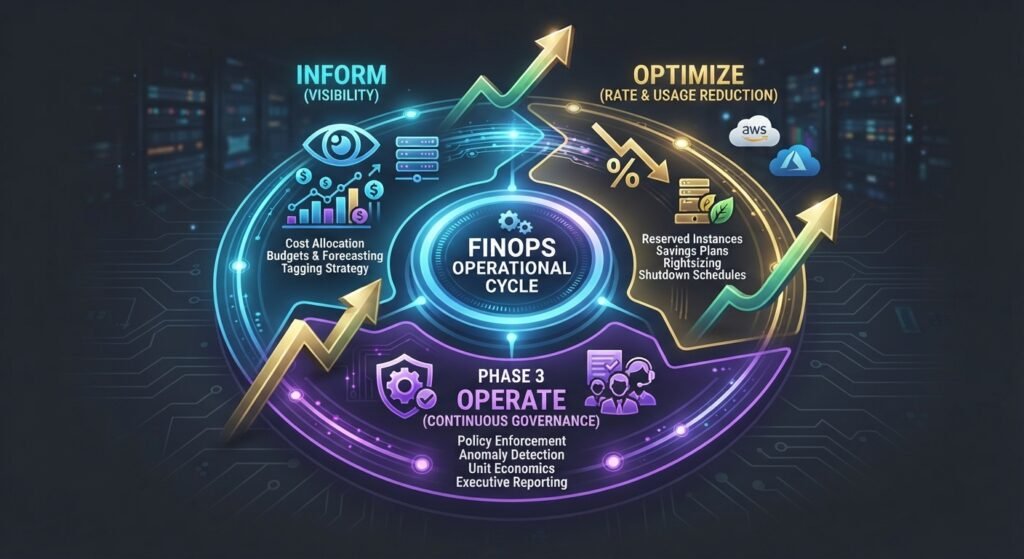
Selecting the best cloud cost optimization platforms for enterprise AWS and Azure is a strategic investment that transforms cloud spend from an unpredictable operational expense into a controllable, measurable business driver. Modern platforms do far more than report historical spend; they contextualize costs, automate commitment purchases, and empower engineers to eliminate infrastructure waste proactively. By selecting a platform that aligns with your technical stack and team culture, your enterprise can achieve continuous efficiency while maintaining architectural agility.
Frequently Asked Questions (FAQs)
What is the best cloud cost optimization platform for enterprise AWS and Azure with heavy Kubernetes usage?
Platforms like Finout, Vantage, and specialized tools like Kubecost excel at container-level cost allocation. They break down shared Amazon EKS and Azure AKS cluster costs by namespace, pod, and service level, allowing accurate showback to engineering teams.
Vantage
Can native tools like AWS Cost Explorer and Azure Cost Management replace third-party FinOps platforms?
Native tools like AWS Cost Explorer and Azure Cost Management are excellent starting points for single-cloud visibility. However, enterprises operating across both AWS and Azure typically outgrow native tools due to fragmented data, lack of cross-cloud cost normalization (FOCUS™ standard), and limited multi-tenant virtual tagging capabilities.
Control Plane
How do FinOps platforms handle automated commitment purchasing safely?
Modern platforms use risk-aware algorithms that analyze historical usage baselines across AWS (Savings Plans / RIs) and Azure (Reserved Instances). Tools like Vantage Autopilot automatically purchase or exchange commitments to maintain optimal discount coverage while preserving financial flexibility against sudden workload changes.
1 thought on “Best Cloud Cost Optimization Platforms for Enterprise AWS and Azure: 2026 Guide”