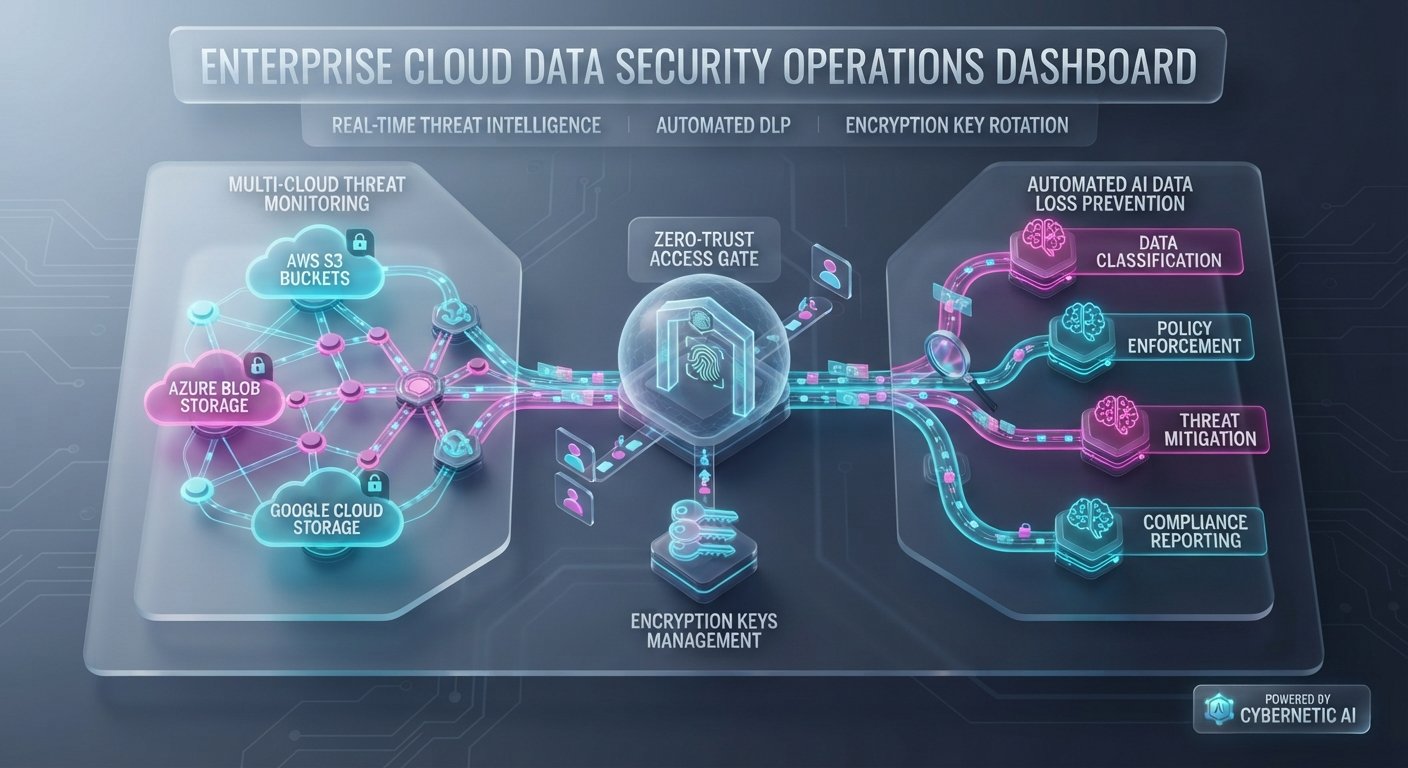
As enterprises migrate mission-critical workloads, proprietary databases, and AI pipelines to multi-cloud environments, safeguarding sensitive corporate data has become a major architectural imperative. Traditional perimeter defense tools are insufficient in decentralized, cloud-native infrastructures where data flows seamlessly across SaaS applications, serverless functions, and object storage repositories.
Navigating the market for the top enterprise security software for cloud data protection requires understanding how emerging security paradigms—such as Data Security Posture Management (DSPM), Cloud-Native Application Protection Platforms (CNAPP), and AI-driven Data Loss Prevention (DLP)—converge to protect sensitive data at rest, in transit, and in use. This detailed guide evaluates leading enterprise platforms, key evaluation criteria, and modern zero-trust frameworks necessary to maintain cloud data integrity and regulatory compliance.
Key Takeaways
- Paradigm Shift to Data-Centric Security: Evaluating the top enterprise security software for cloud data protection requires focusing on solutions that prioritize Data Security Posture Management (DSPM) alongside continuous data discovery and AI-assisted classification.
- Agentless Multi-Cloud Visibility: Leading platforms leverage agentless, API-driven deployments to scan cloud data lakes, object stores (S3, Blob), and SaaS platforms without impacting runtime performance.
- Zero Trust & Identity Attribution: Modern cloud data protection tools bind data access controls tightly to identity governance, preventing unauthorized lateral movement and insider threat risks.
- Automated Remediation & Compliance: Top platforms automate policy enforcement, data redaction, and regulatory compliance mapping (GDPR, HIPAA, SOC 2, PCI DSS) across multi-cloud environments.
Key Pillars of Enterprise Cloud Data Protection
To secure complex multi-cloud ecosystems, enterprise security architecture must extend beyond basic network proxies and static firewalls. Modern software suites combine four foundational technical capabilities:
┌────────────────────────────────────────────────────────────────────────┐
│               ENTERPRISE CLOUD DATA SECURITY ARCHITECTURE              │
├───────────────────────────────┬────────────────────────────────────────┤
│ DATA SECURITY POSTURE (DSPM)  │ CLOUD DATA LOSS PREVENTION (DLP)       │
├───────────────────────────────┼────────────────────────────────────────┤
│ - Continuous Data Discovery   │ - Real-Time Inline Policy Enforcement  │
│ - Sensitive Data Classification│ - Automated Data Masking & Redaction  │
│ - Shadow Data & AI Risk Mapping│ - GenAI Prompt & SaaS Data Protection │
├───────────────────────────────┴────────────────────────────────────────┤
│ ENCRYPTION & KEY GOVERNANCE (KMS)                                      │
│ - Bring Your Own Key (BYOK) / Hold Your Own Key (HYOK)                 │
│ - Zero Trust Identity Access Management & Attribute-Based Controls     │
└────────────────────────────────────────────────────────────────────────┘
1. Data Security Posture Management (DSPM)
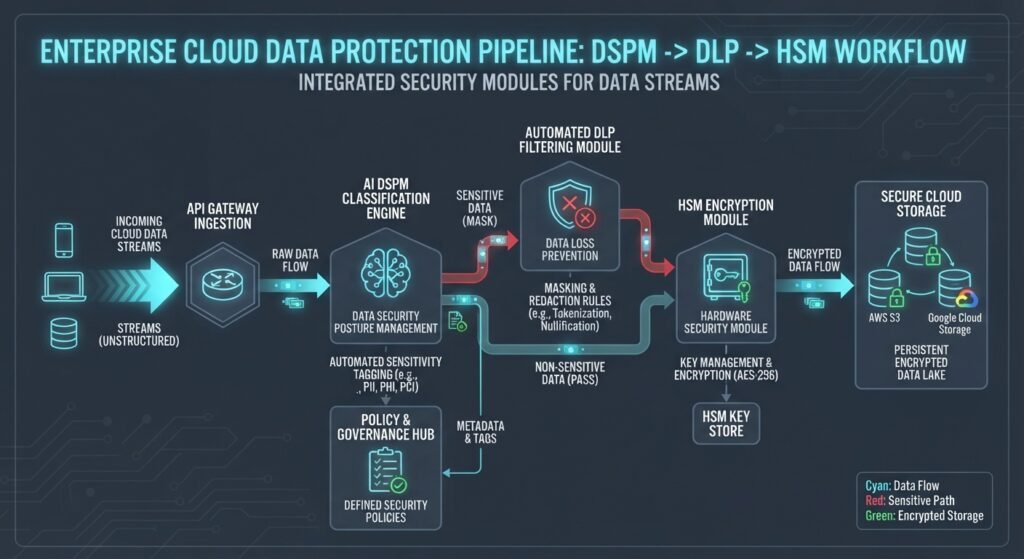
DSPM solutions automatically locate, map, and classify structured and unstructured data across cloud environments. By identifying where sensitive information resides (e.g., PII, PHI, financial records), DSPM pinpoints over-permissioned access, exposed shadow data, and misconfigured storage buckets.
2. Cloud Data Loss Prevention (DLP) and Generative AI Governance
Modern cloud DLP extends policy enforcement across SaaS tools, cloud storage, and AI prompts. These solutions inspect data payloads in real time, redacting or blocking sensitive records before exfiltration or unauthorized AI model training occurs.
3. Key Management Services (KMS) and Persistent Encryption
Protecting data at rest and in transit requires hardware security module (HSM) key management, client-side persistent encryption, and tokenization, ensuring data remains unreadable even in the event of an infrastructure breach.
To see how secure backend API architectures support identity verification workflows, read our technical overview on [Building Progressive Web Apps (PWAs): Best Practices and Architecture Overview]([Internal Link: Insert relevant internal URL here with anchor text]).
Leading Enterprise Cloud Data Protection Platforms
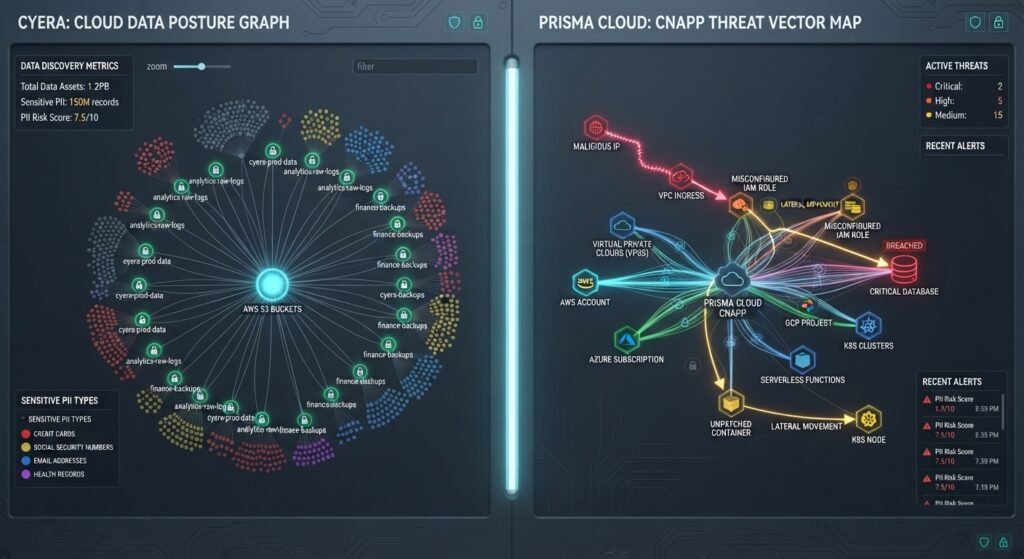
1. Cyera: The AI-Powered DSPM Pioneer
Cyera provides continuous, agentless discovery and classification of data across AWS, Azure, Google Cloud, and SaaS platforms.
- Core Strengths: Fast agentless deployment, context-aware AI classification (95%+ accuracy), and unified mapping of data attack surfaces.
- Best For: Enterprises seeking deep visibility into cloud data posture, shadow data risks, and automated compliance tracking.
2. Palo Alto Networks Prisma Cloud (Cortex Cloud): Unified CNAPP Integration
Palo Alto Networks provides comprehensive security that combines cloud workload protection, data security, and infrastructure posture management within a single CNAPP platform.
- Core Strengths: Deep container/Kubernetes runtime protection, automated IaC configuration scanning, and global threat intelligence.
- Best For: Large enterprises operating hybrid, multi-cloud, and containerized infrastructures requiring end-to-end security coverage.
3. Forcepoint Data Security Cloud: Unified Multi-Cloud & AI DLP
Forcepoint merges DSPM, Data Detection & Response (DDR), and cloud DLP into a single policy engine that extends to Generative AI tools and shadow AI usage.
- Core Strengths: Single-policy architecture across endpoint, web, SaaS, and AI prompts, powered by automated natural-language policy assistants.
- Best For: Organizations needing consistent DLP and data governance across hybrid workforce endpoints, SaaS applications, and AI models.
4. Thales CipherTrust Data Security Platform: Enterprise Key Governance & Encryption
Thales focuses on data-centric security, offering centralized key management, transparent encryption, and tokenization across multi-cloud environments.
- Core Strengths: Robust Hold Your Own Key (HYOK) capabilities, granular access controls, and strict cryptographic separation of duties.
- Best For: Regulated industries (banking, healthcare, government) requiring hardware-level encryption key control across cloud providers.
Detailed Platform Feature & Architectural Comparison Matrix
| Software Platform | Primary Security Focus | Deployment Model | AI & GenAI Governance | Key Management / Encryption | Primary Enterprise Use Case |
|---|---|---|---|---|---|
| Cyera | DSPM & Data Attack Surface | Agentless Cloud Connector | Native AI Classification Engine | Cloud Key Mapping | Cloud Data Discovery & Posture |
| Prisma Cloud | CNAPP & Workload Protection | Hybrid (Agentless + Agent) | Unit 42 AI Threat Analytics | Integrated KMS | Multi-Cloud Infrastructure Security |
| Forcepoint Data Cloud | Unified DLP, DSPM & AI Security | Cloud Native & Inline Proxy | Prompt Inspection & Shadow AI | Native DLP Policy Encryption | Cross-Channel DLP & AI Safeguards |
| Thales CipherTrust | Data Encryption & Key Control | On-Prem, Hybrid, Multi-Cloud | Behavioral Access Audit | Centralized HSM / BYOK / HYOK | Cryptographic Compliance & Key Governance |
| Varonis | Data Access Governance & Insider Risk | Cloud SaaS & Agent Monitoring | AI User Anomaly Detection | Access Control Governance | M365 & SaaS Permission Auditing |
Step-by-Step Framework for Deploying Cloud Data Security
Implementing enterprise data protection software requires a structured, multi-stage architecture strategy:
┌─────────────────────────────────────────────────────────────────────────────────┐
│                 ENTERPRISE CLOUD DATA SECURITY IMPLEMENTATION                   │
├──────────────┬──────────────────┬──────────────────┬────────────────────────────┤
│ PHASE 1      │ PHASE 2          │ PHASE 3          │ PHASE 4                    │
│ Agentless    │ Classify & Map   │ Enforce Zero     │ Automate Continuous        │
│ Discovery    │ Sensitive Data   │ Trust & Encryption│ Monitoring & Response      │
└──────────────┴──────────────────┴──────────────────┴────────────────────────────┘
- Conduct Agentless Cloud Data Discovery: Deploy agentless connector integrations across AWS, Azure, Google Cloud, and SaaS stores to inventory all data repositories without causing operational downtime.
- Apply Automated AI Data Classification: Categorize datasets into sensitivity tiers (e.g., Public, Internal, Confidential, Restricted) based on business context and regulatory frameworks.
- Enforce Least-Privilege & Encryption Controls: Restrict over-permissioned identity access, eliminate public bucket exposures, and implement Bring Your Own Key (BYOK) encryption for regulated records.
- Integrate Real-Time Threat Response: Connect DSPM and DLP alerts to enterprise SIEM/SOAR platforms (e.g., Splunk, Microsoft Sentinel) for automated threat mitigation.
For global cloud security compliance frameworks and benchmarks, consult the official Center for Internet Security (CIS) Benchmarks.

Conclusion
Selecting the top enterprise security software for cloud data protection requires moving away from fragmented point tools toward unified data security platforms. Platforms like Cyera excel at continuous DSPM and cloud data discovery, while Palo Alto Prisma Cloud provides end-to-end CNAPP runtime infrastructure protection. Meanwhile, Forcepoint and Thales ensure comprehensive coverage across cross-channel DLP, AI governance, and persistent cryptographic key management. By combining automated discovery, strict identity access governance, and real-time policy enforcement, modern enterprises can scale their cloud infrastructures securely without compromising data integrity or regulatory compliance.
Frequently Asked Questions (FAQs)
What is the difference between DSPM and traditional Cloud DLP?
Data Security Posture Management (DSPM) focuses on discovering, mapping, and analyzing data at rest across cloud stores to identify exposure risks, misconfigurations, and identity access issues. Cloud Data Loss Prevention (DLP) focuses primarily on inline policy enforcement, inspecting and blocking sensitive data transfers in transit across network endpoints, web traffic, and SaaS applications.
Why is agentless deployment preferred for cloud data security platforms?
Agentless deployments connect directly via cloud provider APIs and read-only storage snapshots. This allows security platforms to continuously discover and scan data stores without installing software agents on virtual machines, avoiding performance overhead, agent maintenance, or deployment delays.
How does cloud data protection software safeguard Generative AI workflows?
Modern cloud data security platforms inspect prompt inputs and API calls in real time, redacting sensitive customer data (PII, financial data, internal code) before it is sent to external Large Language Models (LLMs). They also map shadow AI tool usage across the organization to prevent unauthorized data sharing.
1 thought on “Top Enterprise Security Software for Cloud Data Protection”