
In modern web development, speed is a core feature. Slow page load speeds, sluggish API response times, and high Time to First Byte (TTFB) directly degrade user experience, reduce conversion rates, and negatively impact search engine rankings under Google’s Core Web Vitals(best way to. learn how to Optimize Web Application Performance and Reduce Server Latency.)
Learning how to optimize web application performance and reduce server latency allows software teams to deliver sub-second application loads while lowering cloud infrastructure costs. By identifying runtime bottlenecks, tuning database execution queries, leveraging multi-layer caching, and optimizing edge network routing, engineering leaders maintain fast digital experiences under heavy traffic loads. This guide provides an actionable, full-stack roadmap to accelerate your web applications.
Key Takeaways Optimize Web Application Performance
- Core Web Vitals Alignment: Mastering how to optimize web application performance and reduce server latency directly improves TTFB, Interaction to Next Paint (INP), and Largest Contentful Paint (LCP) metrics.
- Multi-Layer Caching Strategy: Combining in-memory caching (Redis/Memcached) with HTTP browser caching and global CDNs eliminates repetitive backend computational overhead.
- Database Query Optimization: Unindexed database queries and N+1 ORM patterns are primary drivers of high server latency; indexing and connection pooling resolve the vast majority of database bottlenecks.
- Edge Delivery Networks: Routing requests through Content Delivery Networks (CDNs) brings static assets and dynamic API endpoints physically closer to global end-users, cutting round-trip time (RTT).
Understanding Server Latency and Bottlenecks
learn to Optimize Web Application Performance
Server latency measures the time elapsed between a client sending an HTTP request and receiving the initial byte of data back from the origin server (TTFB).
┌────────────────────────────────────────────────────────────────────────┐
│                   ANATOMY OF A WEB REQUEST LATENCY                     │
├────────────────────────────────────────────────────────────────────────┤
│ Client Request Initiated                                               │
│   │                                                                    │
│   ├──► 1. Network RTT (DNS Lookup + TLS Handshake)                    │
│   │                                                                    │
│   ├──► 2. Web Server Overhead (Routing + Middleware Execution)         │
│   │                                                                    │
│   ├──► 3. Application Execution (Business Logic + Serialization)       │
│   │                                                                    │
│   ├──► 4. Database Query Latency (Unindexed Disk I/O)                 │
│   │                                                                    │
│   └──► 5. Response Payload Transfer (Uncompressed Assets)              │
│                                                                        │
│ Total Latency = Sum of all execution delays  Optimize Web Application Performance                         │
└────────────────────────────────────────────────────────────────────────┘
When determining how to optimize web application performance and reduce server latency, software engineers must isolate delays across network transmission, application runtimes, and persistent database storage.
For insights on selecting runtime frameworks designed for high-concurrency throughput, read our technical comparison on [Node.js vs Python for Backend APIs Performance and Scalability]([Internal Link: Insert relevant internal URL here with anchor text]).
Step-by-Step Guide: Optimizing Performance and Reducing Latency
Follow this full-stack engineering workflow to systematically eliminate latency bottlenecks across your application ecosystem:
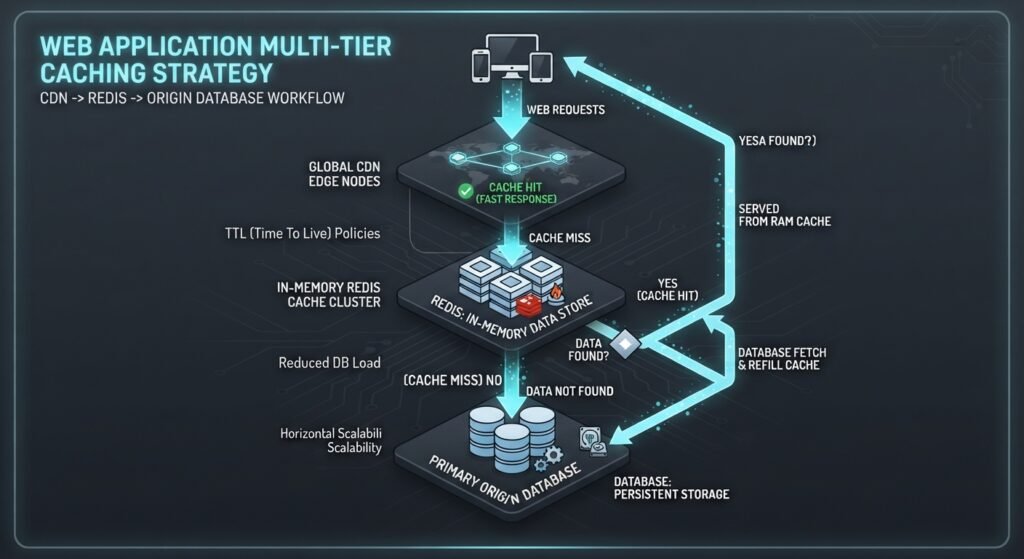
Step 1: Implement Multi-Tier Caching
The fastest database query or computational task is the one that never has to run. Implement caching across three distinct application boundaries:
- In-Memory Caching (Redis/Memcached): Cache frequent database query results, user sessions, and API responses directly in RAM to serve data in sub-millisecond timeframes.
- HTTP & Browser Caching: Utilize
Cache-Controlheaders (e.g.,max-age,stale-while-revalidate) to instruct client browsers to store static assets locally. - Content Delivery Networks (CDNs): Deploy dynamic edge rules via CDNs like Cloudflare or Fastly to cache full HTML pages or API responses at global edge locations.
Step 2: Optimize Web Application Performance
Database disk I/O operations are frequently the single largest source of backend latency.
- Index Frequently Queried Columns: Ensure columns used in
WHERE,JOIN,ORDER BY, andGROUP BYclauses have appropriate B-Tree or Hash indexes. - Eliminate N+1 Query Problems: Configure Object-Relational Mappers (ORMs) to use eager loading instead of lazy loading to fetch relational datasets in a single optimized query.
- Use Database Connection Pooling: Maintain persistent database connection pools (such as PgBouncer for PostgreSQL) to avoid paying the latency cost of opening new TCP/TLS database sockets on every API request.
SQL
-- Example: Adding a composite index to eliminate full table scans
CREATE INDEX idx_orders_user_status ON orders (user_id, status);
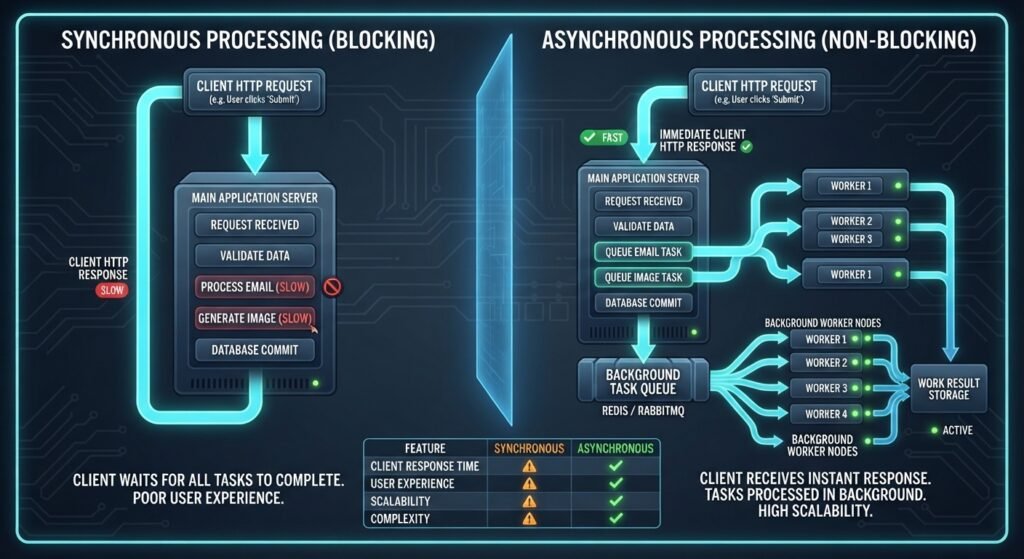
Step 3: Streamline Backend Code and Asynchronous Tasks
Heavy computation or external network calls inside the synchronous HTTP request-response cycle slow down TTFB.
- Offload Background Jobs: Move non-critical tasks (such as email notifications, PDF generation, or webhook dispatches) to background message queues like RabbitMQ or Celery.
- Enable Asynchronous I/O: Leverage non-blocking event loops or concurrent worker threads to process independent operations simultaneously.
Network and Asset Optimization Strategies
Optimizing server-side execution is only half the equation; minimizing network transfer overhead is equally critical for global responsiveness.
┌─────────────────────────────────────────────────────────────────────────────────┐
│                    NETWORK AND ASSET OPTIMIZATION CHECKLIST                     │
├──────────────┬──────────────────┬──────────────────┬────────────────────────────┤
│ STRATEGY 1   │ STRATEGY 2       │ STRATEGY 3       │ STRATEGY 4                 │
│ Enable Next- │ Optimize Payload │ Implement HTTP/3 │ Geographically             │
│ Gen Brotli   │ Sizes (JSON &    │ & Keep-Alive     │ Distribute                 │
│ Compression  │ Images)          │ Connection Pool  │ Origin Servers             │
└──────────────┴──────────────────┴──────────────────┴────────────────────────────┘
- Enable Brotli and Gzip Compression: Compress dynamic JSON responses and text assets at the web server layer (Nginx, Caddy) using Brotli compression, reducing payload transfer sizes by up to 30% over standard Gzip Optimize Web Application Performance.
- Upgrade to HTTP/3 and QUIC: Adopt HTTP/3 protocol implementations to eliminate head-of-line blocking, accelerate TLS handshakes, and optimize packet loss recovery on mobile networks.
- Minify and Tree-Shake Code Assets: Strip unnecessary whitespace, comments, and unused code modules from JavaScript and CSS bundles using modern build tools before serving them to clients
- Optimize Web Application Performance
For web performance standards and Core Web Vitals guidelines, consult the official Google Web.dev Performance Documentation.
Performance Optimization Matrix
| Optimization Area | Primary Bottleneck Solved | Implementation Effort | Expected Latency Reduction |
|---|---|---|---|
| Redis In-Memory Caching | High Database CPU & Disk Read Latency | Medium | 80% – 95% reduction on cached routes |
| Database Indexing | Slow, Full-Table Database Scans | Low | 10x – 100x query speedup |
| CDN Edge Distribution | Long Physical Distance Network RTT | Low | 50% – 70% decrease in global TTFB |
| Asynchronous Message Queues | Blocking Execution in HTTP Request Loop | Medium | Immediate user response turnaround |
| Brotli Compression | Network Transfer Delay on Large Payloads | Low | 20% – 35% reduction in transfer sizes |
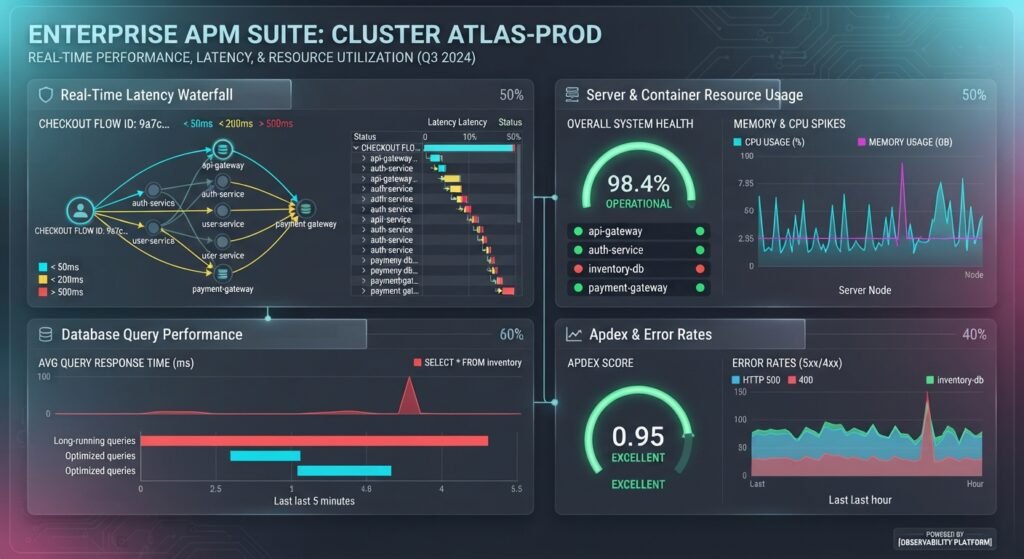
Mastering how to optimize web application performance and reduce server latency requires a disciplined, full-stack approach. By implementing Redis in-memory caching, indexing database queries, offloading heavy computations to asynchronous task queues, and leveraging global CDN networks, software teams can dramatically reduce response latency. Prioritize these performance optimization strategies today to deliver lightning-fast web experiences that boost conversion rates and search engine rankings.
Frequently Asked Questions (FAQs)
What is a good target server latency or TTFB for a scalable web application?
A target Time to First Byte (TTFB) should ideally be under 200 milliseconds. Achieving TTFB under 100ms indicates exceptional backend performance, while TTFB exceeding 600ms requires immediate server optimization under Google’s Core Web Vitals guidelines.
How do unindexed database tables impact web application performance and server latency?
Without indexes, database engines must perform a full table scan, reading every row from disk memory to satisfy a query. As database tables grow to millions of records, single queries can jump from milliseconds to several seconds, stalling application threads and driving up latency.
Does using a CDN reduce server latency for dynamic web application APIs?
Yes. Modern CDNs offer features like API caching, persistent TCP/TLS connection pooling back to origin servers, and edge computing (Worker functions) that reduce network round-trips even for non-static dynamic endpoints.
Optimize Web Application Performance
1 thought on “How to Optimize Web Application Performance and Reduce Server Latency”