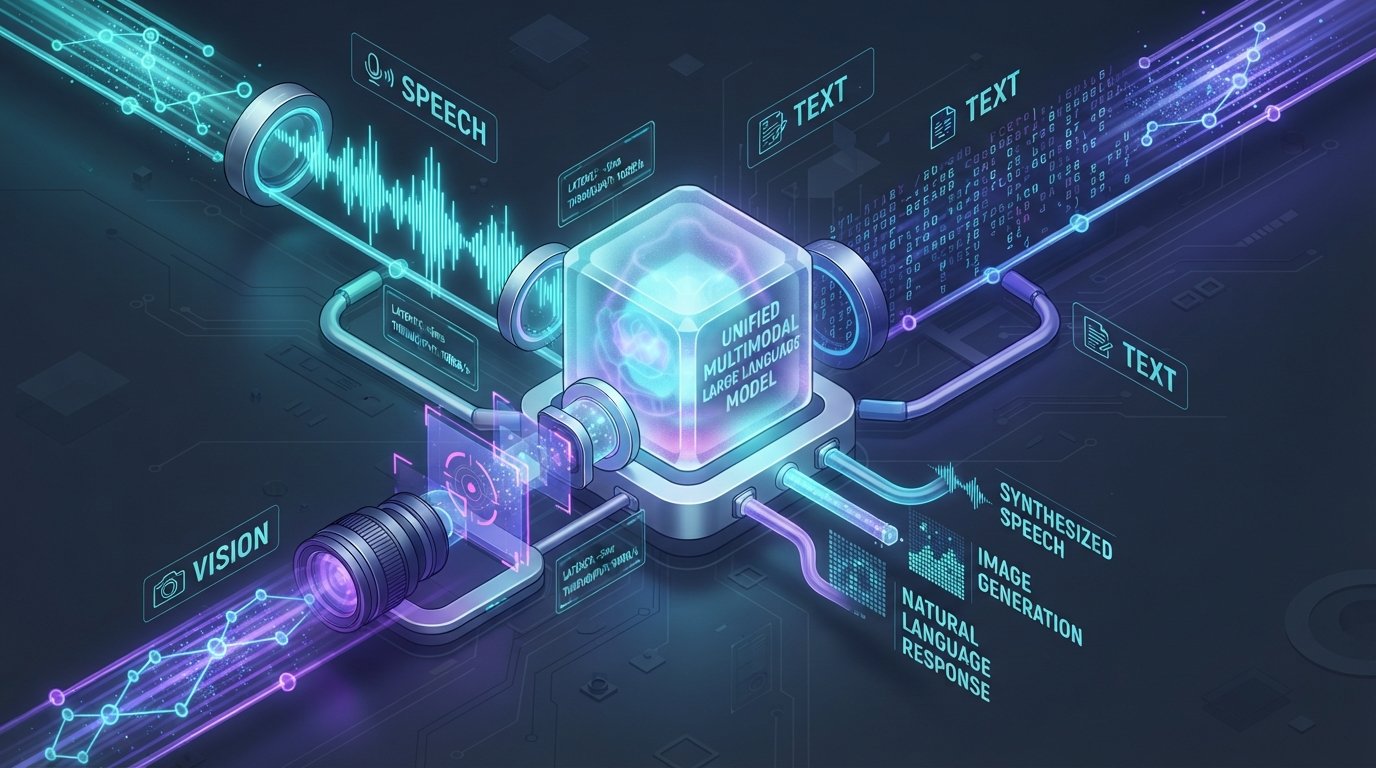
Artificial Intelligence is moving rapidly beyond static, text-in-text-out chat interfaces. Today, the most groundbreaking software applications process audio, image streams, and text simultaneously in low-latency loops. Building real-time multimodal AI apps requires a fundamental shift in traditional system design—transitioning from synchronous request-response models to high-throughput, event-driven streaming architectures.
Whether you are building a conversational voice agent, a live video analytics tool, or a multimodal augmented reality engine, combining speech, vision, and text Large Language Models (LLMs) requires careful orchestration.
Key Takeaways
- Unified Input Fusion: Real-time multimodal AI systems merge text, audio tokens, and visual frames into a single contextual processing pipeline.
- Latency is the Core Metric: Human conversation demands end-to-end response times under 500ms; optimizing transport protocols like WebRTC or WebSockets is critical.
- Native vs. Orchestrated Multimodality: Developers can either chain single-modality models (STT + LLM + TTS) or use natively multimodal foundational models.
- Edge-Cloud Hybrid Pipelines: Preprocessing video frames and audio sampling on the edge significantly reduces cloud compute bandwidth and latency costs.
The Shift to Multimodal AI Architectures
Traditional AI architectures handle tasks in isolation. A speech-to-text (STT) model transcribes an audio file, passes the text payload to a language model, and a text-to-speech (TTS) engine speaks the result. While functional for async tasks, this daisy-chained model fails the speed test for live applications.
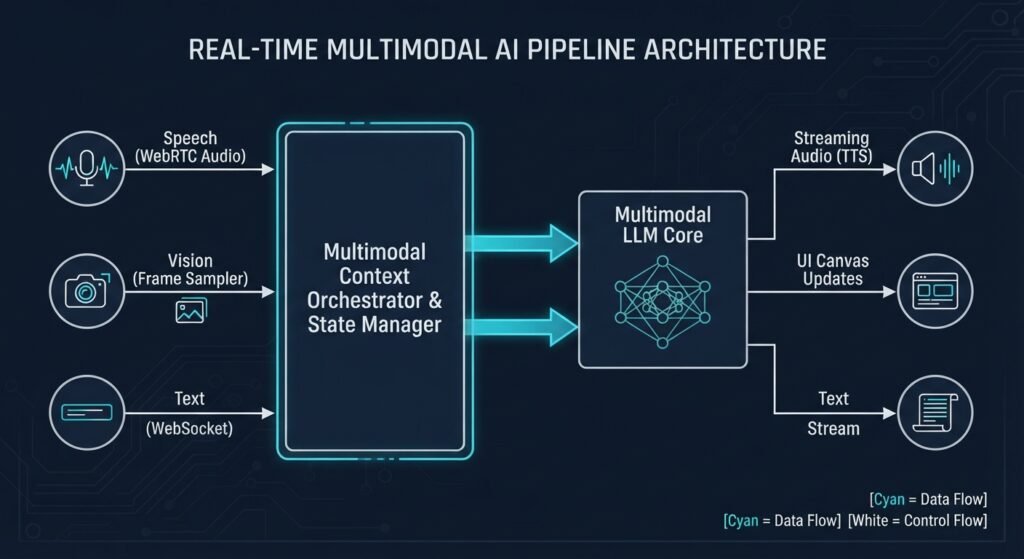
When building real-time multimodal AI apps, developers rely on stream-first paradigms. Audio, visual tokens, and text tokens are treated as parallel events flowing through a unified event pipeline, allowing the system to comprehend non-verbal cues, visual context, and vocal tone with sub-second response times.
+-----------------------------------------------------------------------+
|                         Input Event Stream                            |
|  [ Live Video Frames ]    [ Live Audio Chunks ]    [ Text Prompts ]   |
+--------------------------+------------------------+-------------------+
                           |                        |
                           v                        v
+-----------------------------------------------------------------------+
|                    Streaming Gateway (WebRTC / WS)                    |
+-----------------------------------------------------------------------+
                                   |
                                   v
+-----------------------------------------------------------------------+
|                 Orchestration Layer & Vector Context                  |
+-----------------------------------------------------------------------+
                                   |
                                   v
+-----------------------------------------------------------------------+
|             Multimodal LLM Processing Engine / Router                 |
+-----------------------------------------------------------------------+
                                   |
                                   v
+-----------------------------------------------------------------------+
|                        Unified Output Stream                          |
|      [ Synthesized Speech ]    [ Text Stream ]    [ Overlay Data ]    |
+-----------------------------------------------------------------------+
Core Components of Real-Time Multimodal Pipelines
To execute complex, low-latency AI interactions, you need three core modalities working in tandem:
1. Vision Processing: Frame Sampling & Feature Extraction
Streaming high-definition video directly into an LLM drains bandwidth and skyrockets compute costs. Instead, real-time apps utilize dynamic frame sampling—extracting keyframes at 1–5 FPS or relying on edge computer vision models (like YOLO) to detect scene changes before sending target image frames to the multimodal LLM context window.
2. Speech Processing: Bidirectional Audio Streaming
Audio requires continuous, bidirectional streaming. WebSockets and WebRTC protocols transport raw PCM audio chunks back and forth. Modern native voice models perform direct audio-to-audio processing, skipping text translation entirely to preserve vocal nuances, laughter, and inflection.
3. Text & Reasoning Engine
The central brain handles conversation context, memory retrieval, tool calling, and reasoning. Integrated vector databases allow the multimodal engine to cross-reference incoming visual data with historical user knowledge instantly.
Native Multimodal Models vs. Cascaded Pipelines
When engineering your system, one of the most vital decisions is selecting your model architecture strategy.
| Feature / Aspect | Cascaded Pipeline Architecture (STT + LLM + TTS) | Native Multimodal Architecture |
| Latency | Higher (300ms–1500ms cumulative delay) | Ultra-low (<300ms direct processing) |
| Context Retention | Loses tone, emotion, background noise context | Captures vocal inflection, pacing, and visual context |
| Flexibility | High (swap individual STT/TTS models easily) | Moderate (tied to foundational model vendor specs) |
| Cost Dynamics | Predictable per-token / per-minute rates | High GPU memory footprint; complex token pricing |
Using a cascaded pipeline gives you modularity—you can swap out your speech recognition layer without changing your reasoning engine. However, native multimodal models process audio and vision tokens directly, retaining crucial context that text transcribers throw away, such as pitch, hesitation, and visual positioning.
Tackling the Latency Bottleneck
The human brain perceives delays over 200ms in natural voice conversations as awkward lag. To keep latency minimal when building real-time multimodal AI apps, engineers apply several key performance optimizations:
- Transport Protocols: Replace standard REST APIs with WebRTC or WebSocket connections to handle bidirectional streaming with minimal overhead.
- Speculative Execution: Begin generating and streaming audio tokens before the language model has finished crafting its complete text output.
- Token Pruning & Summarization: Keep the active context window lean by constantly compressing older conversation turns into concise semantic summaries.
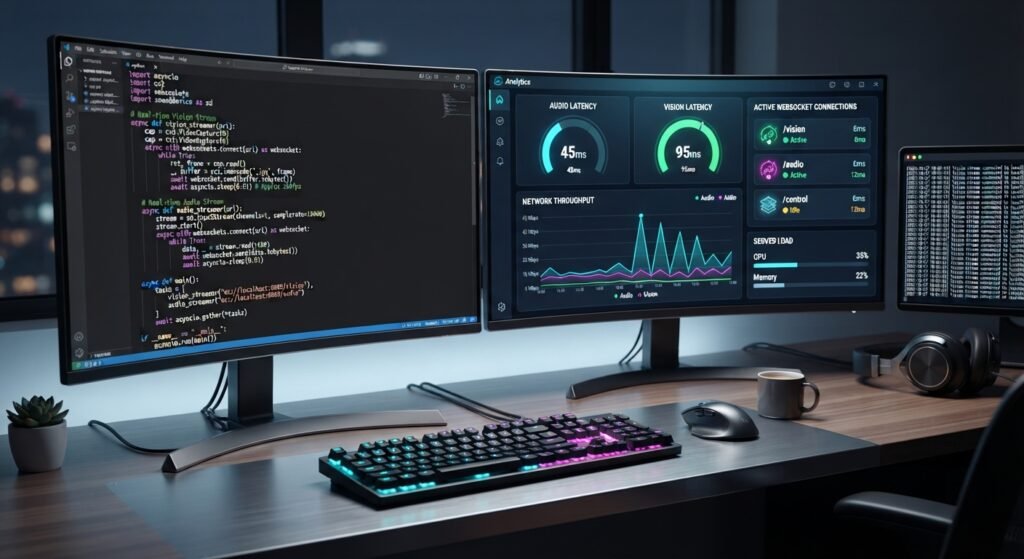
Architectural Workflow: A Step-by-Step Implementation Strategy
Designing a production-ready real-time app requires clear separation of concerns across your technology stack.
- Ingestion Layer: Capture video and audio streams via client-side WebRTC pipelines, applying client-side noise suppression and audio chunking (e.g., 20ms–50ms frames).
- Edge Filtering: Process video streams locally to drop static frames, passing only distinct state changes to the cloud API layer.
- Multimodal Orchestration: Route audio, image frames, and system prompts into an event loop managed by frameworks such as LangChain, LlamaIndex, or custom Rust/Go microservices.
- Context Injection: Execute fast vector lookups to retrieve relevant domain knowledge or session memory.
- Streaming Output: Stream synthesized audio chunks back to the client immediately upon token generation, rendering real-time UI updates synchronously.
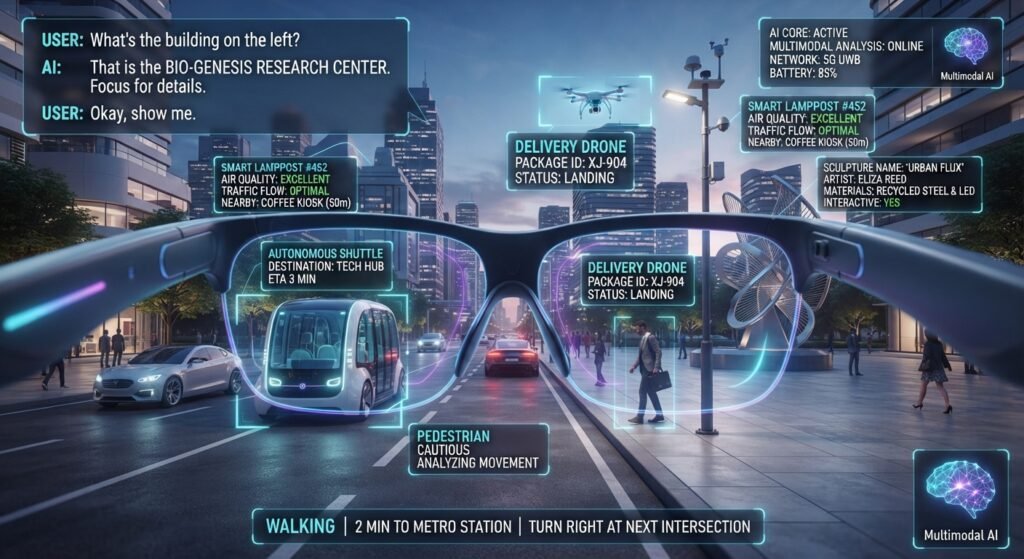
Real-World Use Cases for Multimodal AI
- AI Customer Assistants: Voice-enabled agents that can look at a user’s smartphone camera to diagnose physical product defects live.
- Interactive Healthcare & Coaching: Virtual fitness coaches that analyze form via live video while offering real-time verbal encouragement and adjustments.
- Hands-Free Enterprise Support: Field technicians wearing smart glasses receive instant, audio-guided repair instructions powered by vision models looking at machinery.
Conclusion
Building real-time multimodal AI apps requires rethinking traditional API-driven software architectures in favor of event-driven, low-latency streaming networks. By combining speech, vision, and text LLMs, you can build immersive software experiences that interact with the physical world naturally and instantaneously. As native multimodal foundational models continue to mature, latency will drop further, making real-time interactive intelligence the standard interface for modern software applications.
Frequently Asked Questions (FAQs)
What is the ideal latency target when building real-time multimodal AI apps?
For natural voice and vision interactions, the industry target is under 300 milliseconds. Delays above 500ms cause interruptions and feel unnatural during continuous conversation.
Should I use WebRTC or WebSockets for real-time AI audio and vision streaming?
WebRTC is generally preferred for live audio and video due to its peer-to-peer capabilities, UDP-based low latency, and built-in congestion control. WebSockets work well for text streaming and light JSON state management.
How do native multimodal LLMs differ from chained AI pipelines?
Native multimodal LLMs consume raw audio, image, and text tokens inside a single model architecture, preserving environmental context and vocal inflection. Chained pipelines use separate models (STT, LLM, TTS) connected in series, which introduces cumulative latency and loses non-textual context.
How can I reduce bandwidth costs when streaming video to vision LLMs?
Use edge-based frame sampling. Instead of streaming 30–60 FPS video directly to the model, analyze frames on the client device and send images only when significant scene changes or specific triggers occur.
1 thought on “Building Real-Time Multimodal AI Apps with Speech, Vision, and Text LLMs”