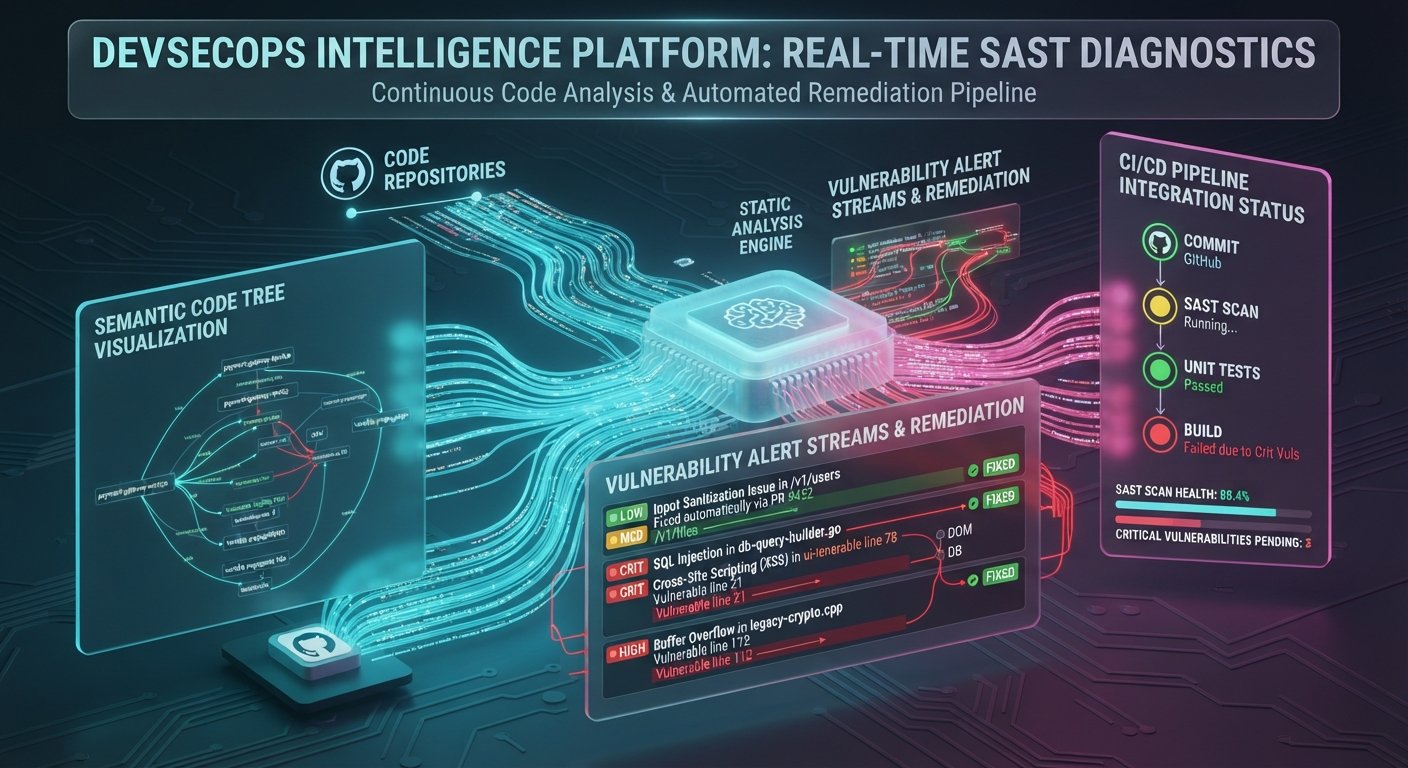
Identifying security vulnerabilities early in the Software Development Life Cycle (SDLC) is critical to preventing high-severity data breaches, compliance failures, and costly hotfixes in production. Static Application Security Testing (SAST) tools empower software engineers and Application Security (AppSec) teams to inspect source code, compiled binaries, and infrastructure-as-code (IaC) templates for security flaws without executing the application.
Selecting the top static code analysis tools for detecting code vulnerabilities requires balancing scanning speed, multi-language support, false-positive reduction, custom rule authoring, and seamless IDE integrations. This comprehensive guide evaluates leading SAST platforms, key scanning paradigms (pattern-based vs. semantic data-flow analysis), and practical implementation strategies for modern DevSecOps pipelines.
Key Takeaways
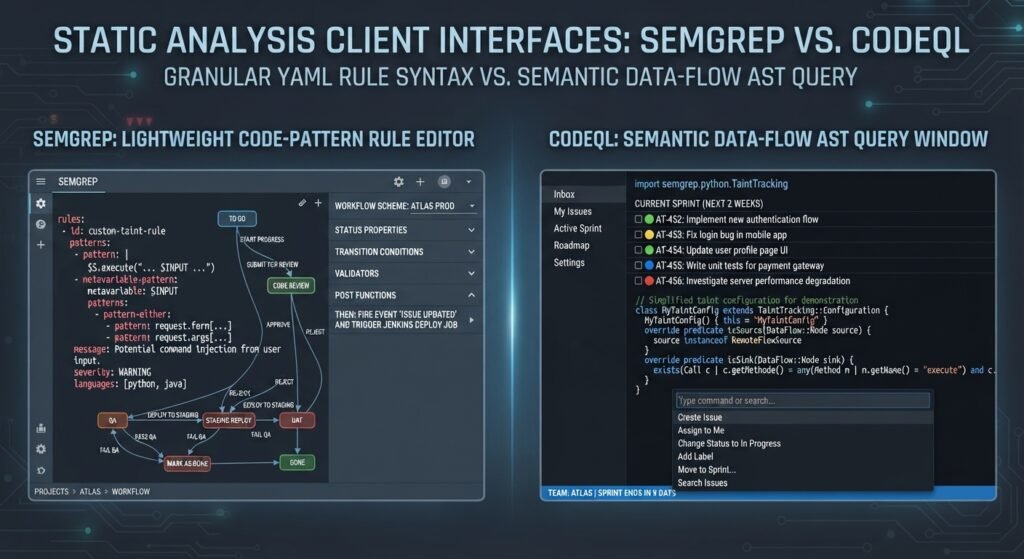
- Scanning Paradigms Dictate Speed vs. Depth: Fast, lightweight pattern-based scanners (like Semgrep) provide immediate feedback during local development, whereas deep semantic taint-analysis engines (like GitHub CodeQL) trace complex cross-file data flows to uncover hidden logic vulnerabilities.
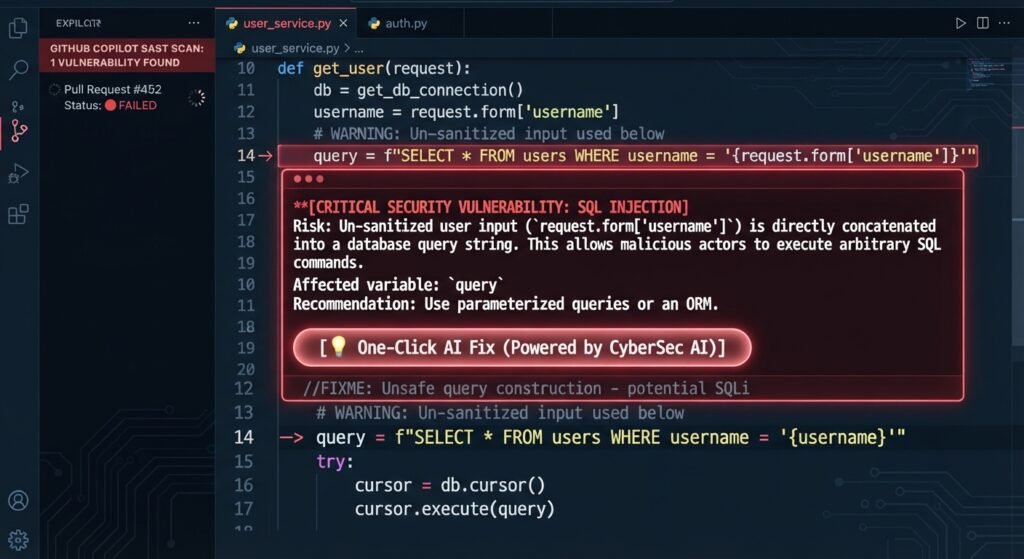
- Shift-Left Developer Workflows: Modern static analysis platforms prioritize IDE extensions (VS Code, JetBrains) and automated Pull Request (PR) inline comments, enabling developers to remediate vulnerabilities before code reaches production branches. OX Security
- Quality vs. Pure AppSec Focus: Tools like SonarQube bridge the gap between technical debt and security bugs, while platforms like Snyk Code, Checkmarx, and Veracode focus heavily on vulnerability management, agentic remediation, and compliance governance. SecureSlate
- Noise Reduction is Mandatory: Modern enterprise SAST tools utilize reachability analysis, context-aware filtering, and AI-driven automated fix suggestions to lower alert fatigue and streamline developer workflows. Jit.io
Technical Evaluation Framework for SAST Tools
To select the right static code analysis solution, engineering and security leadership should evaluate tools across five operational pillars:
┌────────────────────────────────────────────────────────────────────────┐
│               SAST TOOL EVALUATION FRAMEWORK FOR APPSEC                │
├───────────────────────────────┬────────────────────────────────────────┤
│ DETECTION & ANALYSIS METHOD   │ DEVELOPER & PIPELINE INTEGRATION       │
├───────────────────────────────┼────────────────────────────────────────┤
│ - Pattern Matching & RegEx    │ - Native IDE Plugins (VS Code, JetBrains)│
│ - Taint Analysis (Source to Sink)│ - CI/CD Pipeline Gates (GitHub, GitLab) │
│ - Semantic AST Querying       │ - AI-Powered Automated Fix PRs         │
├───────────────────────────────┴────────────────────────────────────────┤
│ GOVERNANCE, ACCURACY & COVERAGE                                        │
│ - Low False-Positive Rate & Noise Reduction                            │
│ - Multi-Language & Framework Support                                   │
│ - Regulatory Compliance Mapping (OWASP Top 10, CWE, PCI DSS, SOC 2)    │
└────────────────────────────────────────────────────────────────────────┘
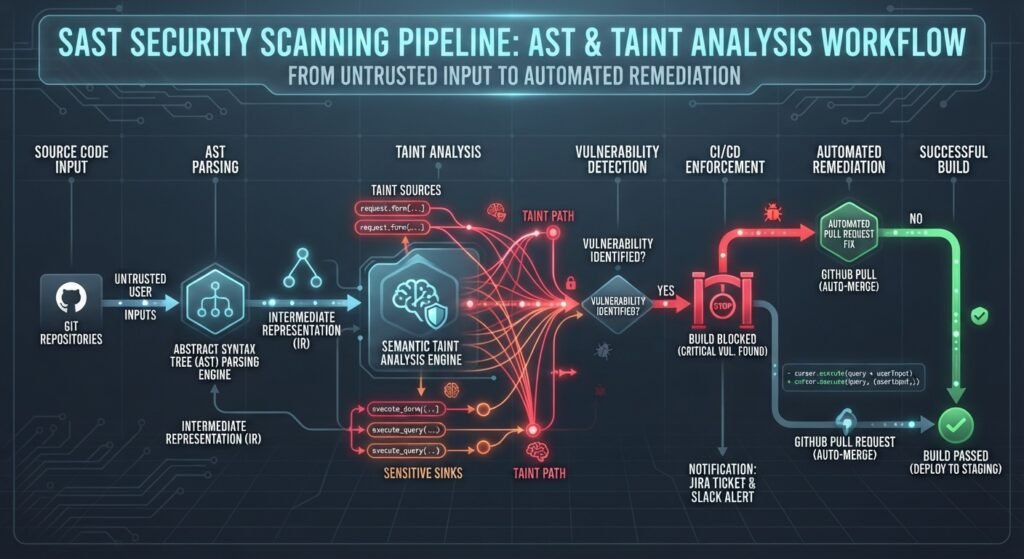
- Analysis Engine Methodology: Tools rely either on fast pattern matching (flagging known bad syntax patterns) or deep semantic taint analysis (tracking untrusted user input from its “source” to a database or system execution “sink”).
- Speed vs. Execution Overhead: Sub-second scans are vital for local git pre-commit hooks, while deep interprocedural analysis is ideal for scheduled CI/CD builds.
- Custom Rule Creation: The ability to write custom rules lets security teams enforce internal API standards and prohibit insecure proprietary patterns.
- Language & Framework Ecosystem: Broad coverage across modern stacks (Python, Go, Java, TypeScript, Rust, C/C++, Terraform) ensures consistent security across microservice architectures.
- Remediation & Actionability: Top tools go beyond flagging lines of code; they provide exact root-cause analysis, contextual remediation guidance, and automated fix pull requests.
Leading Static Code Analysis Tools for Security Vulnerabilities
1. Semgrep: Developer-First Custom Pattern Matching
Semgrep is an open-core, ultra-fast SAST engine designed for developer speed and effortless rule creation. Its rule syntax looks like standard code, allowing security engineers and developers to author custom security checks in minutes without complex query languages.
Rockstar Developer University
- Key Strengths: Sub-second local scanning, intuitive YAML-based rule syntax, zero-configuration setup, and high developer adoption.
- Best Used For: Fast-moving engineering teams seeking fast, customizable security guardrails directly inside IDEs and pull requests.
2. GitHub CodeQL: Deep Semantic Data-Flow Analysis
CodeQL treats source code as a queryable database, enabling security researchers and AppSec teams to write semantic queries that trace complex data paths across entire repositories.
- Key Strengths: Unmatched cross-file taint analysis, native integration with GitHub Advanced Security, free access for open-source projects, and extensive community query libraries.
- Best Used For: Organizations hosted on GitHub requiring deep semantic analysis to detect sophisticated attack chains.
3. SonarQube: Quality & Security Gate Consolidation
SonarQube is a widely adopted static analysis platform that combines code maintainability, technical debt metrics, and core SAST security checking.
Rockstar Developer University
- Key Strengths: Unified quality and security dashboards, clear visual “Quality Gates” for CI/CD releases, multi-language coverage (40+ languages), and robust enterprise reporting.
- Best Used For: Engineering organizations seeking a single tool to manage overall code health alongside foundational security compliance.
4. Snyk Code: Real-Time Developer SAST & AI Remediation
Snyk Code delivers fast, AI-assisted static analysis built explicitly for inline developer feedback and automated remediation workflows.
SecureSlate
- Key Strengths: Near real-time scanning speeds, deep integration across Snyk’s developer security ecosystem (SCA, Container, IaC), and automated patch suggestions.
- Best Used For: Engineering teams prioritizing developer-centric workflows with instant IDE feedback and automated PR fixes. Jit.io
5. Checkmarx One & Veracode: Enterprise AppSec Governance
Checkmarx and Veracode are established enterprise platforms designed for multi-application portfolio visibility, central AppSec administration, and strict regulatory compliance.
- Key Strengths: Broad language support, centralized security policy governance, automated compliance mapping (OWASP, PCI DSS, SOC 2, HIPAA), and multi-method AppSec suite integration. Jit.io
- Best Used For: Large enterprises in regulated industries requiring centralized security audit logging and policy enforcement.
To explore how security and API testing platforms fit into cloud-native pipelines, see our detailed review on the [Best API Testing Tools for Developers: Postman vs Insomnia vs Bruno]([Internal Link: Insert relevant internal URL here with anchor text]).
SAST Tool Feature & Workload Comparison Matrix
| SAST Platform | Primary Analysis Engine | Key Strength | Rule Authoring Complexity | Best Deployment Fit |
|---|---|---|---|---|
| Semgrep | Fast Pattern & Taint Matching | Developer speed & readable custom rules | Low (YAML Syntax) | CLI / IDE / CI/CD |
| GitHub CodeQL | Semantic AST & Data-Flow | Deep cross-file taint analysis | High (QL Language) | GitHub Native / CI |
| SonarQube | Pattern & Quality Rules | Combines code smells & security gates | Moderate | Self-Hosted / Cloud |
| Snyk Code | AI-Enhanced SAST Engine | Real-time IDE scans & automated fixes | Moderate | SaaS / IDE Plugin |
| Checkmarx One | Deep AST Taint Analysis | Enterprise AppSec & compliance governance | Moderate to High | Cloud / Hybrid |
Best Practices for Deploying SAST in DevSecOps Pipelines
To successfully adopt static code analysis tools without stalling release speed or causing developer alert fatigue, follow these four implementation phases:
┌─────────────────────────────────────────────────────────────────────────────────┐
│                    SAST IMPLEMENTATION LIFECYCLE FOR TEAMS                      │
├──────────────┬──────────────────┬──────────────────┬────────────────────────────┤
│ PHASE 1      │ PHASE 2          │ PHASE 3          │ PHASE 4                    │
│ Baseline     │ Rule Tuning &    │ Shift Left to    │ Enforce CI/CD              │
│ Vulnerability│ False-Positive   │ IDEs & Pre-Commit│ Quality Gates              │
│ Audit        │ Reduction        │ Hooks            │                            │
└──────────────┴──────────────────┴──────────────────┴────────────────────────────┘
- Establish a Baseline Audit: Run an initial passive scan across existing codebases to catalog current security debt without blocking developer pull requests.
- Tune Rules and Minimize Noise: Disable irrelevant default rules and customize suppressions to lower false positives, establishing high developer confidence in scanner alerts.
- Shift Left to Local Workflows: Supply developers with IDE plugins (such as VS Code or JetBrains extensions) and git pre-commit hooks to catch vulnerabilities as code is written.
- Enforce CI/CD Blocking Quality Gates: Block merges for high and critical vulnerabilities in pull requests while serving actionable inline remediation guidance.
For authoritative standards on web application security risks, refer to the official OWASP Top Ten Security Project Guide.
Conclusion
Deploying the top static code analysis tools for detecting code vulnerabilities is a pivotal step toward building resilient, secure software applications. Scanners like Semgrep and Snyk Code deliver rapid, developer-centric feedback that halts security bugs right inside the IDE. Meanwhile, platforms like GitHub CodeQL and Checkmarx provide the deep semantic visibility required to trace cross-file data flows and satisfy enterprise security compliance. By pairing the right tool with automated CI/CD quality gates, engineering teams can catch and remediate code vulnerabilities efficiently before they ever reach production.
Rockstar Developer University
Frequently Asked Questions (FAQs)
What is the main difference between SAST and DAST?
Static Application Security Testing (SAST) analyzes source code, binaries, or configuration files from the inside out without executing the program. Dynamic Application Security Testing (DAST) tests a running application from the outside in, simulating real-world attacks against live HTTP endpoints and user interfaces.
How do static analysis tools lower false-positive rates?
Modern SAST tools minimize false positives by combining abstract syntax tree (AST) parsing with semantic taint analysis—verifying whether untrusted inputs actually reach sensitive database or system execution sinks—and allowing security teams to tune rules to fit specific framework contexts.
Jit.io
Can static code analysis replace manual security code reviews or penetration testing?
No. While SAST tools excel at automatically identifying known syntactic patterns, hardcoded secrets, and common OWASP top 10 flaws across massive codebases, they cannot replace human code reviews or penetration testing for detecting complex business logic flaws, authorization bypasses, or architectural design errors.
1 thought on “Top Static Code Analysis Tools for Detecting Code Vulnerabilities”