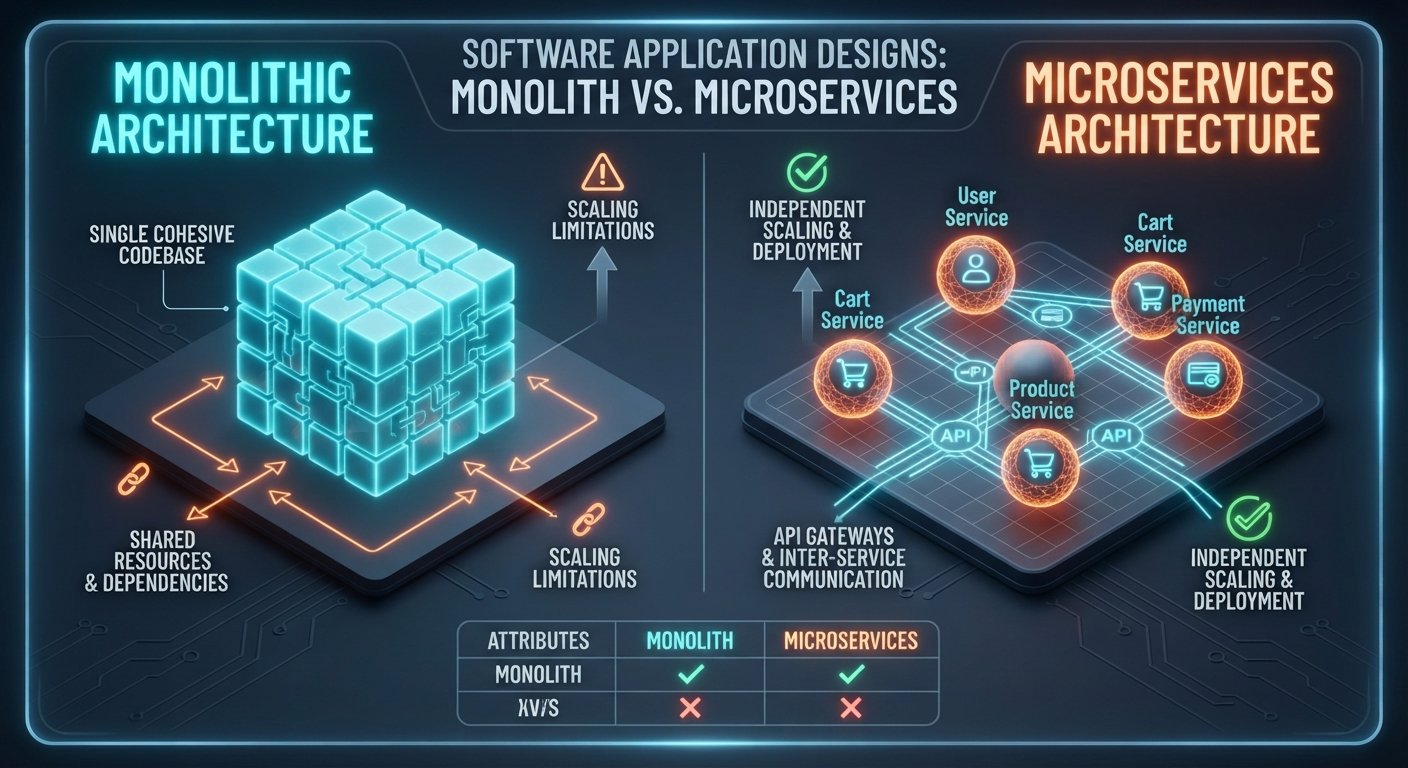
Choosing the right application architecture is one of the most critical decisions a engineering team can make. As software platforms grow, technical debt, release velocity bottlenecks, and infrastructure scaling costs inevitably force software leaders to re-evaluate how their codebases are structured.
Evaluating monolith vs microservices architecture requires balancing immediate development speed against long-term operational complexity. While monolithic systems offer simplicity and rapid initial deployment, microservices provide independent scaling and fault isolation for large, distributed engineering teams. This plain-English guide breaks down the core differences, advantages, trade-offs, and decision frameworks to help your software team choose the optimal path.
Key Takeaways
- Architectural Trade-Offs: Understanding monolith vs microservices architecture comes down to choosing between monolithic operational simplicity and microservices organizational autonomy.
- Unified vs. Distributed: A monolith deploys as a single executable unit sharing a centralized database, while microservices run as decoupled, independently deployable services communicating over APIs.
- Team Scaling Bottlenecks: Monoliths excel for early-stage products and small teams, whereas microservices solve team coordination bottlenecks in large engineering organizations.
- Evolutionary Migration: Software teams do not need to choose between extremes; adopting a modular monolith first provides a clean path toward microservices when business scale justifies the shift.
What is Monolithic Architecture?
A monolithic architecture is a traditional software development model where all application components—user interface, backend business logic, database access layers, and background workers—are combined into a single, unified codebase and deployed as one unit.
┌────────────────────────────────────────────────────────────────────────┐
│                        MONOLITHIC ARCHITECTURE                         │
├────────────────────────────────────────────────────────────────────────┤
│ Single Application Deployment Package (.jar, .war, Docker Container)  │
│                                                                        │
│  ┌───────────────────┐  ┌───────────────────┐  ┌───────────────────┐  │
│  │ User Auth Module  │  │ Billing Engine    │  │ Notification Unit │  │
│  └─────────┬─────────┘  └─────────┬─────────┘  └─────────┬─────────┘  │
│            └──────────────────────┼──────────────────────┘            │
│                                   ▼                                    │
│                    Unified Relational Database                         │
└────────────────────────────────────────────────────────────────────────┘
In a monolith, components interact through direct in-memory function calls rather than network requests.
Advantages of a Monolith
- Simplified Development: Easy to build, test, and debug locally without orchestrating multiple distributed services.
- Straightforward Deployment: Deploying involves shipping a single artifact to a server host or container cluster.
- High Performance: In-memory calls between modules eliminate network latency and serialization overhead.
- ACID Transactions: Database operations easily maintain strict ACID compliance within a shared relational database.
Disadvantages of a Monolith
- Tight Coupling: Changes in one module can inadvertently break unrelated features elsewhere in the codebase.
- Scaling Bottlenecks: To scale a single high-traffic component, the entire application must be replicated, increasing resource consumption.
- Deployment Risk: A critical error or memory leak in one module can bring down the entire platform.
What is Microservices Architecture?
Monolith vs Microservices Architecture application down into a collection of small, loosely coupled, independently deployable services organized around specific business domains (e.g., Auth Service, Payment Service, Inventory Service).
┌────────────────────────────────────────────────────────────────────────┐
│                      MICROSERVICES ARCHITECTURE                        │
├────────────────────────────────────────────────────────────────────────┤
│ API Gateway / Service Mesh Router                                      │
│    │                                                                   │
│    ├──► Auth Service ──────► Dedicated Auth DB                         │
│    │                                                                   │
│    ├──► Payment Service ───► Dedicated Payment DB                      │
│    │                                                                   │
│    └──► Inventory Service ─► Dedicated Inventory DB                    │
└────────────────────────────────────────────────────────────────────────┘
Each microservice manages its own private database, preventing direct database access across service boundaries. Services communicate using lightweight protocols such as REST APIs, gRPC, or asynchronous message brokers (e.g., Kafka, RabbitMQ).
Advantages of Monolith vs Microservices Architecture
- Independent Deployments: Teams can deploy updates to individual services continuously without redeploying the entire system.
- Targeted Scalability: Scale only the resource-intensive services independently based on real-time demand.
- Fault Isolation: A failure or crash in one service is contained, allowing the rest of the application to remain operational.
- Technology Flexibility: Teams can select different programming languages, frameworks, or databases tailored to each service’s requirements.
Disadvantages of Microservices
- Operational Complexity: Managing dozens of distributed services requires advanced DevOps infrastructure, service discovery, and monitoring tools.
- Data Consistency Challenges: Managing distributed transactions across isolated databases requires event-driven patterns like Sagas instead of traditional SQL joins.
- Network Latency: Inter-service network calls introduce latency, network serialization overhead, and potential connection failures.
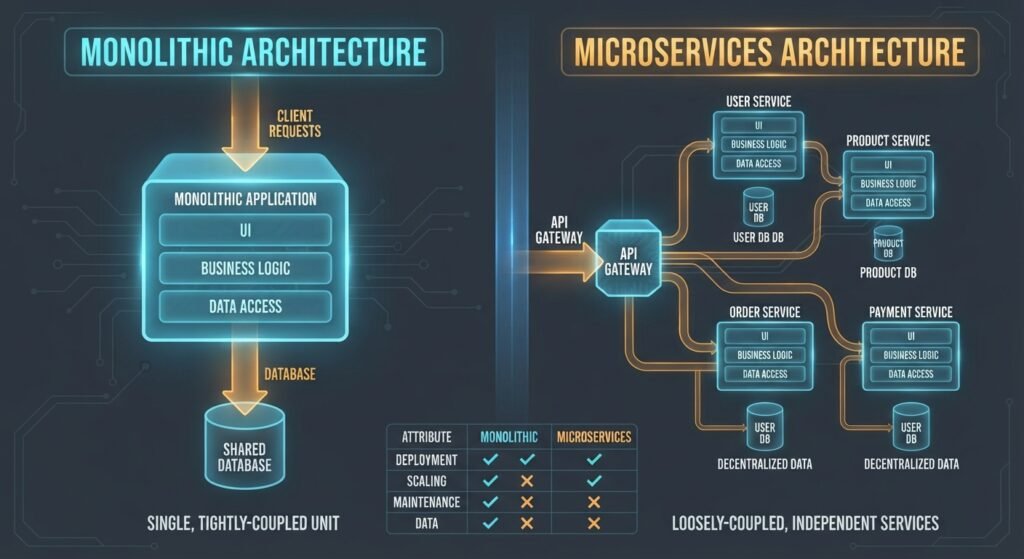
┌─────────────────────────────────────────────────────────────────────────────────┐
│                       ARCHITECTURAL COMPARISON MATRIX                           │
├───────────────────┬──────────────────────────────┬──────────────────────────────┤
│ FEATURE           │ MONOLITH                     │ MICROSERVICES                │
├───────────────────┼──────────────────────────────┼──────────────────────────────┤
│ Deployment Unit   │ Single shared artifact       │ Multiple independent builds  │
│ Data Management   │ Single centralized database │ Database-per-service pattern │
│ Communication     │ In-memory method calls       │ HTTP REST / gRPC / Pub-Sub   │
│ Testing           │ Simple end-to-end setups     │ Complex integration testing  │
│ Operational Cost  │ Low initial overhead         │ High initial DevOps overhead │
└───────────────────┴──────────────────────────────┴──────────────────────────────┘
When comparing monolith vs microservices architecture, the decision rarely comes down to which pattern is strictly “better.” Instead, it depends on team size, domain complexity, and operational maturity.
For guidance on choosing the right tech stack components for either paradigm, explore our step-by-step guide on [How to Choose the Right Tech Stack for a Scalable Web Application]([Internal Link: Insert relevant internal URL here with anchor text]).
How to Decide: Which Architecture Fits Your Software Team?
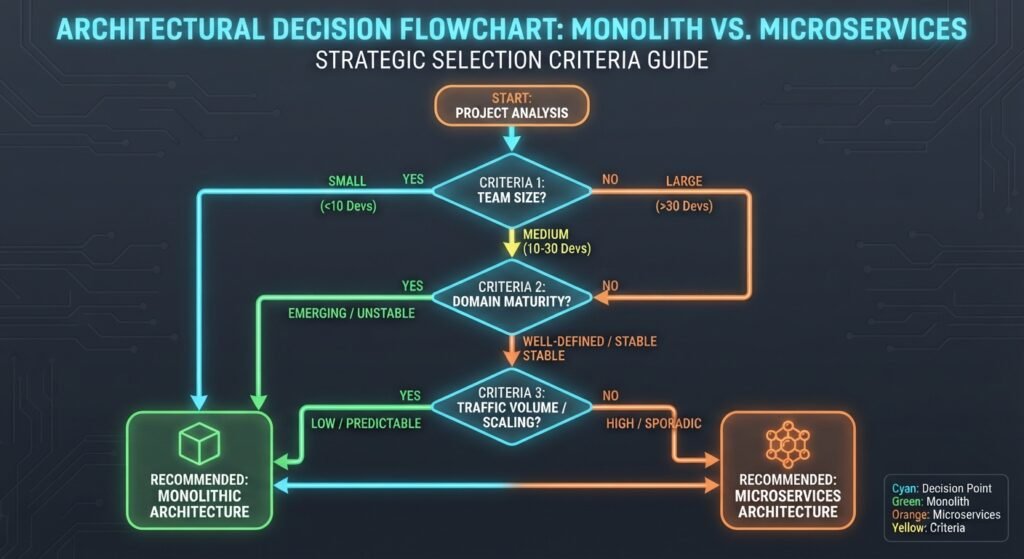
To determine the right architectural direction, evaluate your team against these four criteria:
1. Team Size and Organizational Structure
According to Conway’s Law, system design naturally mirrors an organization’s communication structure:
- Teams under 15–20 engineers: A monolithic architecture usually delivers higher velocity, as communication overhead is low.
- Large engineering organizations (50+ engineers): Microservices allow autonomous domain teams to own, build, and deploy services independently without stepping on each other’s code.
2. Domain Complexity and Maturity
If your business model or domain boundaries are still evolving, starting with microservices can lead to misaligned service boundaries that require costly refactoring. A monolith lets you explore and refine domain boundaries before locking them into service APIs.
3. Traffic and Scalability Needs
If specific application workloads experience asymmetric load—such as real-time notifications or video processing—microservices allow you to scale those specific workloads without scaling the rest of the stack.
4. DevOps Readiness
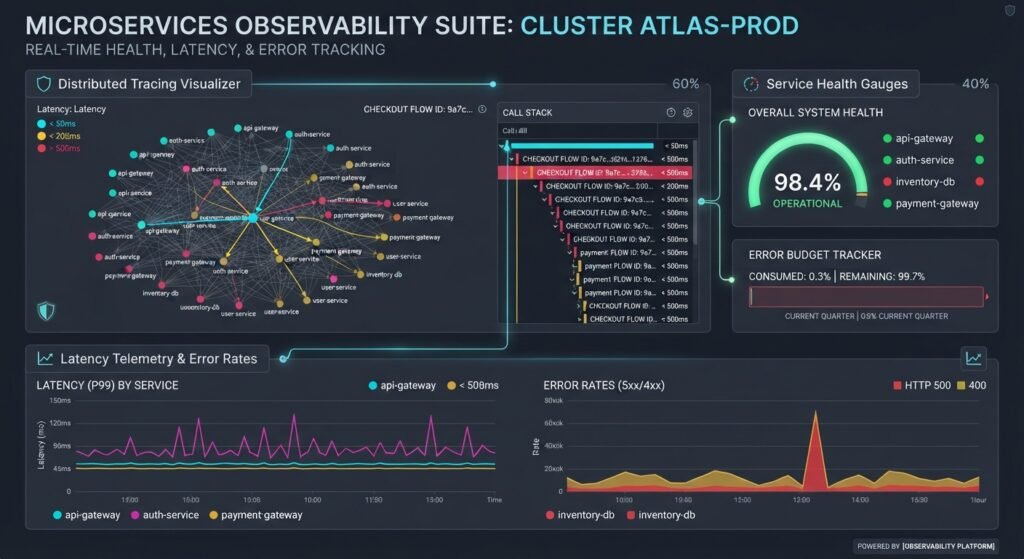
Microservices demand robust automated infrastructure. Without mature continuous integration, continuous delivery pipelines, and distributed tracing, managing microservices becomes unmaintainable.
Software teams do not have to choose between a messy “spaghetti” monolith and a complex microservices mesh. The Modular Monolith offers a compelling middle ground.
┌─────────────────────────────────────────────────────────────────┐
│                      THE MODULAR MONOLITH                       │
├─────────────────────────────────────────────────────────────────┤
│ Single Deployment Artifact                                      │
│                                                                 │
│  ┌─────────────────────┐       ┌─────────────────────┐          │
│  │ Auth Module         │───────│ Billing Module      │          │
│  │ (Strict Boundary)   │ APIs  │ (Strict Boundary)   │          │
│  └─────────────────────┘       └─────────────────────┘          │
│            │                              │                     │
│            └──────────────────────────────┘                     │
│                           ▼                                     │
│               Single Database / Isolated Schemas                │
└─────────────────────────────────────────────────────────────────┘
A modular monolith enforces strict code boundaries between internal modules within a single codebase. Modules communicate only through formal interface contracts, preventing arbitrary cross-module dependencies. If a specific module later requires independent scaling, it can easily be extracted into a standalone microservice.
For official guidelines on cloud migration strategies, consult the AWS Cloud Architecture Center Guidelines.
Architectural Traps to Avoid
| Architectural Trap | Risk Level | Root Cause | Preventive Solution |
|---|---|---|---|
| Distributed Monolith | High | Shared database across microservices | Enforce strict database-per-service isolation |
| Premature Microservices | High | Adopting microservices before product-market fit | Start with a modular monolith first |
| Monolithic Microservices | Medium | Overly granular services (nano-services) | Group services around cohesive business domains |
| Lack of Observability | Critical | Missing distributed tracing and centralized logs | Implement OpenTelemetry and structured logging early |
Navigating monolith vs microservices architecture requires aligning system structure with team size, business maturity, and operational resources. Monoliths offer unmatched simplicity, rapid development, and low operational overhead for early-stage products and small teams. Microservices provide scalability and team autonomy, but introduce distributed system complexity. By adopting a modular design mindset early, software teams can build resilient platforms that scale cleanly as business requirements evolve.
Frequently Asked Questions (FAQs)
What is the primary difference in the monolith vs microservices architecture debate?
The primary difference lies in deployment structure and data storage. A monolith packages all code components into a single executable sharing one database, while microservices decompose the application into independent, domain-focused services with isolated databases.
When should a software team migrate from a monolith to microservices?
A team should consider migrating when monolithic code contention slows down team velocity, when scaling specific application components becomes cost-prohibitive, or when independent domain teams require autonomous deployment pipelines.
What is a distributed monolith and why should software teams avoid it?
A distributed monolith occurs when an application is split into separate microservices, but those services still share a centralized database or tightly coupled synchronous dependencies. It combines the operational complexity of microservices with the deployment rigidity of a monolith.
1 thought on “Monolith vs Microservices Architecture: A Plain-English Guide for Software Teams”