Conversational AI has evolved far beyond clunky, rules-based interactive voice response (IVR) systems and rigid text-chat windows retrofitted with speech synthesis. Modern users expect fluid, human-like voice interactions characterized by sub-second latency, natural prosody, emotional nuance, and the ability to handle mid-sentence interruptions seamlessly.
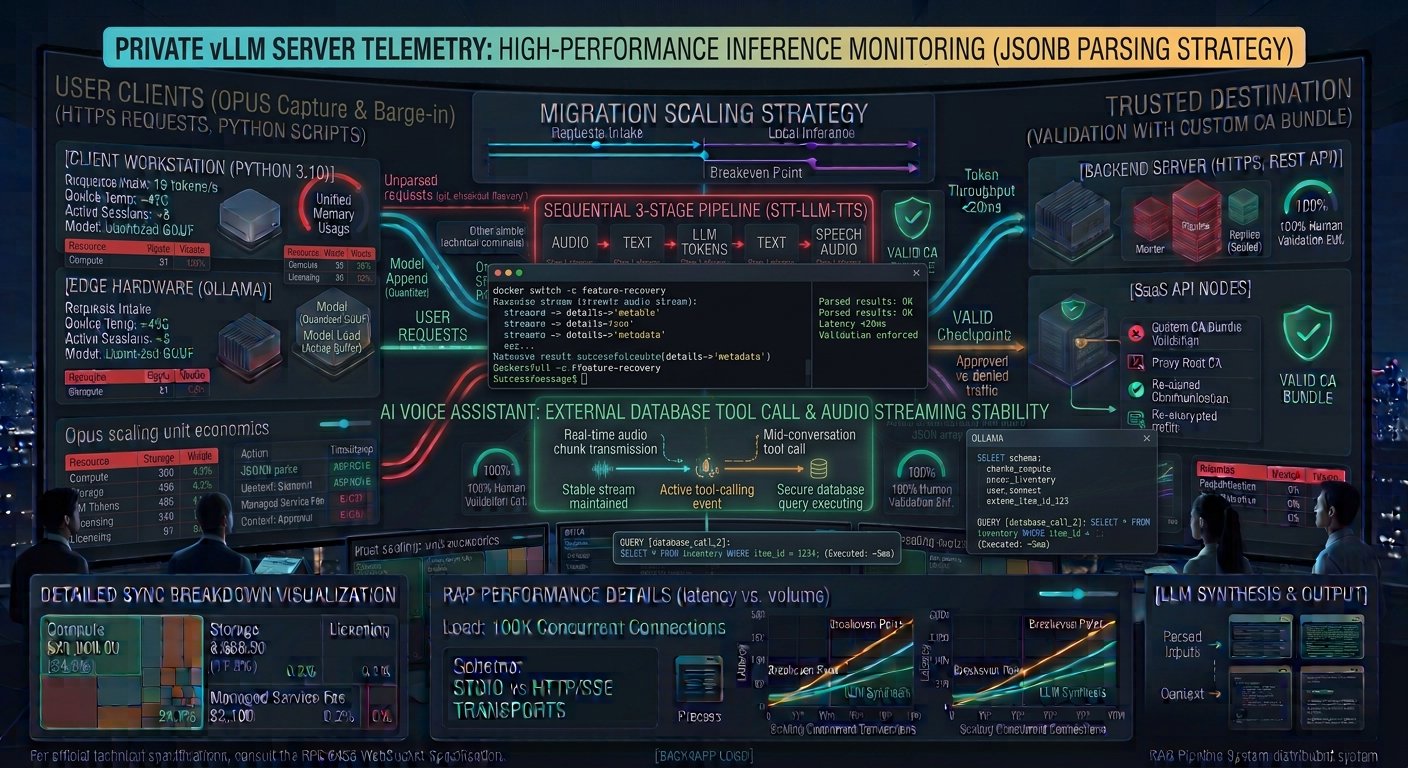
Historically, engineering teams implemented voice bots by chaining separate components together: a Speech-to-Text (STT) engine, a text-based Large Language Model (LLM), and a Text-to-Speech (TTS) synthesizer. However, this traditional cascade architecture introduces cumulative latency, loses paralinguistic cues like tone and laughter, and creates disjointed conversation loops.
Mastering building voice-first generative AI assistants with speech-to-speech LLMs requires transitioning to native multimodal architectures that process audio tokens directly, cutting down latency and delivering truly natural human-computer interaction.
Building Voice-First Generative AI Assistants
Key Takeaways
- The Shift from Cascade to Native Multimodal: Traditional STT → LLM → TTS pipelines introduce compounding latency and strip away emotional nuance. Native speech-to-speech models ingest and output raw audio directly, enabling sub-300ms response times.
- The Latency Budget: To maintain a natural conversational cadence, total end-to-end response time must remain under 1 second (ideally under 400ms) from the moment the user stops speaking.
- Intelligent Turn-Taking & Interruption Handling: Production voice assistants require robust Voice Activity Detection (VAD) and streaming audio buffers to detect user interruptions and immediately halt assistant speech.
- Tool Calling in Audio Spaces: Modern voice agents must execute backend tool calls and database queries without breaking the conversational flow or creating awkward dead air.
The Architectural Evolution: Cascade vs. Native Speech-to-Speech
To understand why native speech-to-speech models represent a paradigm shift, we must examine the limitations of legacy orchestration pipelines.
┌────────────────────────────────────────────────────────────────────────┐
│                   VOICE AI ARCHITECTURAL PARADIGMS                     │
├───────────────────────────────┬────────────────────────────────────────┤
│ TRADITIONAL CASCADE (STT-LLM-TTS)│ NATIVE SPEECH-TO-SPEECH (Multimodal) │
├───────────────────────────────┼────────────────────────────────────────┤
│ Audio ➔ STT (Text) ➔ LLM (Text)│ Audio In ➔ Multimodal Transformer ➔   │
│ ➔ TTS (Audio)                 │ Audio Out                              │
├───────────────────────────────┼────────────────────────────────────────┤
│ High compounding latency      │ Ultra-low latency (<300ms response)    │
│ Loses emotion, tone, & laughs │ Preserves prosody, emotion, & cadence  │
│ Complex error propagation     │ Unified reasoning across audio tokens  │
└───────────────────────────────┴────────────────────────────────────────┘
The Traditional Pipeline Bottleneck
In a legacy cascade setup, audio streams in over WebRTC or telephony layers, gets transcribed into text by an STT model, processed by a text LLM, and finally converted back into speech by a TTS engine. While streaming chunks help overlap these operations, each sequential handoff adds latency overhead, and text-based LLMs completely miss acoustic cues such as sarcasm, hesitation, or urgency.
The Speech-to-Speech Multimodal Advantage
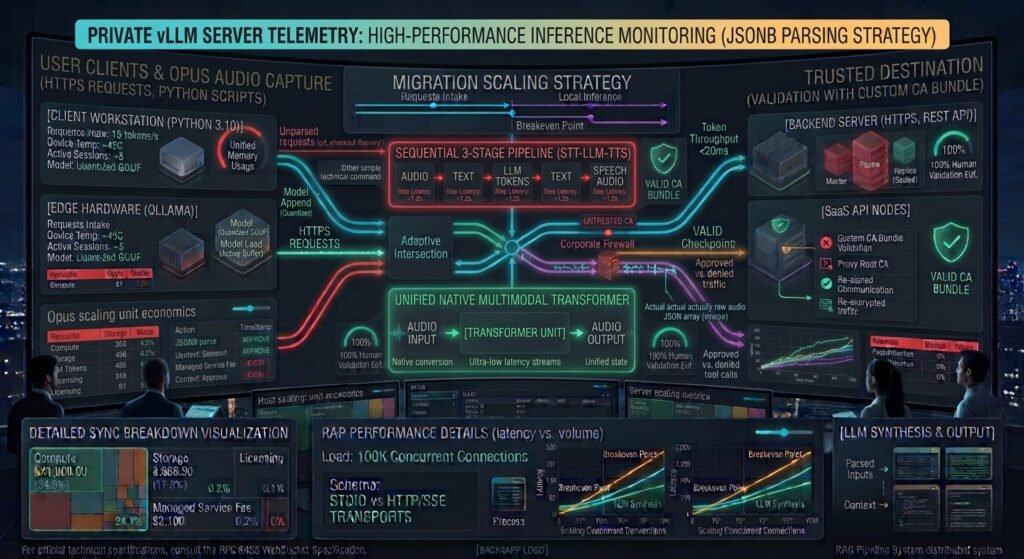
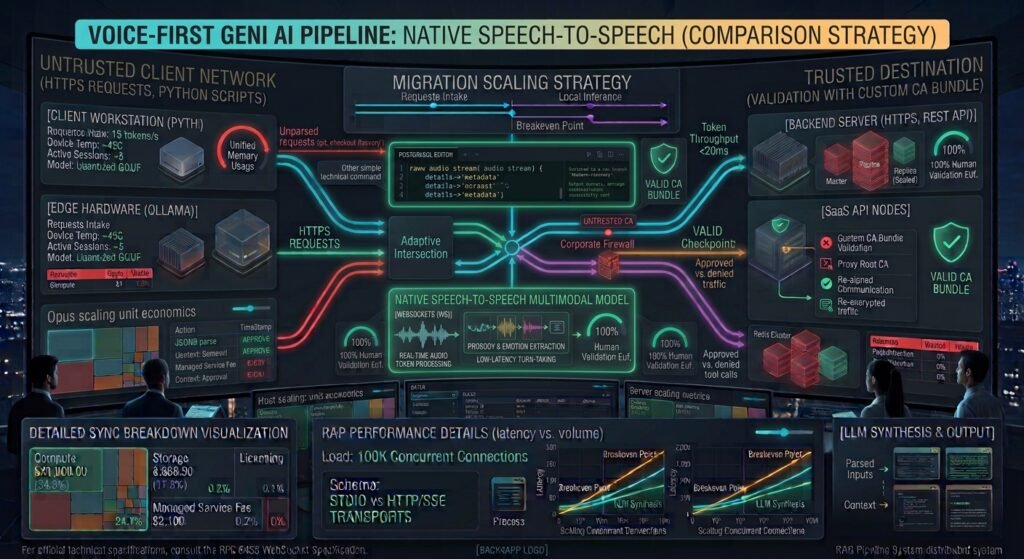
Native speech-to-speech models (such as advanced multimodal LLMs and real-time audio APIs) process continuous audio streams directly. By operating on audio tokens natively, the model understands paralinguistic context,dynamically adjusts its vocal inflection, and slashes time-to-first-audio metrics.
Core Engineering Components of a Production Voice Agent
When building voice-first generative AI assistants with speech-to-speech LLMs, developers must orchestrate several critical subsystems to ensure stability and low latency.
┌────────────────────────────────────────────────────────────────────────┐
│                  PRODUCTION VOICE AGENT SUBSYSTEMS                     │
├───────────────────────────────┬────────────────────────────────────────┤
│ SUBSYSTEM                     │ FUNCTION & OPTIMIZATION                │
├───────────────────────────────┼────────────────────────────────────────┤
│ Telephony & WebRTC Layer      │ Manages real-time bi-directional audio │
│                               │ packet streams (SIP trunks / WebRTC)  │
├───────────────────────────────┼────────────────────────────────────────┤
│ Voice Activity Detection (VAD)│ Detects speech vs. silence on incoming │
│                               │ audio chunks to manage turn-taking   │
├───────────────────────────────┼────────────────────────────────────────┤
│ Streaming Session Manager     │ Coordinates stateful worker processes  │
│                               │ over persistent WebSocket connections  │
├───────────────────────────────┼────────────────────────────────────────┤
│ Tool Orchestration Engine     │ Executes backend APIs and database     │
│                               │ lookups during active voice sessions   │
└───────────────────────────────┴────────────────────────────────────────┘
1. Robust Voice Activity Detection (VAD) and Turn-Taking
A sluggish VAD layer can ruin user experience. If tuned too strictly, it cuts users off mid-word; if tuned too loosely, the agent feels unresponsive. Production systems rely on lightweight neural networks trained specifically on conversational audio to detect end-of-utterance signals and handle user interruptions instantly.
2. Handling Barge-In and Interruption Logic
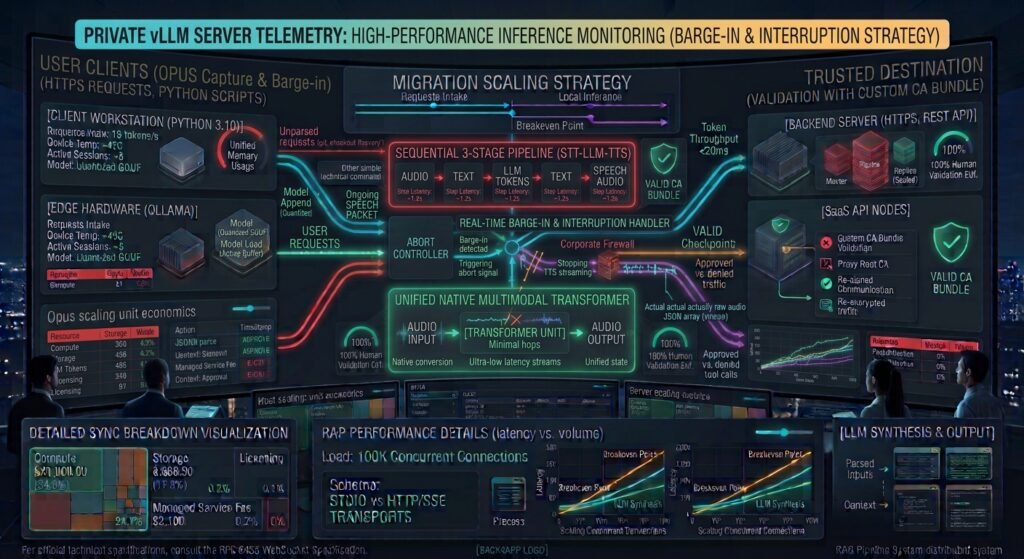
Natural conversation involves overlapping speech. When a user speaks while the AI assistant is actively generating output, the system must immediately abort current audio playback, clear streaming buffers, and listen to the new user input.
For official technical frameworks on real-time media streaming protocols and WebRTC transport specifications, consult the W3C WebRTC 1.0 Real-Time Communication Standard.
Integrating Tool Calling and Backend Actions
Voice assistants are most valuable when they can perform real-world tasks—such as checking account balances,booking appointments, or modifying database records. However, executing tools during a voice conversation introduces unique challenges:
- Avoiding Dead Air: If a backend API call takes 800 milliseconds to fetch customer records, the voice assistant cannot simply freeze. It must emit filler phrases or natural conversational sounds (“Let me check that for you…”) while awaiting execution results.
Scaling Stateful Voice Agent Infrastructure
Unlike stateless HTTP REST APIs, voice-first AI assistants maintain persistent, stateful connections (via WebSockets or WebRTC) for the entire duration of a call.
- Worker Process Isolation: Each active session stays bound to a specific worker process or container instance for its full lifecycle.
- Horizontal Auto-Scaling: Scaling requires distributing concurrent call sessions across a pool of worker nodes based on CPU utilization and network socket capacity, ensuring zero dropped audio frames.
Conclusion
Building voice-first generative AI assistants with speech-to-speech LLMs represents the cutting edge of conversational software engineering. By moving away from rigid, multi-stage cascade pipelines toward unified multimodal audio architectures, developers can deliver lightning-fast, emotionally resonant, and highly capable voice agents. Mastering streaming VAD, interruption handling, and resilient tool execution unlocks truly natural human-computer interaction.
Frequently Asked Questions (FAQs)
What is the primary advantage of speech-to-speech LLMs over traditional STT-LLM-TTS pipelines?
Native speech-to-speech LLMs process audio input and generate audio output directly within a single multimodal model. This eliminates compounding latency across multiple service hops and preserves natural acoustic nuances like emotion, tone, and pacing that get stripped away during text transcription.
How do voice AI assistants handle user interruptions (barge-in)?
Voice assistants handle interruptions using a combination of advanced Voice Activity Detection (VAD) and streaming audio session management. When user speech is detected mid-response, the system immediately sends a cancellation signal to halt audio playback and clear output buffers, allowing the agent to listen.
What is an acceptable latency budget for real-time voice AI agents?
For a conversation to feel natural and responsive, the total end-to-end latency—from the moment the user stops speaking to when the assistant begins playback—should ideally remain under 400ms to 1 second.
Building Voice-First Generative AI Assistants
1 thought on “Building Voice-First Generative AI Assistants with Speech-to-Speech LLMs”